 Society
European higher education week opens new opportunities
1.
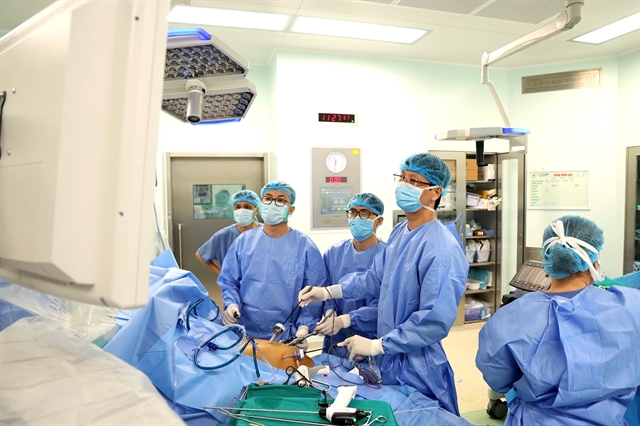 |
| Medical staff of the Central Military Hospital 108 conducts a liver transplant. — VNA/VNS Photo Ngọc Bích |
HÀ NỘI — Over the past 10 years, more than 1,300 patients suffering from serious diseases of the heart, lungs, liver, kidneys and pancreas who once seemed to have no chance of survival have been brought back from the brink through organ transplantation, highlighting major advances in Việt Nam’s medical capabilities.
Each patient represents a distinct story and often difficult circumstances. Yet they now share a common thread: a return to life with renewed health and hope, thanks to the efforts of doctors at Central Military Hospital 108.
During a recent working session at the hospital, Party General Secretary Tô Lâm emphasised that medicine is a special profession and that being a physician is a noble title.
That role, he said, brings together intelligence, science, compassion and humanity, where every professional decision is closely tied to human life.
The hospital’s team of physicians has mastered a wide range of modern medical techniques, particularly in tissue and organ transplantation. It continues to maintain its position as one of the largest transplant centres in the country and the leading liver transplant facility in Việt Nam, affirming the professional standing of Vietnamese medicine on the international stage.
Pioneering milestones
Each transplant case is a life-and-death battle, with doctors devoting their full expertise and energy in a race against time.
It is in these critical moments that medical ethics, intelligence and resolve are most clearly demonstrated, often resulting in dramatic recoveries for patients once considered beyond saving.
After nine years, Nguyễn Thị Thanh, 64, from Hà Nội, remains in stable health and leads an active life following her liver transplant.
Thanh was the first successful liver transplant case performed at Central Military Hospital 108. Her operation was an emergency procedure, one of the most complex techniques in hepatobiliary surgery, successfully carried out at the hospital.
Prior to the transplant, she suffered from cirrhosis and severe liver failure. In October 2017, she underwent the operation, receiving 60 per cent of a liver donated by her biological son. She is one of more than 300 patients to have undergone successful liver transplants at the hospital over the past nine years.
During the recent Tết holiday, on February 14 this year, just two days before Lunar New Year’s Eve, when many people were rushing home to reunite with their families, operating theatres at the hospital remained brightly lit.
An emergency liver transplant was urgently carried out to save the life of a 65-year-old woman from Hải Phòng who was in critical condition.
After six hours, the successful procedure brought renewed life to the patient and her family.
Notably, cross-country organ transplants across Việt Nam have been carried out through close coordination between medical teams in the north and south, regardless of time or distance, with significant contributions from doctors at Central Military Hospital 108.
Organs donated from brain-dead donors in HCM City have been transported to Hà Nội and Huế, while others have been sent from Hà Nội to different parts of the country. These journeys, spanning multiple cities and operating rooms, have helped extend and save lives through the combined efforts of medical teams.
Thanks to the noble gestures of donors and their families, many patients have been given another chance to live, return to their loved ones and continue unfinished dreams.
Colonel Ngô Vi Hải, head of the Thoracic Surgery Ward, said that from the start of organ retrieval, specialist teams maintained constant communication.
Doctors provided updates at key moments, including when the heart was removed, when the aorta was clamped and the estimated transport time.
On those critical cross-country flights, the entire focus of the teams was directed towards safeguarding the organs and ensuring they reached patients awaiting transplant in time.
Organ transplant ecosystem
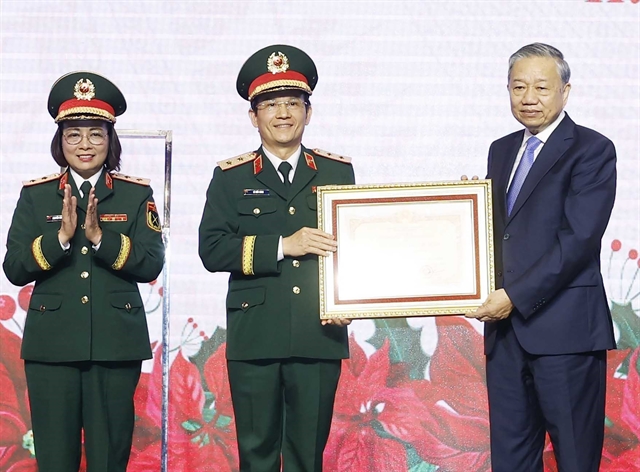 |
| Party General Secretary Tô Lâm presents the Hồ Chí Minh Order to the Central Military Hospital 108 on March 30 this year. — VNA/VNS Photo Thống Nhất |
A decade after performing its first kidney transplant in 2016, Central Military Hospital 108 has carved out a distinctive chapter in Việt Nam’s medical history, placing the country firmly on the global organ transplant map.
Since then, doctors at the hospital have steadily refined their expertise, expanding and applying advanced techniques in liver transplantation.
These include transplants for adults and children, procedures using organs from living and brain-dead donors, laparoscopic surgery to retrieve liver grafts, laparoscopic-assisted surgery for recipients, emergency liver transplants and liver splitting for transplantation.
Notably, in 2024, the hospital became the first in Việt Nam to successfully carry out in-abdomen liver splitting.
According to Lieutenant General Lê Hữu Song, the hospital’s director, after nearly a decade, the facility has successfully conducted eight types of tissue and organ transplants.
The total number of procedures has now exceeded 1,300, a significant milestone that includes 683 kidney transplants, 322 liver transplants, nine heart transplants, four lung transplants and a range of other complex procedures.
In 2024–2025, the hospital’s doctors continued to set recognised professional records, most notably a multi-organ retrieval and transplant operation that saved eight patients from a single donor.
In January this year, the hospital carried out its 1,000th organ transplant, reinforcing its role as a leading national centre for organ donation and transplantation.
Each successful transplant represents not only a life saved but also the generosity of donors and their families and the sustained efforts of medical staff.
Director Song said the hospital would continue to prioritise tissue and organ transplantation as a strategic focus, expanding capacity and improving the quality of established techniques.
He added that over the past 71 years, President Hồ Chí Minh's teaching: "Physician like a mother" had remained a guiding principle for the medical profession and for every doctor at the hospital.
The 10-year journey in organ transplantation stands as clear evidence of studying and following Hồ Chí Minh’s thought, morality and style: where physicians strive for professional excellence while demonstrating compassion, responsibility and a willingness to take on challenges for the sake of patients.
Beyond the figures, the most profound achievement lies in the human impact. Each successful transplant is a renewal of life, each patient returning home a testament to the intelligence, compassion and determination of the medical teams.
In recent years, the hospital has developed along the lines of a specialised medical centre, integrating treatment, training and scientific research.
A wide range of complex techniques has been mastered and routinely applied, particularly in tissue and organ transplantation, microsurgery, orthopaedic trauma, anaesthesia and resuscitation, cardiovascular medicine, neurology, stroke care, infectious diseases, molecular biology, stem cell research and nuclear medicine, strengthening military medical capacity and reducing the need for patients to seek treatment abroad.
Guided by the spirit of giving to last forever, the hospital has also taken a leading role in training and transferring technology to both military and civilian medical facilities, promoting professional knowledge and community responsibility.
A defining feature of its 10-year transplant journey has been this commitment to social responsibility through technology transfer.
With the view that medical advances achieve their full value only when widely shared, the hospital has actively disseminated expertise, opening its doors to transfer advanced organ transplant techniques to medical centres across the country. — VNS
Society
 Society
 Society
 Society
 Society
 Society
 Society
 Society
 Society
 Society
 Society
 Society
 Society
 Society
 Society