 Society

Vietnamese Prime Minister meets Cambodian National Assembly President
1.
|
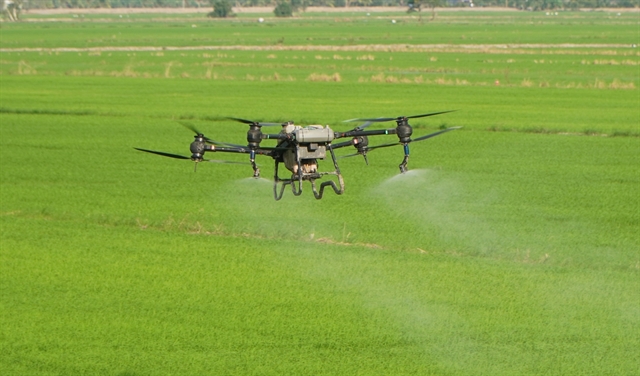
| The Phú Xuân Agricultural Services Co-operative in Đồng Tháp Province’s Tam Nông Commune uses a drone to spray plant pesticides on rice fields. — VNA/VNS Photo Nhựt An |
ĐỒNG THÁP — Co-operatives in Đồng Tháp Province are stepping up the use of science and technology in production and marketing, helping improve productivity, quality and economic efficiency.
Following the Cửu Long (Mekong) Delta province’s implementation of the Politburo’s Resolution No. 57, issued on December 22, 2024, on breakthroughs in science, technology, innovation and national digital transformation, many co-operatives have actively applied science and technology from production to consumption, opening up new production and business models and improving economic efficiency.
The province now has 545 co-operatives and people’s credit funds, including 419 operating in agriculture and fisheries.
These agriculture and fisheries co-operatives not only organise agricultural production but also act as a bridge linking farmers and enterprises, building raw material areas and ensuring stable outlets for farm produce.
At the Hòa Thạnh General Agricultural Co-operative in Long Bình Commune, the use of mechanisation and technology in vegetable farming has delivered clear results.
The co-operative has about 35ha of vegetables, including 10ha meeting Vietnamese Good Agricultural Practices (VietGAP) standards, while the rest follows safe production methods.
The co-operative produces 2,000 tonnes of vegetables a year and sells them to supermarkets and canteens.
Nguyễn Thanh Quang, director of the co-operative, said: “Applying science and technology in specialised safe vegetable farming brings high efficiency for both producers and consumers.”
The co-operative’s members grow an average of 10 vegetable crops a year and earn profits of VNĐ5–8 million (US$190–300) per 1,000 sq.m per crop, he said.
Many co-operatives in the province are promoting digital transformation in production and marketing their products.
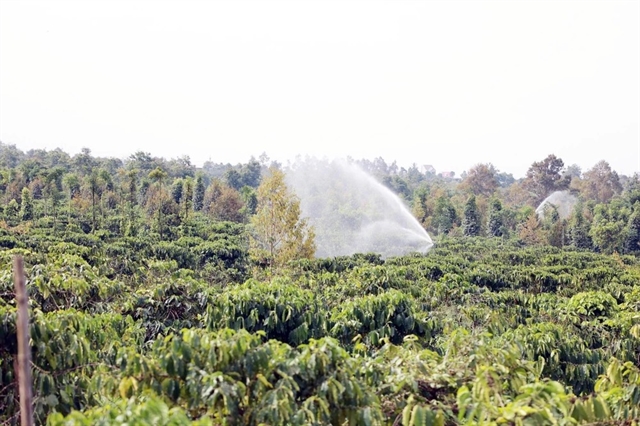
Bùi Ngọc Đang, director of the Tân Dương Flower and Ornamental Plant Services Co-operative in Tân Dương Commune, said over 80 per cent of its members now use automatic watering systems, while about 40 per cent sell products online.
The co-operative has around 250ha of flowers and ornamental plants, with its members earning profits several times higher than from rice cultivation, he said.
It has built a website and applied QR codes to trace product origins, improving transparency and strengthening consumer trust, he said.
|
| The Phú Xuân Agricultural Services Co-operative in Đồng Tháp Province’s Tam Nông Commune uses a drone to spray plant pesticides on rice fields. — VNA/VNS Photo Nhựt An |
In rice production, digital technology is also changing farming methods in the province.
At the Bình Thành Agricultural Service Co-operative in Lấp Vò Commune, the use of drones, automatic irrigation and digitalised production processes has reduced costs by 10–20 per cent.
Cao Thọ Trường, a member of the co-operative, said: “Growing rice is much easier now. We no longer have to work as hard in the fields as many stages are managed via smartphones.”
Lê Hà Luân, director of the province Department of Agriculture and Environment, said when farmers link through co-operatives and form concentrated farming areas, it creates a foundation for technology to be applied effectively.
“Digital transformation in agriculture is not only about technology, but also about changing mindsets and production methods. When data becomes the foundation, farmers can be more proactive in management, forecasting and market connections.”
With the consistent application of science, technology and production standards, many co-operatives have gradually accessed international markets.
The Hung Thinh Phat Clean Agricultural Co-operative in Tân Thuận Bình Commune, which produces about 3,000 tonnes of dragon fruit each year, has invested in packaging lines, cold storage and applied Hazard Analysis and Critical Control Points (HACCP) standards for exports.
Its dragon fruit has been recognised as a four-star product under the national programme’s “One Commune–One Product” (OCOP) programme since 2022.
Nguyễn Trung Quý, director of the co-operative, said: “The co-operative is working to build value chain linkages and target demanding export markets.”
At the Mỹ Xương Mango Co-operative in Mỹ Thọ Commune, the “My Mango Tree” service model combines electronic diaries and QR codes to trace product origins and connect directly with consumers.
Lê Minh Khánh, deputy chairman of the province Co-operative Alliance, said during the digital transformation process, most co-operatives have organised production under integrated service models, linked with enterprises and operated along value chains to market products for their members.
Many co-operatives have applied VietGAP and GlobalGAP standards, joined the OCOP programme and developed growing area codes for exports, he said.
The alliance will continue to co-ordinate with the province Department of Science and Technology and the province Department of Agriculture and Environment to guide and introduce co-operatives to join research projects and technology transfer programmes. — VNS
Society
 Society
 Society
 Society
 Society
 Society
 Society
 Society
 Society
 Society
 Society
 Society
 Society
 Society
 Society