 Society
Rural tourism needs to cash quantities over goods sold
1.
|
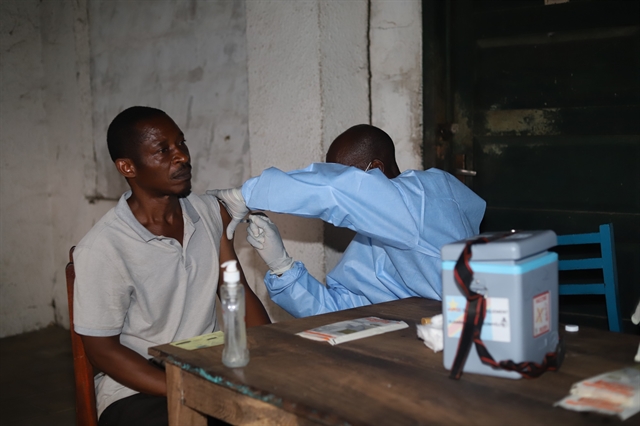
| A health worker vaccinates a resident against Ebola in Bulape, DR Congo. — XINHUA/VNA Photo |
HÀ NỘI — The Ministry of Health has intensified monitoring measures following the World Health Organisation’s (WHO) declaration that epidemic of Ebola disease caused by the Bundibugyo strain in the Democratic Republic of the Congo and Uganda constitutes a public health emergency of international concern.
According to the ministry, WHO on Sunday stressed that the declaration serves as an important warning for countries to strengthen surveillance, early detection and preparedness measures, but does not mean the disease has spread globally.
WHO reported that as of Saturday, the Democratic Republic of the Congo had recorded eight laboratory-confirmed Ebola cases, 246 suspected cases and 80 suspected deaths linked to the disease in Ituri province. In Uganda, two laboratory-confirmed cases, including one death in Kampala, were reported, with both patients having travelled from the Congo.
Ebola is a severe infectious disease that can cause serious illness and death. The virus spreads through direct contact with the blood or bodily fluids of infected or deceased individuals, or through contaminated objects and surfaces. Common symptoms include fever, fatigue, headache, muscle pain, sore throat, vomiting, diarrhoea, abdominal pain and rash, while some patients may experience bleeding. The incubation period ranges from two to 21 days.
The ministry said it is closely monitoring developments, regularly updating information from WHO and national focal points implementing the International Health Regulations, while strengthening surveillance at medical facilities and health quarantine measures at border gates.
The ministry advised the public not to panic and to follow official information released by the Ministry of Health and WHO. People are also urged to avoid direct contact with individuals showing suspected Ebola symptoms, as well as blood, bodily fluids or belongings of infected patients.
Those returning from affected areas are advised to monitor their health for 21 days. Anyone who develops symptoms such as fever, fatigue, headache, muscle pain, vomiting, diarrhoea or bleeding after returning from outbreak areas should immediately seek medical attention and provide details of their travel and contact history for timely guidance.
The ministry said it will continue updating the public and issuing appropriate disease prevention and control measures in line with the evolving situation. — VNA/VNS
Society
 Society
 Society
 Society
 Society
 Society
 Society
 Society
 Society
 Society
 Society
 Society
 Society
 Society
 Society