 Society

Vietnamese Prime Minister meets Cambodian National Assembly President
1.
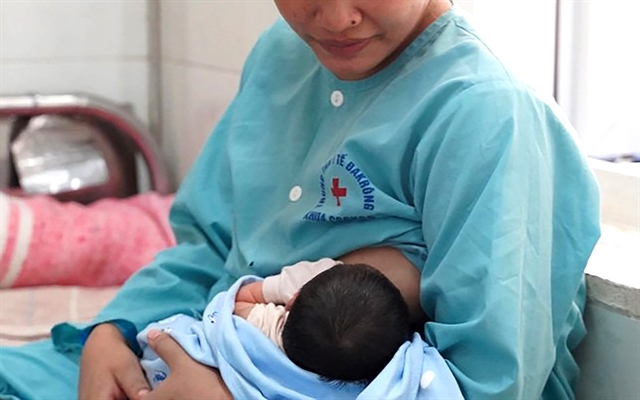 |
| Postpartum depression is treatable if detected early, according to experts. — Photo courtesy of the Administration of Maternal and Children’s Affairs |
HÀ NỘI — Health experts have urged proactive care and stronger prevention measures as studies indicate that up to 16 per cent of women in Việt Nam experience depression after childbirth.
They warned that if left unaddressed, postpartum depression can lead to serious consequences, including a reduced quality of life, increased risk of substance abuse and in severe cases, suicide.
At a recent conference held at the National Institute of Mental Health under Bạch Mai Hospital, physicians noted that the condition accounts for around 20 per cent of postpartum deaths.
Data from the institute show that postpartum depression is common but often overlooked, as families may assume new mothers are simply tired or overly sensitive after childbirth. The condition usually develops within four to six weeks after delivery but can persist for months or even more than a year if left untreated.
Prevalence can be significantly higher among women under psychological stress or during public crises such as a pandemic. Genetic and family factors also play a role.
Dr Nguyễn Phương Linh said the institute recently treated a case of postpartum depression involving a patient identified by the initials N.B.T., a 23-year-old university student who had an unplanned pregnancy.
During pregnancy, T. experienced severe morning sickness, physical changes and rapid weight gain, which affected her mental state. She frequently felt sad, became tearful, was irritable without a clear reason and became self-conscious about her appearance.
Despite this, with encouragement from her partner, family and friends, she managed to continue her studies. Her lecturers also supported her attendance until close to her due date.
T. gave birth to a healthy baby boy with full support from her family. In the first few weeks, she felt happy.
However, her mood began to change about five weeks after childbirth. T. experienced fatigue, sadness and a loss of interest in her usual activities. She also reduced social interactions and avoided seeing family and friends.
The young mother was breastfeeding but prolonged stress caused her milk supply to decline and eventually stop despite daily efforts to stimulate lactation. Switching to formula feeding left her feeling more distressed and guilty.
Ongoing anxiety about her health and the pressure of caring for her child worsened her condition. For nearly a month, T. slept very little and remained constantly anxious and stressed while also experiencing auditory hallucinations described as cicada-like buzzing.
About three weeks before hospitalisation, T.’s family found her on the balcony at home, intending to jump with the child in her arms. As suicidal thoughts became more frequent, she was admitted to the National Institute of Mental Health for treatment.
She received a combination of medication, transcranial magnetic stimulation and psychotherapy and was discharged after 20 days.
Her family was also guided on how to support her recovery. Two months later, her mental health has stabilised and she is preparing to return to complete her degree and seek employment.
Associate Professor Nguyễn Văn Tuấn, director of the National Institute of Mental Health, said postpartum depression is a common disorder typically developing within the first four to six weeks after childbirth.
He noted that it is different from baby blues, which are temporary feelings of sadness, tearfulness and fatigue that usually occur within the first 10 days after birth and resolve on their own.
Tuấn said if symptoms persist for more than two weeks, worsen over time and affect daily functioning, mothers should seek early medical consultation.
Medical experts also highlighted high-risk but often overlooked groups, including women who give birth under difficult or unplanned circumstances, are not ready for pregnancy, have underlying health conditions, face financial pressure or lack family support.
They added that partners may also feel confused and distressed and question whether they are at fault. In many cases, both parents require mental health support after a diagnosis of postpartum depression.
In this context, experts stressed proactive care and prevention within families in line with the Politburo’s Resolution No. 72-NQ/TW on breakthrough solutions in protecting, caring for and improving public health.
Health experts emphasised that postpartum depression is treatable if detected early. Patients should receive psychological support, adequate rest, reduced childcare pressure and greater family involvement. In severe cases or where there is a risk of suicide, hospitalisation and specialised treatment should be provided as early as possible. — VNS
Society
 Society
 Society
 Society
 Society
 Society
 Society
 Society
 Society
 Society
 Society
 Society
 Society
 Society
 Society