 Life & Style
Rural tourism needs to cash quantities over goods sold
1.
|
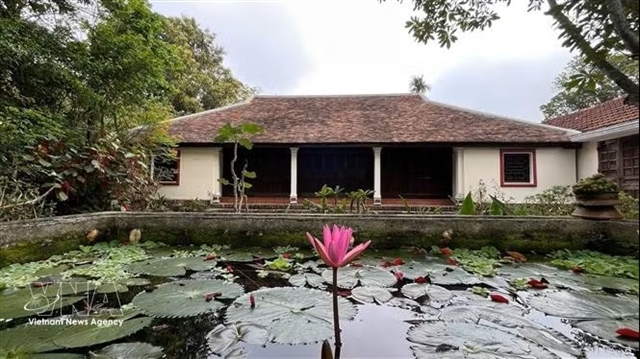
| A traditional-style house in Phước Tích Village. — VNA/VNS Photo |
HUẾ — Phước Tích, a village more than five centuries old set along the Ô Lâu River roughly 40 km north of Huế, holds a quiet, weathered beauty that captures the stamp of traditional north-central Vietnamese rural life.
Home to heritage wooden houses
The village is now home to 40 traditional wooden houses aged between 100 and 300 years. They share a common architectural lineage, built by master carpenters from famed Mỹ Xuyên carpentry village using sturdy frames joined with pegs and mortise techniques, without iron nails.
Crossbeams, decorative doors, rafters and roof trusses are carved with fine motifs and patterns drawn from ancient Vietnamese culture.
Each house follows a Huế-style layout with gateways, gardens, ponds, decorative screens and trimmed hedges. Visitors touring the homes get a briefing on their architecture, cultural significance and history.
Beyond the wooden dwellings, the village holds a rich mix of spiritual and religious structures, including communal houses, pagodas and shrines.
Tourism push
Phước Tích’s landscape blends into its natural surroundings, wrapped in bamboo groves and centuries-old trees. Homes and lanes, separated not by walls but by lush green hedges, create an uninterrupted swath of green and an open settlement pattern typical of Vietnam’s north-central countryside.
Cultural researcher Assoc. Prof. Dr. Nguyễn Văn Mạnh said it is exceptionally rare for a village in central Việt Nam, a region battered by prolonged war and bombing, to have preserved its ancient structures, temples, and trees as remarkably as Phước Tích.
The village was recognised as a National Heritage Village in 2009. Seventeen years on, it has made progress in both conservation and tourism. From 2024 through late 2025, the village welcomed more than 50,000 visitors, generating over VNĐ3.2 billion (US$123,000) in tourism revenue.
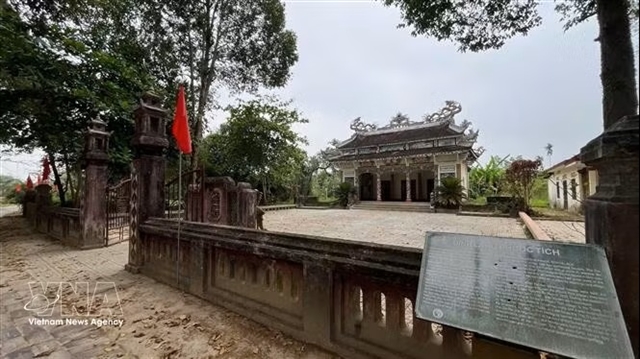
|
| The Phước Tích communal house. — VNA/VNS Photo |
Nguyễn Ngọc Nam, Deputy Director of the Public Service Centre of Phong Điền ward (Huế City), said the village now offers nine tourism service categories engaging about 40 local residents, including heritage house tours, food services, bicycle rentals, guided tours, pottery demonstrations, traditional cake-making, and folk cultural exchanges.
Among the preserved ancient houses, 11 now welcome visitors, four run homestays, and four offer culinary experiences.
To bring in more arrivals, local authorities have been working with over 40 travel agents and schools that arrange educational and experiential tours to Phước Tích.
Local authorities are also planning to step up training for residents and guides, develop new tourism products and improve homestay services. The aim is for visitors to do more than sightsee and stay, but immerse themselves in the village’s cultural identity and local hospitality, spreading Phước Tích’s image across Việt Nam and beyond. — VNA/VNS
Life & Style
 Life & Style
 Life & Style
 Life & Style
 Life & Style
 Life & Style
 Life & Style
 Life & Style
 Life & Style
 Life & Style
 Life & Style
 Life & Style
 Life & Style
 Life & Style
 Life & Style