 Life & Style
Sơn La launches $24 million industrial cluster project
1.
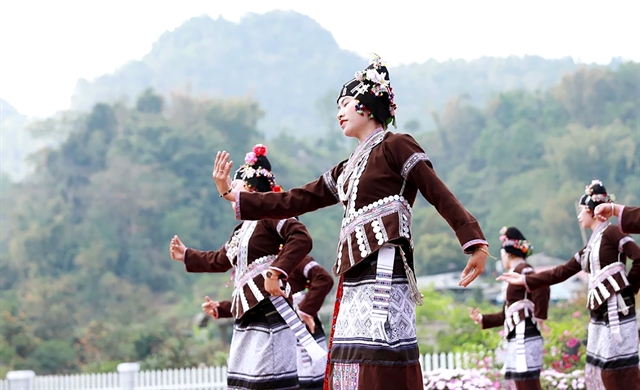 |
| Women from the Lự ethnic group perform in traditional costumes in Lai Châu Province. — VNA/VNS Photos Việt Dũng |
LAI CHÂU — Nestled among the towering mountains of northern Việt Nam, Lai Châu is placing cultural preservation and community participation at the centre of its tourism strategy, seeking to transform its natural and cultural treasures into sustainable economic drivers.
Home to seven of Việt Nam’s 10 highest peaks, including Pu Ta Leng and Bạch Mộc Lương Tử, the northern border province possesses striking landscapes suited to eco-tourism, trekking and adventure travel.
Destinations such as the Ô Quy Hồ Pass, Tác Tình Waterfall and vast hydropower reservoirs further strengthen its tourism appeal.
But beyond the scenery, authorities believe Lai Châu’s greatest advantage lies in the cultural richness of its 20 ethnic groups, whose traditions are reflected in language, costumes, festivals, folk arts and handicrafts.
Culture at the heart of tourism
Vice Chairman of the Provincial People’s Committee Tống Thanh Hải said the province had early identified tourism linked with cultural preservation as a strategic priority.
The Resolution of the 14th Provincial Party Congress for the 2020-2025 term identified tourism one of Lai Châu’s key development pillars. The province later introduced policies supporting the preservation and promotion of ethnic cultural identities alongside tourism development.
These efforts align with the Politburo’s Resolution No 80-NQ/TW, which views culture as an endogenous strength and a driving force for sustainable national development. The policy encourages localities to turn cultural heritage into distinctive economic resources while ensuring communities remain at the centre of development.
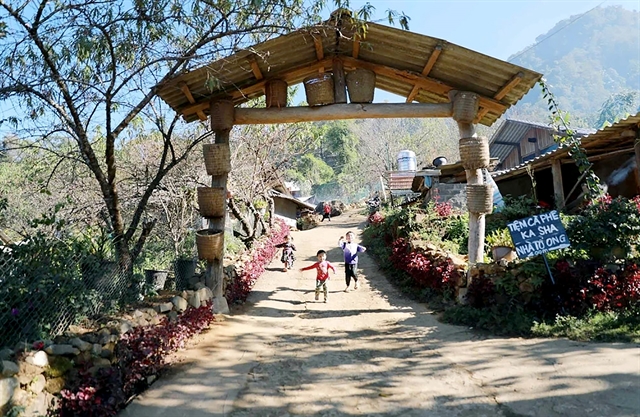 |
| Sin Suối Hồ community tourism village has become one of Lai Châu’s most prominent travel destinations. |
The approach has produced encouraging results.
Between 2021 and 2025, Lai Châu welcomed an estimated five million visitors, with annual tourism growth exceeding 33 per cent. Tourism revenue reached more than VNĐ3.8 trillion (approximately US$149 million), contributing significantly to the province’s economy.
Community-based tourism has become one of the province’s standout models. Villages such as Sin Suối Hồ, Sì Thâu Chải and Lao Chải 1 now attract visitors seeking authentic cultural experiences through homestays, traditional cuisine and local crafts.
In 2023, Sin Suối Hồ received the ASEAN Community-Based Tourism Award, an important international recognition for sustainable tourism development.
According to Director of the provincial Department of Culture, Sports and Tourism Trần Mạnh Hùng, each tourism product must carry genuine cultural value while allowing local people to directly benefit.
“Our tourism models not only create stable livelihoods for residents, but also encourage communities to preserve their languages, traditional clothing and handicrafts,” he said.
For many residents, tourism has become both an economic opportunity and a reason to preserve cultural traditions.
Hảng Thị Sú, owner of a homestay in Sin Suối Hồ Village, said her family’s life had changed significantly since joining the tourism sector.
“Since we started doing tourism, our income has become much more stable compared to relying only on farming,” she said.
“But what makes me happiest is that our children still know how to embroider brocade and sing in the Mông language. Tourists love these traditions, so the younger generation feels proud to preserve them.”
Building a sustainable future
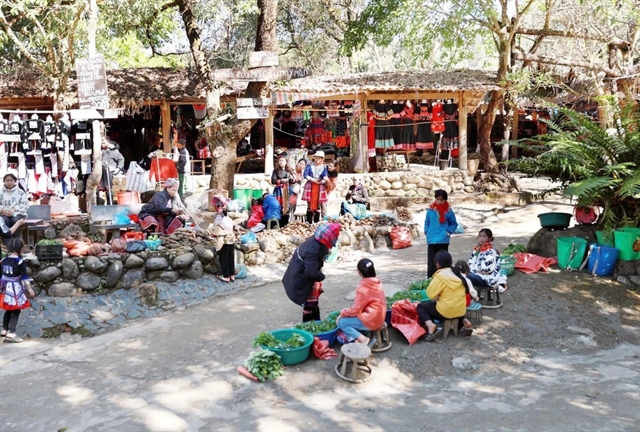 |
| The Sin Suối Hồ weekend market reflects the vibrant cultural life of the Mông ethnic community in Lai Châu Province. VNA/VNS Photo |
Looking ahead, Lai Châu has adopted Resolution No. 08-NQ/TU on tourism development for 2026-2030, with a vision to 2035.
The strategy aims to develop tourism along green and sustainable lines while improving service quality and strengthening cultural preservation.
Under the plan, the province hopes to attract more than 2.4 million visitors annually by 2030 and generate tourism revenue exceeding VNĐ2.7 trillion (around US$106 million).
Authorities also plan to expand community tourism, with more than 15 villages expected to gain official recognition as community tourism destinations. Sin Suối Hồ is aiming for recognition as one of the Best Tourism Villages by the UN World Tourism Organisation.
The province is also promoting trekking tours, eco-resorts, agricultural tourism linked to tea plantations and cross-border tourism while increasing digital promotion and workforce training.
Hùng said infrastructure, human resources and tourism promotion remain key challenges, but cultural preservation must continue to be prioritised.
“Lai Châu does not lack tourism resources,” he said.
“What matters now is removing bottlenecks in infrastructure and human resources while persistently preserving cultural values, because they are the foundation for green, sustainable tourism development that cannot be replicated elsewhere.” — VNS
Life & Style
 Life & Style
 Life & Style
 Life & Style
 Life & Style
 Life & Style
 Life & Style
 Life & Style
 Life & Style
 Life & Style
 Life & Style
 Life & Style
 Life & Style
 Life & Style
 Life & Style