 Society
HCM City honours fallen soldiers with solemn musical tribute
1.
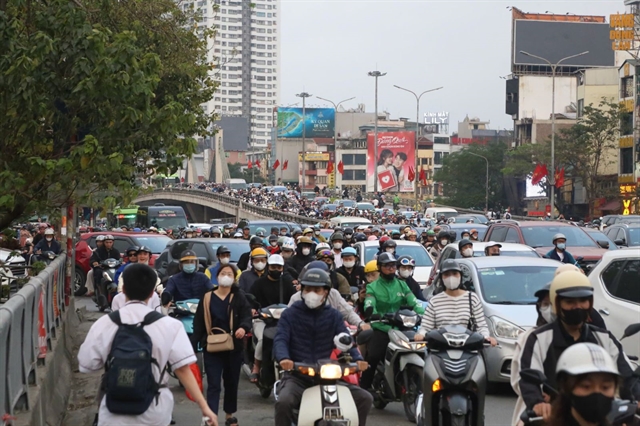 |
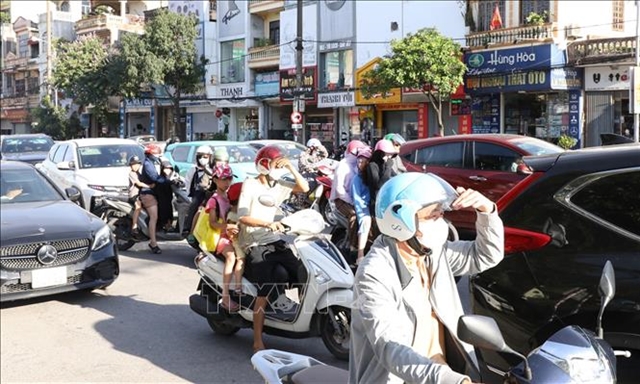
| Traffic congestion at Nguyễn Trãi Street in Hà Nội. — VNA/VNS Photo |
HÀ NỘI — Hà Nội will not roll out low-emissions zones across the entire Ring Road 1 inner city area from July 1, according to deputy director of the municipal Department of Construction Đào Việt Long.
Instead, the city will pilot the initiative in selected areas under a phased roadmap with an appropriate scope, timeline and target groups, he said at a recent press conference held by the Hà Nội People’s Committee announcing further details on the implementation of low-emissions zones under the city’s Resolution 57.
Long said municipal authorities have assigned the Department of Agriculture and Environment to take the lead, in coordination with the Department of Construction, city police and other relevant agencies, in drawing up a low-emissions zone plan for the Ring Road 1 area.
The scope of application, target groups, implementation roadmap and technical and management measures will be designed to suit real-world conditions in the capital city.
Public transport capacity has been improved in preparation for the low-emissions zone rollout, with two urban railway lines within the Ring Road 1 area – Line 2A and Line 3.1 – serving around 462,000 passenger trips per day.
With 45 subsidised bus routes capable of carrying more than 903,000 passengers daily, the city is also seeking to maximise the share of green buses operating within Ring Road 1 before the pilot begins. Priority will be given to routes running directly through the pilot area.
In Q2 2026, Hà Nội is expected to add more public bicycle stations to help bridge last-mile connectivity gaps, while also studying the launch of additional small electric bus routes suited to narrow lanes and streets within the ring road.
As for park-and-ride facilities, the Hà Nội Department of Construction is planning to arrange parking lots at gateway locations bordering the pilot area, so that residents can leave their private vehicles and switch to public transport.
An initial review has already identified more than 210 potential sites within Ring Road 1, and the survey is continuing to produce a more complete dataset.
In terms of charging infrastructure and battery swap cabinets, as well as the legal framework on fire prevention and fighting for underground charging stations in older apartment blocks, city construction officials said the matter is being finalised by relevant authorities.
The city’s inter-agency task force has also developed a plan to prioritise the deployment of compact battery swap cabinets in public spaces. Under the proposal, residents would need only two to three minutes to swap batteries, helping address both fire safety concerns and space constraints in older housing blocks and the Old Quarter.
This plan has already been submitted to the Hà Nội People’s Committee and will be implemented soon, Long said, adding that once administrative procedures are completed, actual installation time would take only one to three days.
Regarding policies to support vehicle conversion, the Hà Nội construction department is coordinating with relevant agencies to finalise a draft resolution detailing support measures for switching to clean-energy vehicles. The document will be submitted to the city’s People’s Council for consideration.
“The proposed policy framework is designed by specialised agencies in a way that clearly classifies target groups and ensures that residents, especially low-income groups, are not disadvantaged during the transition. The specific contents and support levels will be officially announced after approval by the People’s Council,” Long said.
Officials from the city’s construction department stressed that low-emissions zones are not merely an administrative measure, but a phased shift in the structure of urban transport, in which residents’ interests must be safeguarded at every step of implementation.
“The municipal People’s Committee will continue directing departments and agencies to conduct periodic assessments so that adjustments can be made in line with actual conditions, ensuring that residents have sufficient time to prepare and adapt before scaling up,” the department’s leadership said.
Under Resolution 57 of the Hà Nội People’s Council, from July 1, 2026 to December 31, 2027, Hà Nội will pilot low-emissions zones in selected areas within Ring Road 1.
From January 1, 2028 to December 31, 2029, the city will implement low-emissions zones throughout Ring Road 1 and in several areas within Ring Road 2. From January 1, 2030, low-emissions zones will be applied within Ring Road 3.
Hà Nội also encourages commune-level authorities to establish low-emissions zones in areas under their management.
Under the Resolution, from January 1, 2031, city areas that are designated as a strictly protected or a low-emissions zone, frequently experience serious traffic congestion or have below-average air quality will be required to implement low-emissions zones. — VNS
Society
 Society
 Society
 Society
 Society
 Society
 Society
 Society
 Society
 Society
 Society
 Society
 Society
 Society
 Society




