 Society
Việt Nam-Cambodia trade gathers pace towards $20 billion target
1.
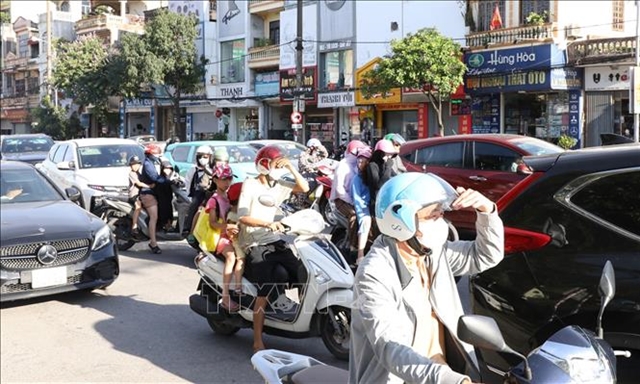 |
| People in Hoa Lư City of Ninh Bình Province suffer hot weather on Monday. — VNA/VNS Photo |
HÀ NỘI — Several regions will experience severe to exceptionally severe heat, with temperatures exceeding 40 degrees Celsius today and tomorrow, according to the National Centre for Hydro-Meteorological Forecasting.
Specifically, during Tuesday and Wednesday, the Northwest region, the area from Thanh Hóa Province to Đà Nẵng City, and the eastern parts of provinces from Quảng Ngãi to Đắk Lắk will face intense heat, with some places experiencing extreme conditions.
The highest temperatures will commonly range from 37–39 degrees Celsius, with some locations surpassing 40 degrees Celsius and the lowest relative humidity is expected to be around 35–40 per cent.
In the Northeast region, excluding Quảng Ninh and Hải Phòng cities, the Central Highlands, and the Southern region, hot weather is also forecast, with some areas experiencing severe heat.
Maximum temperatures will generally be 35–36 degrees Celsius, with some places exceeding 37 degrees Celsius. The lowest relative humidity will commonly range from 45–50 per cent.
The weather forecasters have warned that the heatwave in these areas may persist for several more days.
“The temperatures forecast in heat advisories and the actual perceived outdoor temperatures may differ by 2–4 degrees Celsius, and could be even higher depending on surface conditions such as concrete or asphalt,” said Lê Thị Loan, deputy head of the Weather Forecasting Department.
Due to the impact of intense heat combined with low humidity, there is an increased risk of fires and explosions in residential areas as electricity demand rises.
Prolonged exposure to high temperatures may also lead to dehydration in humans.
To prevent heat-related health issues, medical experts advise people to limit outdoor activities between 10am and 16pm.
If going outside is unavoidable, individuals should wear protective clothing, hats, sunglasses, and masks to avoid direct sunlight. People should avoid working for extended periods outdoors or in hot environments and refrain from excessive physical exertion.
Those working in hot conditions should drink sufficient water, at least 1.5 to 2 litres per day, to prevent dehydration and electrolyte imbalance.
Failure to replenish fluids in time can reduce blood volume, potentially leading to cardiovascular collapse or severe electrolyte disorders that may be fatal.
People are also advised to work in well-ventilated areas to prevent heatstroke. When using electric fans, they should not be directed straight at the body for long periods to avoid catching a chill.
In addition, maintaining a balanced diet with plenty of green vegetables and fruits is recommended to strengthen the immune system.
Regular health check-ups are also important, especially for the elderly, young children, and individuals with chronic or underlying conditions such as hypertension or cardiovascular disease. — VNS
Society
 Society
 Society
 Society
 Society
 Society
 Society
 Society
 Society
 Society
 Society
 Society
 Society
 Society
.jpg) Society
Society