 Society
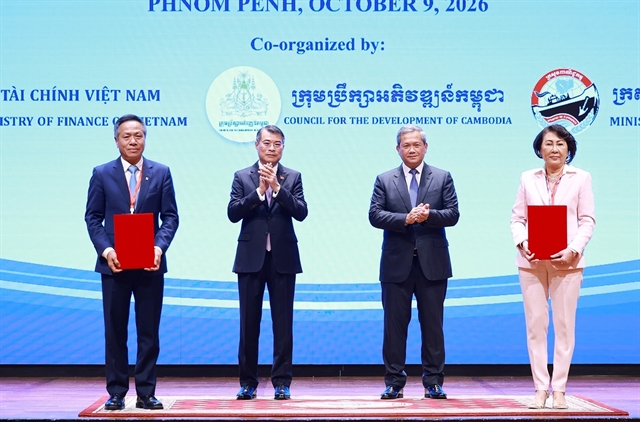
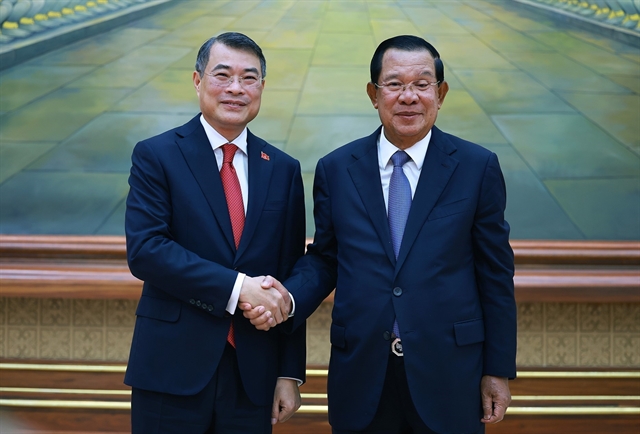
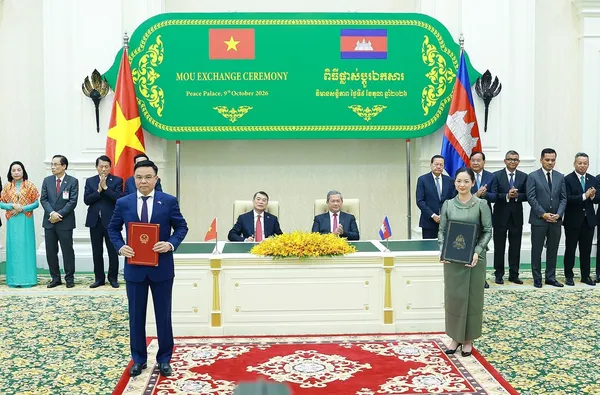
Vietnamese Prime Minister meets Cambodian National Assembly President
1.
|
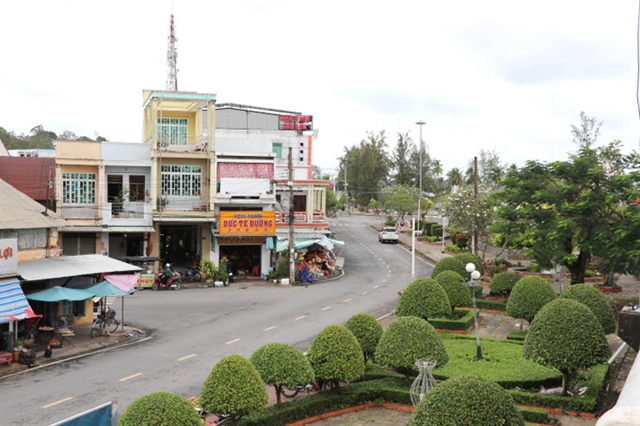
| A road in Vĩnh Long Province’s Tiểu Cần Commune. — VNA/VNS Photo |
VĨNH LONG — The Cửu Long (Mekong) Delta province of Vĩnh Long aims for all its 105 communes to meet new-style rural area standards this year.
Only seven have yet to meet them: Long Hồ, Trà Côn, An Bình, Tân Thủy, Bảo Thạnh, Ba Tri, and An Hiệp.
Of the 98 new-style rural communes, 20 have reached advanced standards and one, Long Vĩnh, has achieved exemplary standards.
A new-style rural commune is upgraded to advanced and then exemplary by meeting higher standards across all the programme’s criteria.
In 2026–30 period, a commune recognised as a new-style rural commune must meet the programme’s 10 criteria: planning; socio-economic infrastructure; economic development; human resource training; culture, education, and healthcare; poverty reduction and social welfare; science, technology, and digital transformation; environment and rural landscape; political system building and public administration; and access to law, security, and national defence.
According to the province Department of Agriculture and Environment, more than VNĐ1.32 trillion (US$50.3 million) is required in public investment for the seven remaining communes to meet these criteria, primarily for transport, education and cultural projects.
Châu Văn Hòa, deputy chairman of the province People’s Committee, has instructed relevant departments and the seven communes to focus on eliminating obstacles and accelerating progress to meet new-style rural area standards by the end of the year.
He said they should strengthen advocacy, complete steering committees and management boards for building new-style rural areas, assign responsibilities clearly, set timelines for each criterion, and mobilise resources from other programmes to improve standards.
|
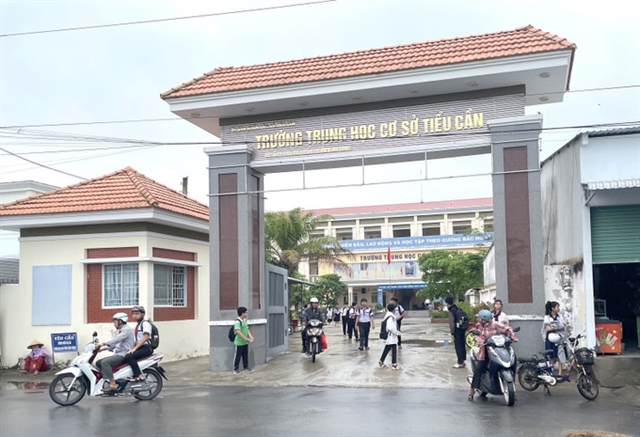
| Tiểu Cần Secondary School in Vĩnh Long Province’s Tiểu Cần Commune meets national standards. — VNA/VNS Photo |
Long Hồ Commune is a typical example of mobilising both the political system and community efforts to build new-style rural areas.
Based on its achievements and the programme’s 10 criteria, Long Hồ currently meets two of the criteria – poverty reduction and social welfare and political system building and public administration.
Determined to be recognised by the end of this year, the commune has strengthened leadership and taken coordinated, decisive action while mobilising the entire political system and local people to implement the criteria.
As a result, its new-style rural area development has gradually expanded in scale, delivering positive outcomes.
The commune’s An Lương A Hamlet stands out with clean, attractive roads lined with flowers and trees, creating a countryside that looks refreshing and peaceful.
Võ Kim Phượng, who lives on its Gạch Chòi Road, said: “Since the trees and flowers were planted, the road looks refreshing and cheerful. We care for it with simple joy.”
The commune Farmers Association plays a key role in the efforts to build new-style rural areas.
The association has more than 1,930 members recognised as excellent farmers. They have donated over 32,000sq.m of land to upgrade rural roads, dykes and embankments, planted and maintained more than 52 kilometres of flower-lined roads and repaired six rural bridges.
Phạm Thanh Hiền, chairman of the association, said many of the members have applied new farming techniques, supported each other economically and contributed to meeting the new-style rural area criteria.
Võ Minh Trung, deputy chairman of the Long Hồ People’s Committee, said the commune still faces difficulties due to unclear guidance on new criteria for 2026–30, limited budget capacity and insufficient support funds, which slows down infrastructure development.
To achieve the target of becoming a new-style rural commune this year, it has petitioned for additional funding and more detailed guidance from the province, he said.
|
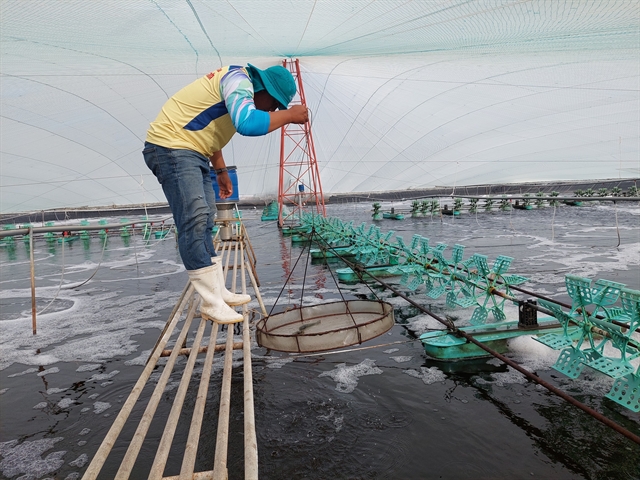
| A high-tech shrimp farming model in Vĩnh Long Province’s Thạnh Phong Commune is equipped with modern technology, including net houses, automatic feeders, oxygen generators, and chlorine aeration systems for water treatment. — VNA/VNS Photo |
Developing co-operatives
Alongside infrastructure, developing co-operatives and production linkages is a strategic factor in improving the quality of new-style rural areas.
Vĩnh Long has found that when co-operatives are strengthened and properly developed, they become a “supporter” of farmers in production and marketing, helping further develop rural areas.
The agricultural sector promotes linked supply chains, with co-operatives acting as connectors.
Joining co-operatives and linking with businesses helps farmers access quality inputs at reasonable prices and secure steady markets.
|
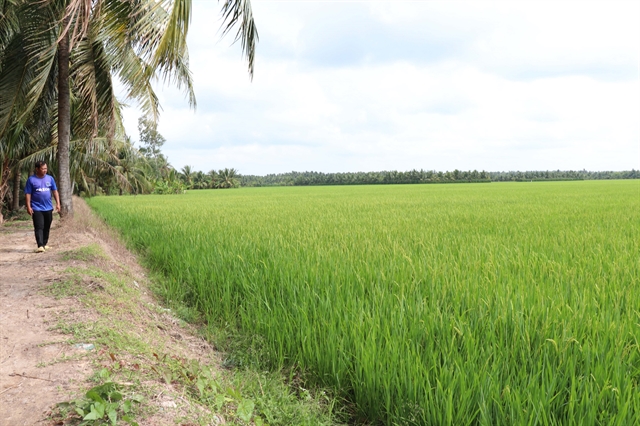
| A rice field belonging to the Rạch Lọp Agricultural Co-operative in Vĩnh Long Province’s Hùng Hòa Commune, which is part of the “Sustainable Development of One Million Hectares of High-Quality and Low-Emission Rice Associated with Green Growth in the Mekong Delta by 2030” programme. — VNA/VNS Photo |
The Rạch Lọp Co-operative in Hùng Hòa Commune is a typical example. It has signed contracts with six companies supplying inputs and four purchasing its produce.
It sells 1,500–1,800 tonnes of rice annually directly to export-processing companies, earning VNĐ20–50 per kilogramme more than local market prices.
The economic efficiency of many co-operatives in the province has raised their members’ incomes, strengthened confidence in the new-style co-operative model and contributed to the production organisation criterion in building new-style rural areas.
The province had 1,140 products recognised as three stars or higher under the country’s “One Commune – One Product” (OCOP) programme as of last month.
Many local specialities recognised under the OCOP programme have increased in value, while consumption markets have become more stable, helping create jobs, reduce poverty and increase incomes for rural residents.
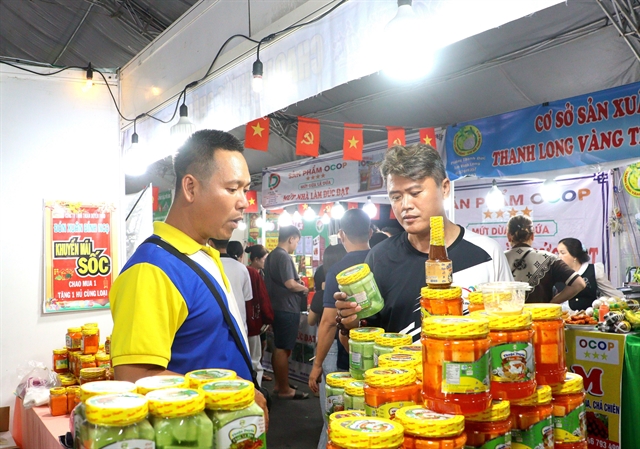
The province has focused on improving quality, refining design and packaging of OCOP products, and actively supporting businesses and co-operatives to bring them into modern distribution systems, e-commerce platforms, trade fairs and exhibitions, and supply–demand connection programmes within and outside the province.
|
| Visitors buy products recognised under the country’s “One Commune – One Product” (OCOP) programme at a trade and tourism promotion fair organised by Vĩnh Long Province. — VNA/VNS Photo |
In 2026–30 the province will build new-style rural areas with a modern, comprehensive and sustainable approach, linked to urbanisation and climate adaptation.
It will shift the focus from “meeting standards” to “improving quality,” emphasising rural economic development, reduction of multidimensional poverty, green growth, science and technology application, innovation and digital transformation.
It will continue prioritising investment in infrastructure, restructuring agriculture towards green and circular models, developing efficient rural economic models, strengthening value chain linkages and expanding products under the OCOP programme.
It aims for around 10 per cent of communes to reach modern new-style rural area status by 2030, creating a foundation for comprehensive and sustainable development and ensuring residents enjoy prosperous, happy and cultured lives. — VNS
Society
 Society
 Society
 Society
 Society
 Society
 Society
 Society
 Society
 Society
 Society
 Society
 Society
 Society
 Society