 Society
European higher education week opens new opportunities
1.
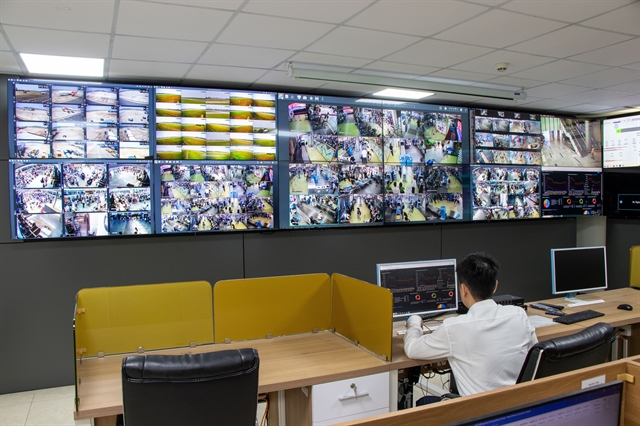 |
| A staff works at the Operations Control Centre of Đà Nẵng International Airport.— VNA/VNS Photo Xuân Quý |
HÀ NỘI — Việt Nam aims to place among the world’s top 50 countries in national quality infrastructure by 2030, while positioning itself within the top three in Southeast Asia for artificial intelligence research and development.
These targets are outlined in Decision No. 604/QĐ-TTg, recently signed into effect by Deputy Prime Minister Nguyễn Chí Dũng, approving revisions and supplements to the National Strategy for science, technology and innovation development through to 2030.
Under the strategy, by 2030 Vietnamese enterprises are expected to reach the global average in technological capability and innovation capacity. More than 40 per cent of businesses will be engaged in innovation activities, while at least 30 per cent of research outcomes from universities and research institutes are to be commercialised.
The country also aims to nurture five to ten regionally scaled technology firms operating in strategic sectors, alongside achieving domestic mastery and production of key technologies with significant implications for economic development and national security. Total factor productivity is projected to contribute more than 55 per cent to economic growth and high-tech exports are expected to account for at least half of total export value.
Việt Nam’s ranking in the Global Innovation Index is set to rise steadily, placing it among the world’s top 40 economies. Total social investment in research and development is targeted to reach at least 2 per cent of GDP, with more than 60 per cent from non-State funding. At least 2 per cent of annual State budget expenditure will be allocated to science, technology and innovation, with further increases aligned to development needs.
The full-time equivalent workforce in scientific research and technological development is expected to reach 12 researchers per 10,000 people, while at least 50 science and technology organisations are to achieve regional or global recognition. International scientific publications are projected to grow by an average of 10 per cent annually, with patent applications and granted patents expected to rise by 16–18 per cent per year, and commercialisation rates reaching 8–10 per cent.
The overarching goal is to position science, technology and innovation as the primary driver of economic growth, enhancing productivity, growth quality and national competitiveness. The strategy also aims to contribute directly to rapid and sustainable development, while ensuring national defence and security, environmental protection and improved living standards.
Việt Nam will strengthen its scientific and technological capabilities to advanced levels in key sectors, building the capacity to master and develop core and strategic technologies that underpin national technological self-reliance. The strategy further envisions a modern, internationally integrated national innovation system, a robust start-up ecosystem, and a cohort of Vietnamese technology enterprises capable of competing regionally and expanding into global markets.
Six priority tasks
The strategy sets out six core priorities. First, the rollout of targeted programmes to develop strategic technologies and key technology products. Second, strengthening foundational scientific and technological disciplines that underpin innovation. Third, expanding infrastructure for science, technology and innovation, alongside a robust national data system. Fourth, upgrading science and technology organisations while building a highly skilled workforce. Fifth, establishing a comprehensive innovation ecosystem encompassing start-ups, technology enterprises, science and technology markets and intellectual property frameworks. Finally, proactive international integration and stronger diplomacy in science, technology and innovation.
To support these priorities, the strategy introduces breakthrough measures in institutional reform and governance, alongside improved financial mechanisms, enhanced resource mobilisation, and more effective systems for monitoring, evaluation and policy adjustment. — VNS
Society
 Society
 Society
 Society
 Society
 Society
 Society
 Society
 Society
 Society
 Society
 Society
 Society
 Society
 Society