 Society

ECO Expo Asia opens at Hong Kong AsiaWorld-Expo in late October
1.
|
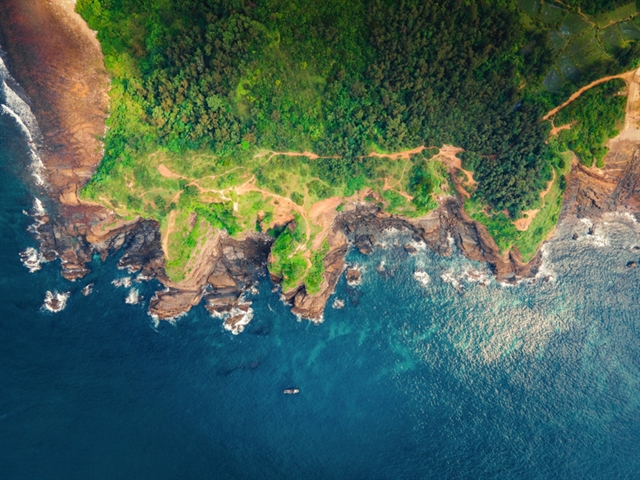
| The Cô Tô Sea in Quảng Ninh Province. Tourism is oriented towards green growth and a circular economy, maximising contributions to global sustainable development goals. — VNA/VNS Photo Vương Công Nam |
HÀ NỘI — Việt Nam’s tourism sector is set to shift from chasing visitor numbers to delivering higher value growth, with a new master plan aiming to modernise the industry, improve quality and boost its contribution to the wider economy.
The tourism sector will develop in a more professional and modern manner, delving deeper while enhancing quality and efficiency.
Rather than merely increasing visitor numbers, the entire industry is oriented towards boosting added value, making a greater contribution to gross domestic product (GDP) and simultaneously creating spillover momentum for other sectors and fields to grow.
They form key parts of the decision approving adjustments to the Tourism System Master Plan 2021-2030, with a vision to 2045, recently issued by the Ministry of Culture, Sports and Tourism.
The adjustment sets out new strategic directions to truly position tourism as a spearhead economic sector, playing a vital role in the national economy’s structure.
Notably, the decision emphasises the simultaneous development of international and domestic tourism. International tourism remains a key driver, alongside effectively tapping the vast and stable potential of the domestic market.
The master plan also focuses on strengthening linkages between tourism and other economic sectors, promoting regional and inter-regional connectivity to form tourism corridors linked to domestic and international economic corridors.
Tourism is oriented towards green growth and a circular economy, maximising contributions to global sustainable development goals. Environmental protection, climate change response as well as ensuring social security and order are overarching requirements throughout the development process.
On specific targets, by 2030 Việt Nam’s tourism sector aims to welcome 45-50 million international visitors, with an average annual growth rate of 16-19 per cent, and serve around 160 million domestic visitors. It is expected to directly contribute about 14 per cent to GDP and create around 12 million jobs, including four million direct jobs.
The accommodation system will expand significantly, targeting about 2.5 million rooms nationwide.
|
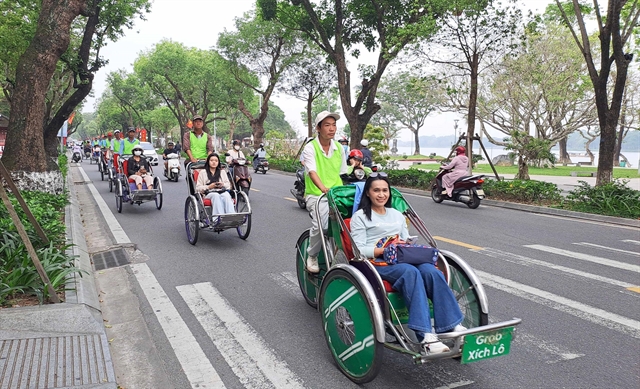
| Foreign tourists on a xích lô (cyclo) tour in Huế City. — VNA/VNS Photo |
Particularly notable are the environmental requirements. By 2030, 100 per cent of coastal tourism areas, accommodation facilities and services will cease using single-use plastics and hard-to-degrade nylon bags, progressively operating under a circular economy model.
Regarding development space, the master plan stresses tourism growth tied to major cities such as Hà Nội, HCM City, Đà Nẵng, Hải Phòng and Cần Thơ, along with specialised tourism cities including Hội An, Huế, Sa Pa, Hạ Long, Nha Trang, Đà Lạt, Phan Thiết and Phú Quốc. These areas will become hubs for high-quality tourism products linked to cultural industries and the night-time economy.
Regional and corridor clusters, including North-South and East-West tourism corridors, will connect domestic localities as well as regional countries to maximise tourism resource and infrastructure advantages while expanding cross-border tourism space.
In the development structure, certain tourism growth centres and poles are clearly defined. Đà Nẵng is positioned as the growth pole for the central coast and Central Highlands, while HCM City serves as the nucleus driving tourism in the southeast and Mekong Delta.
The master plan aims to form seven national tourism growth engine regions. Up to 2030, the focus will be on developing five key regions. After 2030, additional growth engines will expand to the northern midlands and mountainous areas and the northwest region.
Alongside this, ten major tourism centres linked to cities with standout advantages will be prioritised, emphasising product diversification, especially the night-time economy, high-end resorts and cultural experiences.
On resources, the private sector will lead tourism investment and development. The State budget will target critical tasks such as digital transformation, promotion, human resource training and environmental protection, creating a foundation and impetus to attract wider social investment.
Completing institutions and policies is set as an urgent requirement. Relevant laws such as the Tourism Law, Land Law and Investment Law will be studied for amendments and supplements to create a favourable legal framework for tourism development.
Special mechanisms for developing the night-time economy, business support, streamlined immigration procedures and expanded visa exemptions will also be promoted to enhance Việt Nam tourism’s international competitiveness. — VNS
Society
 Society
 Society
 Society
 Society
 Society
 Society
 Society
 Society
 Society
 Society
 Society
 Society
 Society
 Society