 Society
Education in the age of AI: ensuring people remain in control
1.
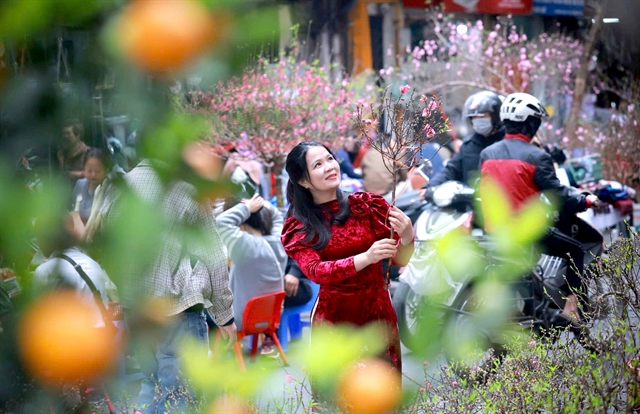 |
| A customer chooses a branch of peach blossam at the Hàng Lược traditional flower market in Hà Nội to prepare for Tết. — VNS Photo Trương Vị |
Thu Trang
HÀ NỘI — As we are living in an era of renewal, entering the digital age, with the world changing at a mindboggling pace, people gradually discard the old and replace it with new trends.
One of the most noticeable changes is the way people welcome Tết.
Along with shifts in history and national culture, the Lunar New Year festival in Hà Nội has undergone clear changes across different periods. Nevertheless, both the old and new Tết still share many core values in common.
Travel or stay home?
Nguyễn Đức Minh, a State employee who lives in Kim Mã Ward, said: “During recent years, instead of welcoming Tết in Hà Nội like before, we are determined to treat ourselves to a vacation after a year of hard work.
“My family is very relaxed. We do not insist on where we should celebrate Tết and want to experience new places. I think travelling during Tết is also an opportunity to feel the beauty of spring across Việt Nam.”
“For me, gathering with family while travelling at Tết remains the best feeling,” Minh said.
But this wasn't their routine around 20 years ago, when Minh and family would always enjoy the Lunar New Year festivities in Hà Nội.
“We listen to spring songs, sitting together watching the bánh chưng boil, or going to the market to enjoy the tastes of spring just before the new year,” he said.
Over the years, family customs for Tết in Minh's household changed considerably.
“But, realistically speaking, Tết will always be the ideal time to be with family or to meet friends after long periods of study or work,” Minh said.
"We still enjoy warm meals together and the affectionate wishes we exchange as we welcomed the new year under a sky lit by fireworks."
Lê Thu Hương, a mother, sticks with tradition and keeps the same customs during Tết.
“For me, Tết is a time to rest after a hard year," she said.
"It’s also a chance to spend more time on myself, family and friends. When a year ends, my family and I usually shop and tidy our house to welcome Tết.”
Hương says she still follows the same routines passed down from her mother and grandmother.
Tidying the house, making bánh chưng – traditional square sticky rice cakes, arranging flowers and setting out the five-fruit tray - activities of loved by her and her family.
From the second to the fifth day of Tết, Hương’s family often wear traditional áo dài and visits their relatives who live in Hà Nội or close to the capital.
“Wearing áo dài during the new year fills me with pride and deepens my love for Việt Nam’s traditional culture,” Hương said.
“Thus, during the holiday, we can reunite with our relatives at a meaningful moment for the new year.”
Shopping for Tết
Turning the clock back 40 years and a typical Tết in Hà Nội would see hustle and bustle markets, packed with people carefully choosing branches of peach blossom, seeking out the ones with the buds in abundance.
Back then, necessities for Tết could, and would, only ever be bought at the market.
These scenes gave Hà Nội its soul.
Families with wide-eyed excited children rushing through the stalls, anxious to complete their last-minute shopping in order to switch off for the holidays at home with the ones they love dearly.
Fast forward to today, the ways and methods people shop for Tết have undergone a dramatic facelift.
Lê Bích Ngọc, a university lecturer who lives in Hà Đông Ward, said: “Now people can sit at home and order online from e-commerce platforms or online stores, which will deliver the goods to their doors.”
This online method of shopping for Tết was not just about attractive prices, Ngọc said, but also a way to avoid the traffic jams that just seem to grow during the festive period.
Ngọc believes to beat the congestion, shopping online, and shopping early, is the best way forward.
Instead of battling to beat the rush on the roads, Ngọc spends her lunch break shopping from the comfort of her keyboard, inviting colleagues to pool orders to enjoy free delivery and extra discounts.
“Now virtually every supermarket website carries a full range and offers the same advantages as in-store, so I choose online shopping to keep things easy – no queues, no road congestion,” she explains.
But despite the digital revolution, the tradition of buying peach blossoms and kumquat trees, will always stay the same, with some splashing the cash on expensive flowers like orchids, ornamental tangerines, white apricots or wild peaches.
“Flowers and plants are an essential link between Hà Nội’s old and new Tết,” said Ngọc.
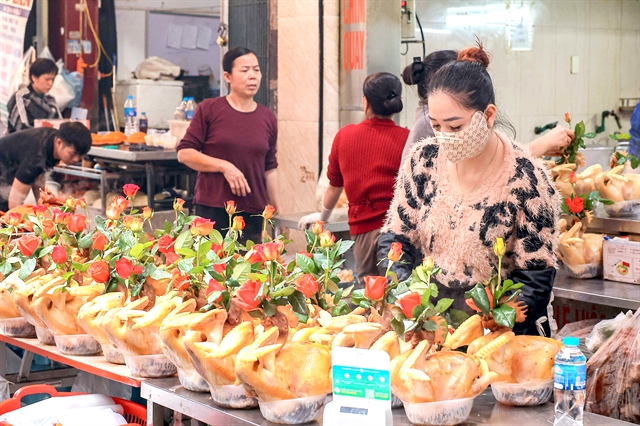 |
| Chickens with their wings tied in a flying pose and a rose in their beak are widely sold at Hàng Bè Market and are an indispensable item on the Hà Nội family's Tết offering tray. According to tradition, during Tết, every family prepares a respectful offering tray to present to their ancestors and the deities. — VNA/VNS Photo Hoàng Hiếu |
Nguyễn Thị Hoa, who lives in Đống Đa Ward, said that in recent years she has gradually shifted from preparing ancestral feasts herself to ordering from supermarket buffets.
“Previously, every time I prepared a feast for the ancestors, I had to wake up early to buy all the ingredients, then manage the cooking," Hoa said.
"The spread has to include a number of traditional dishes. Missing any dish felt like I’d failed to satisfy my ancestors.”
Now things are easier as Hoa orders the feast from a supermarket – lightening the load while preserving the sense of complete preparation.
“During the past years I’ve ordered our family feast from shops or supermarkets. Every dish is fresh and full of flavour, just like home cooking. The whole family is very satisfied,” Hoa said.
She believes that instead of focusing on packaging and aesthetics like before, consumers increasingly prioritise safety, quality and traceability.
Customers no longer stockpile as they did years ago, Hoa said, buying just enough, ensuring quality and suitability to real-life needs during the holiday period.
“This shift results from years of adjusting consumer behaviour," she said.
"In a time where information about food safety is widely considered, buyers are willing to spend selectively but won’t compromise on quality just to have a flashier presentation.”
You will still find traditional foods like preserved sweets, processed meats and dried goods, front and centre, but now with a slight twist.
“Hanoians now pay more attention to ingredient sources, products with transparent origin information, expiry dates, storage conditions, production processes and safety certifications, rather than just brand or packaging,” said Hoa.
The trend of 'lightweight Tết eating' is also evident as consumers opt for small, easy-to-store, easy-to-prepare packaged goods. This is seen as suitable for urban lifestyles and helps reduce post-Tết food waste.
“Publicly stating the origin, place of origin and production processes is no longer a peripheral factor. It has become a prerequisite to win over consumers,” Hoa added.
The Tết trend among residents today has its own distinct characteristics. They may enjoy modern-day Tết by focusing more on activities and experiences and less on the formal rituals of days gone by.
But, they still eagerly anticipate the holiday and have their own ways of showing respect for traditions, affection for grandparents, parents and loved ones.
As society changes, to align with modern trends, the people have developed differences in how they celebrate and experience Tết, sometimes in more contemporary ways.
But, this does not mean that traditional Tết activities are neglected by the younger generations. They simply perform them differently or add a modern twist, bringing fresh energy to the customs. — VNS
Society
 Society
 Society
 Society
 Society
 Society
 Society
 Society
 Society
 Society
 Society
 Society
 Society
 Society
 Society