 Society

Việt Nam, Russia step up cooperation in criminal sentence enforcement
1.
|
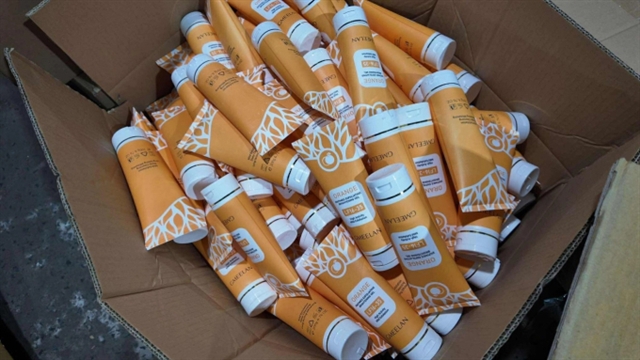
| A box of counterfeit cosmetics seized in 2025. — Photo courtesy of HCM City Police |
HCM CITY — HCM City authorities have ordered an urgent tightening of oversight on the production, sale and advertising of cosmetics, with a sharp focus on online platforms and livestream commerce, as Việt Nam’s fast-growing beauty market faces rising cases of counterfeit and unsafe products.
The directive was recently announced at a recent meeting of the city’s People’s Committee as officials reviewed socio-economic performance and set near-term priorities, highlighting growing concerns over risks linked to the boom in online retail.
The Department of Health was asigned to lead coordinated inspections with local authorities and related agencies to monitor manufacturing facilities and retailers, particularly those suspected of regulatory violations or distributing unverified products online.
Officials said they would also strengthen scrutiny of digital advertising. Working alongside the Department of Culture and Sports, regulators would monitor cosmetics promotions across online platforms to identify misleading claims or non-compliant marketing that could deceive consumers.
Meanwhile, the Department of Industry and Trade and market surveillance forces were asked to step up checks to detect cosmetics of unknown origin, counterfeit goods and substandard products.
Police have been tasked with investigating suspected cases of fake cosmetics production, fraudulent product registration dossiers and illegal distribution networks.
The crackdown comes as Việt Nam’s cosmetics and beauty sector posts rapid growth, driven largely by e-commerce.
Data from analytics platform Metric show that beauty products generated the highest gross merchandise value (GMV) across major platforms, including Shopee, TikTok Shop, Lazada and Tiki, over the past year.
In 2025, Vietnamese consumers spent nearly VNĐ74.5 trillion (US$3 billion) buying more than 560 million beauty products on these platforms, representing an annual increase of nearly 30 per cent in value and over 6 per cent in volume.
Authorities say the surge in online sales has been accompanied by a wave of large-scale violations.
Recent enforcement actions underscore the risks. Last October, HCM City police arrested three suspects accused of producing and trading counterfeit cosmetics and functional foods valued at billions of Vietnamese đồng.
Last month, police in Quảng Trị, Hà Nội and Ninh Bình dismantled a fake cosmetics ring selling products through Facebook and Shopee, seizing around 25 tonnes of goods.
Under the new directive, the Department of Industry and Trade must also work directly with e-commerce platforms to review listings and swiftly remove vendors found to be selling illegal or unsafe cosmetics. — VNS
Society
 Society
 Society
 Society
 Society
 Society
 Society
 Society
 Society
 Society
 Society
 Society
 Society
 Society
 Society