 Society
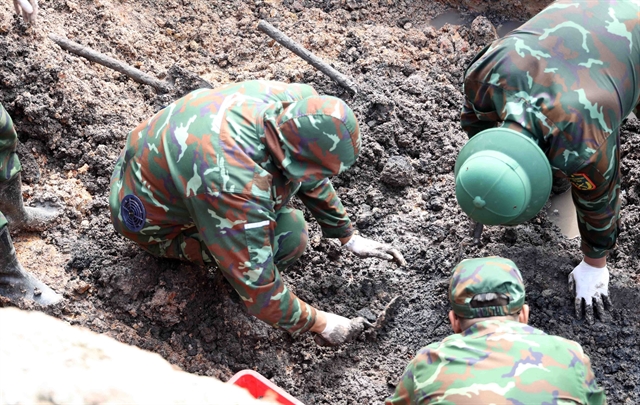
Military aircraft transports more samples of war martyrs’ remains to Hà Nội for DNA identification
1.
 |
| National flags and banners line National Highway 4D along Điện Biên Phủ Street in Lai Châu Province. — VNA/VNS Photos Quý Trung |
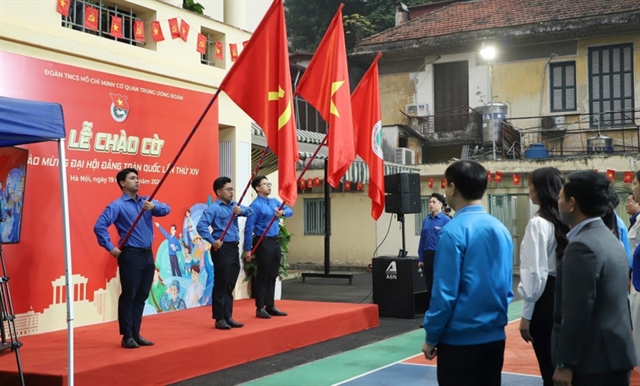
LAI CHÂU — As the 14th National Party Congress unfolds in Hà Nội, its influence is being felt far from conference halls and major cities, resonating deeply in Việt Nam’s remote borderlands.
In Lai Châu, a mountainous province in the north-west, the congress is reflected in everyday life in border villages, mountain schools and local communities, where people are following developments closely and quietly placing their hopes in decisions that may shape livelihoods and future prospects for years to come.
In Thu Lũm, the province’s most remote border commune, the congress is regarded as both an honour and a powerful political catalyst. Local Party members and residents say it has strengthened their resolve to intensify patriotic emulation movements, boost labour and production and firmly safeguard national border sovereignty.
Nguyễn Trường Giang, Secretary of the Thu Lũm Commune Party Committee, said the local Party organisation has prioritised communication so people clearly understand the significance of the 14th National Party Congress. More importantly, he said, this awareness has been translated into practical action. Emulation movements are closely tied to daily life, from restructuring crops and livestock to developing household and forest-based economies linked with ecological protection.
Alongside economic initiatives, residents are actively engaged in social movements promoting community cohesion, poverty reduction and public security. In this border area, particular emphasis is placed on the role of local people in protecting boundary lines and markers.
“Every person here is a living marker,” Giang said, underscoring the idea that residents form the first line of defence along the nation’s frontier.
A similar atmosphere can be felt in Phong Thổ, another border commune where the spirit of emulation inspired by the congress has been reflected in tangible achievements.
Lê Hữu Hồng, chairman of the Phong Thổ Commune People’s Committee, said local people have shown strong determination in production, making use of local advantages to develop agriculture, forestry and fisheries.
In 2025, the commune cultivated food crops across more than 1,750 hectares, producing over 8,000 tonnes of grain. It now has three farm-scale livestock facilities, while eight livestock and aquaculture products have earned three-star certification under the national One Commune One Product (OCOP) programme promoting local specialities.
Meanwhile, Khun Há Commune offers another perspective on how national politics filter down to village life. Cleaner roads, more orderly settlements and lush tea hills and ginseng gardens beneath forest canopies point to steady grassroots change.
In Lao Chải 1, a community-based tourism village in Khun Há, Mông residents have joined hands to sweep village paths, repair fences, tidy courtyards and rehang national flags in front of their homes. These simple acts are not only intended to welcome visitors but also reflect a shared sense of pride and responsibility during this important political period.
Cứ A Ly, a homestay owner in the village, said residents hope to create a more attractive image of their community so that both domestic and international tourists can learn about it. A more beautiful village would help draw more visitors and improve livelihoods for local families, he said.
Community-based tourism has emerged as one of Khun Há’s most promising development paths. Traditional stilt houses and ground-level homes of the Lự and Mông people cling to steep slopes, while festivals and customs rooted in local history offer visitors a rare glimpse into highland life. Many households have renovated their homes while carefully preserving traditional spaces, viewing tourism as both a livelihood and a responsibility to protect cultural identity.
 |
| Lê Lợi Boulevard, the main route leading to the provincial administrative centre, is brightly decorated. |
Vice Chairman of the Khun Há Commune People’s Committee Đỗ Trọng Thi said the locality has encouraged residents to improve village landscapes, develop tourism products and adopt simple digital tools such as QR codes to better serve visitors.
At the same time, expectations linked to the congress extend beyond tourism and agriculture. In communes such as Thu Lũm, residents hope for sustained attention from central and provincial authorities, particularly in infrastructure, livelihoods, education and healthcare. For families directly involved in border protection, adequate material and spiritual support is essential to help people remain on the land and stay committed to their communities over the long term.
Education is a recurring concern in mountainous areas.
Lê Duy Khánh, Deputy Headmaster of Lản Nhì Thàng Semi-Boarding Primary School for Ethnic Minority Pupils in Đoàn Kết Ward, said teachers hope the congress will result in more practical support for schools in disadvantaged areas. Better facilities, improved teaching conditions and greater attention to life skills and ethics education would make a real difference for both pupils and educators.
He also stressed the need for stronger policies to support teachers working in especially difficult conditions, from remuneration and working environments to opportunities for professional development. For ethnic minority pupils, continued investment in boarding and semi-boarding school models remains crucial to ensuring stable access to education.
Mùa A Trừ, Secretary of the Party Committee and Chairman of the People’s Council of Tân Phong Ward, described the congress as a milestone reflecting long-term thinking and national ambition. He expressed confidence that it would introduce practical policies aimed at improving living standards, particularly in regions that have long lagged behind in development.
The business community is watching closely as well. Nguyễn Duy Kiên, General Director of Thành Công Lai Châu Joint Stock Company in Tân Uyên Commune, said that after four decades of Đổi mới (Renewal), the private sector has become an increasingly important pillar of Việt Nam’s socialist-oriented market economy. Beyond contributing to growth and employment, private enterprises have also played a key role in innovation and social stability.
Yet Kiên said businesses still face obstacles, from administrative procedures to market access. He hopes the congress will accelerate institutional reform, creating a more transparent and predictable business environment. A shift from a management approach to a service approach within public administration, he said, would allow enterprises to invest with greater confidence, particularly in remote provinces such as Lai Châu.
From border posts to mountain villages, people are looking for policies that address everyday needs and ensure development reaches even the country’s most remote areas. — VNS
Society
 Society
 Society
 Society
 Society
 Society
 Society
 Society
 Society
 Society
 Society
 Society
 Society
 Society
 Society