 Politics & Law
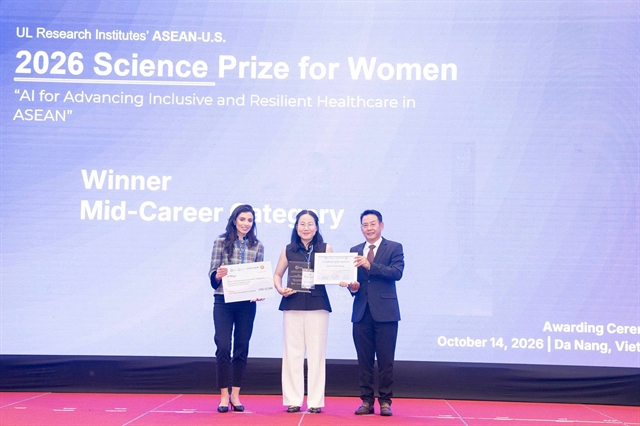
Vietnamese scientist wins ASEAN-US Science Prize for Women
1.
|
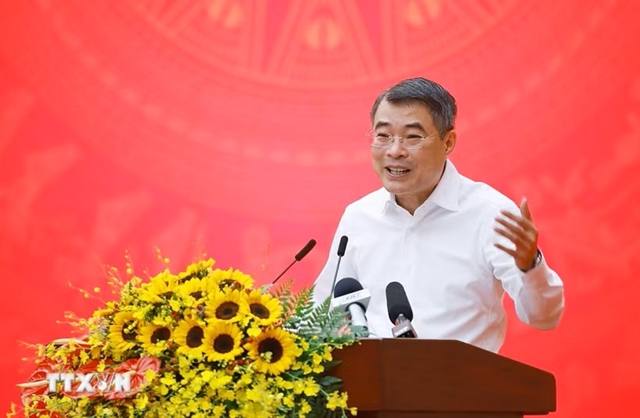
| Prime Minister Lê Minh Hưng chairs a working session with the Standing Board of the HCM City Party Committee on June 13. VNA/VNS Photo Dương Giang |
HCM CITY - Prime Minister Lê Minh Hưng has urged HCM City to further strengthen its role as Việt Nam’s leading growth engine, stressing that the city, which accounts for nearly one-quarter of the nation’s GDP, will play a decisive role in helping the country achieve its double-digit growth target.
Turning special mechanisms into development resources
Chairing a working session with the Standing Board of the HCM City Party Committee on June 13, PM Hưng commended the city’s Party organisation, authorities and residents for their efforts and achievements, which have contributed significantly to the country’s overall development.
The PM, however, pointed to several persistent bottlenecks, including growth that remains below expectations, slow public investment disbursement, underutilisation of special policy mechanisms, shortages of high-quality human resources and unresolved long-delayed projects. Traffic congestion, flooding, environmental pollution and weak infrastructure connectivity also continue to hamper development.
The PM urged the city to further streamline administrative procedures, reduce compliance costs for businesses and residents, and create a more open and competitive investment environment.
He called for a comprehensive review of the city’s 2026 economic growth scenarios, with a focus on identifying untapped potential across sectors and deploying effective measures to maximise growth in the remaining quarters of the year, particularly in manufacturing, pharmaceuticals, logistics, finance and banking, and other high-value-added industries.
Regarding public investment, he stressed the need to assign clear accountability to agencies, units and their leaders, impose strict penalties for delays caused by subjective factors, and proactively reallocate capital from slow-moving projects to those with stronger implementation capacity, aiming for a 100 per cent disbursement rate.
He also urged the city to make better use of the special mechanisms and policies approved by the National Assembly, turning them into concrete development resources and new growth-generating projects. He called for close coordination with ministries and sectors to accelerate the drafting of the Special Urban Law and submit it to the National Assembly as soon as possible.
The legislation, he said, presents a valuable opportunity for the city to propose breakthrough policies on finance, land, investment, infrastructure, science and technology and urban governance.
Accelerating key projects to achieve double-digit growth
PM Hưng instructed the city to speed up major infrastructure projects while preparing conditions for the launch of several large-scale developments, including Metro Line No. 2, the Cần Giờ sea bridge, the Thủ Thiêm–Long Thành railway, Thủ Thiêm 4 Bridge and other strategic infrastructure projects.
The city should take advantage of newly approved special mechanisms to resolve long-standing projects and accelerate the reorganisation and effective utilisation of surplus public land and assets, he said.
The government leader also called on Hồ Chí Minh City to remain at the forefront of implementing Politburo Resolution 57 on science, technology, innovation and digital transformation. He emphasised the importance of strengthening links among research institutes, universities and businesses to generate practical scientific and technological products and create new growth drivers.
He urged the city to prioritise strategic industries and emerging growth sectors such as artificial intelligence (AI), semiconductors, digital technology, logistics, the green economy and renewable energy. Big investment should be directed towards digital infrastructure, innovation ecosystems, attracting global technology corporations and fostering start-up development.
To improve the investment and business environment, the city should continue cutting administrative procedures, reducing costs and processing times for residents and businesses, while accelerating the development of integrated databases and data-sharing mechanisms between the public and private sectors. Strong support should also be provided to the private sector, start-ups and innovation activities.
He underscored the importance of establishing and operating the International Financial Centre in the city. He urged the city to work closely with ministries and sectors to develop internationally competitive mechanisms capable of attracting major financial institutions and investors, thereby mobilising long-term capital for development.
The government leader also called for the swift completion of a new master plan for HCM City with a long-term vision aligned with national and southeastern regional planning frameworks. Following the expansion of its development space, the city must capitalise on new advantages, strengthen its role as the growth nucleus of the southeastern region, and deepen connectivity with the Mekong Delta, the South Central Coast and the Central Highlands.
On housing policy, the PM said the city should take the lead in developing rental housing. He advocated a shift in policy thinking from supporting home ownership to ensuring access to housing. The city should propose mechanisms to mobilise both public and private resources for rental housing development, particularly housing linked to industrial parks and export processing zones, while launching large-scale projects capable of delivering tangible results in 2026.
Regarding the two-tier local administration model, he stressed the need to ensure smooth and efficient operations, clearly define responsibilities at each level, accelerate digital transformation, and improve data and digital infrastructure to enable seamless connectivity from central to grassroots levels. Administrative discipline should be strengthened while encouraging and protecting proactive and innovative officials acting in the public interest.
The city was also urged to continue reviewing decentralisation arrangements, reassess the quality of grassroots-level officials, and proactively reassign personnel who fail to meet job requirements to improve government effectiveness. The locality should continue proposing new policy mechanisms and promptly report emerging difficulties to the central authorities for coordinated solutions.
According to a report from the municipal Party Committee, the city’s economy continued to recover strongly in the first five months of 2026. First-quarter GRDP expanded by 8.27 per cent, the highest growth rate in around a decade. Industrial production rose 11 per cent, while total retail sales and consumer service revenue approached VNĐ800 trillion (about US$30.4 billion), up 12.8 per cent year-on-year.
Tourism and trade activities maintained growth momentum, while major economic balances remained stable. State budget revenue reached nearly VNĐ402 trillion in the first five months, equivalent to 50 per cent of the annual target and up 24.3 per cent from a year earlier. The investment climate continued to improve, with foreign direct investment (FDI) exceeding $6.6 billion, or around 60 per cent of the annual plan. Public investment disbursement reached 16.9 per cent of the assigned target.
The two-tier local administration model has operated largely smoothly and effectively following administrative restructuring. The city has simplified 570 administrative procedures, reducing processing times by 39.18 per cent and compliance costs by 22.49 per cent.
Implementation of Resolution 57 has also been pursued vigorously, producing early improvements in the city’s growth model. The city ranked second nationwide in the Provincial Innovation Index (PII) and remains home to Việt Nam’s largest innovation and start-up ecosystem.
Efforts to remove obstacles facing investment projects have delivered notable results, while social housing development has gained momentum. Numerous challenges related to investment procedures, land use and planning have been resolved, helping accelerate project implementation and gradually improve supply.
Progress was also recorded across culture, healthcare, education and training, while national defence and security remained firmly safeguarded. Law enforcement agencies achieved significant successes in combating crime, contributing to a safer environment for residents and international visitors. VNA/VNS
Politics & Law
 Politics & Law
 Politics & Law
 Politics & Law
 Politics & Law
 Politics & Law
 Politics & Law
 Politics & Law
 Politics & Law
 Politics & Law
 Politics & Law
 Politics & Law
 Politics & Law
 Politics & Law
 Politics & Law