 Life & Style
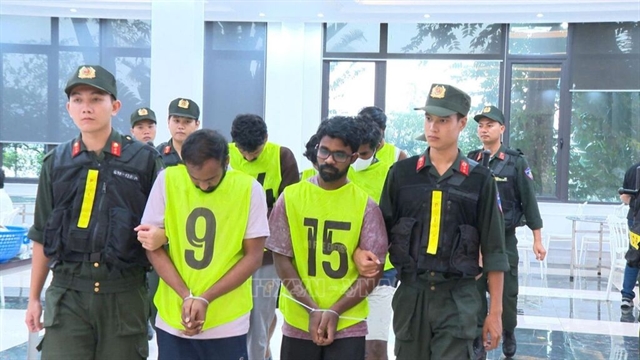
84 individuals investigated for transnational online frauds
1.
|
| Foreign tourists in Hà Nội. — Photo bvhttdl.gov.vn |
HÀ NỘI — Việt Nam ranks second among the ten economies displaying the fastest improvers in Travel & Tourism Development Index (TTDI) score gains between 2024 and 2026, according to a World Economic Forum's (WEF) report.
With a record 6.3 per cent increase, the country is among the 10 economies showing the most remarkable improvement in the ranking board of the WEF's leaders and fastest risers in global tourism.
Việt Nam stands only after Albania (7.3 per cent) and is followed by Laos (6.1 per cent), Qatar (6.0 per cent) and then Malaysia, Thailand, the Philippines, Morocco, Nepal and Sri Lanka.
Its tourism and travel core gain is significantly higher than the average increase of 2.1 per cent across the 110 surveyed economies – the fastest rate of improvement since 2019. This figure is driven by an increase in cultural resources, infrastructure, and tourism services, as well as airline connectivity and resources for business tourism, according to the report.

|
| Việt Nam stands only after Albania (7.3 per cent) and is followed by Laos (6.1 per cent), Qatar (6.0 per cent), Malaysia, Thailand, the Philippines, Morocco, Nepal and Sri Lanka. — Photo courtesy of WEF |
The WEF rankings show the country climbing from 59th place in 2024 to 52nd place in 2026 with a score of 4.15 points.
The TTDI assesses 110 economies based on the conditions and policies that support sustainable tourism development and resilience to shocks, including transport infrastructure, tourist services, safety, cultural and natural resources and sustainability-related factors.
This outcome unfolds against a backdrop of improving global conditions for tourism development, yet the sector also faces new challenges.
The WEF reports a decline in price competitiveness across three-quarters of the ranked economies for the 2024-2026 period; meanwhile, tourism investment has failed to keep pace with demand, and labour shortages and skills gaps continue to strain the industry's growth prospects.
The WEF also emphasises that rising tourism activity and visitor spending do not automatically translate into broader socio-economic benefits for local communities.
Issues resulting from overcrowding and large numbers of visitors gathering in one place still occur at high rates after the COVID pandemic, requiring destinations to focus not only on driving growth but also on actively managing and distributing tourism benefits more widely while mitigating pressure on communities, infrastructure, and natural resources.
The WEF's TTDI 2026 also lists Việt Nam and nine other countries among the ten largest non-high-income T&T economies by direct T&T GDP.
The nine others are China, India, Indonesia, Malaysia, Thailand, the Philippines, Türkiye, Mexico and Brazil. These economies account for more than 28 per cent of global direct travel and tourism GDP, with their share projected to rise to 35 per cent by 2035.
Between 2024 and 2026 alone, these economies improved at a faster rate than the remaining 100 economies on 15 of the 17 TTDI pillars.
The WEF said that since 2019, these economies have continued to strengthen their advantage in cultural resources while gradually narrowing the gap with advanced economies in terms of ICT readiness, safety and security, and air transport infrastructure.
This trend comes amid the Asia-Pacific region being the most improved region, with its average TTDI score increasing by 3.6 per cent between 2024 and 2026. Notably, seven out of the 10 most improved economies come from developing countries in South-East and South Asia.
Nonetheless, important gaps remain, the report pointed out.
Tourist services and infrastructure represent by far the largest difference between these economies and the top 20, underscoring the need for greater investment in accommodation, visitor services and supporting infrastructure.
Below-average scores for the Business Environment and Human Resources and Labour Market pillars reflect common challenges, including limited access to finance, regulatory barriers and gaps in workforce capabilities. Environmental sustainability remains another challenge, underlying a growing risk to these economies’ rich tourism-generating natural resources.
Economy and regional performance
The WEF's TTDI 2026 reveals tourism development conditions improved in almost every economy and advanced economies continue to set the pace.
Between 2024 and 2026, 92 per cent of economies improved their TTDI score, reflecting broad-based progress in both advanced and developing tourism markets. Gains were recorded across every region and income group.
High-income economies account for 19 of the top 20 TTDI performers, combining world-class tourism infrastructure, strong connectivity, major commercial centres and favourable enabling conditions. Japan leads the rankings, while European economies hold six of the top 10 positions, the index reported.
Asia-Pacific and emerging tourism economies are gaining ground: The 10 largest emerging tourism economies have improved their TTDI scores more than twice as fast as the top 20 since 2019. Asia-Pacific is driving much of this momentum, accounting for seven of the 10 fastest-improving performers, while Albania was the most improved economy overall between 2024 and 2026.
Many destinations are strengthening their tourism assets and connectivity, but those with deeper infrastructure, services and supporting systems continue to hold an advantage, it said.
The TTDI 2026 marks the 10th edition of the WEF's flagship travel and tourism benchmarking series, first launched in 2007 as the Travel & Tourism Competitiveness Index and relaunched in its current form in 2022. The index provides governments, businesses and destination leaders with comparable evidence to identify the conditions and policies that help travel and tourism grow sustainably, withstand disruption and support a country’s development. — VNS
Life & Style
 Life & Style
 Life & Style
 Life & Style
 Life & Style
 Life & Style
 Life & Style
 Life & Style
 Life & Style
 Life & Style
 Life & Style
 Life & Style
 Life & Style
 Life & Style
 Life & Style