 Life & Style
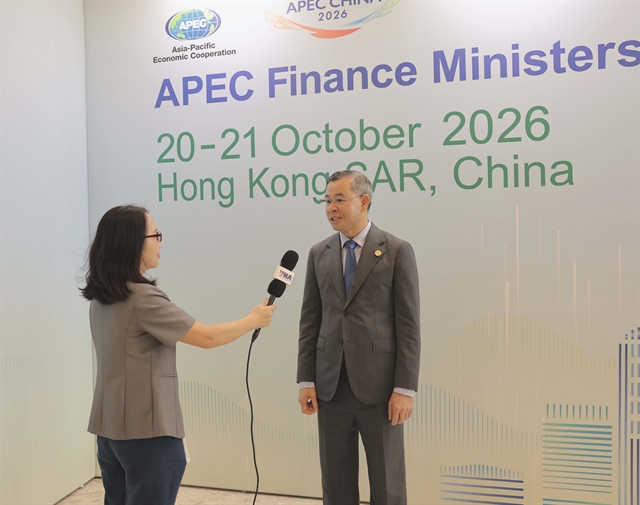
Việt Nam sets four priorities for APEC Finance Ministers’ Meeting in 2027
1.
.jpg)
|
| Participants pose for a group photo at the dialogue. — VNA/VNS Photos |
HÀ NỘI — The 2026 Asia-Pacific Regional Dialogue on Heritage and Authenticity closed in Hà Nội on Wednesday after three days of serious, open and productive discussions.
The event was co-hosted by the Việt Nam National Commission for UNESCO, the Ministry of Culture, Sports and Tourism, the Hà Nội and Ninh Bình People's Committees, the UNESCO World Heritage Centre and the UNESCO Office in Hà Nội. The high-level policy forum brought together heritage experts and managers from the region and beyond to discuss how to conserve and uphold heritage values.
At the closing session, participants adopted the Hà Nội Document on Heritage and Authenticity, presented as the Asia-Pacific region's practical contribution to the global dialogue. It builds on the 1964 Venice Charter, the 1994 Nara Document and the 2025 Nairobi Outcome Document.
The Hà Nội Document draws on the experience of leading regional experts and managers and is intended to make the World Heritage List more representative, balanced and credible.
It argues that Asia-Pacific heritage is diverse and dynamic, and change and adaptation do not necessarily erode authenticity. Instead, they can help preserve its authenticity, allowing heritage to survive and pass across generations.
The document also affirms that local people, artisans and communities hold key knowledge and should be directly involved in identifying, assessing and safeguarding authenticity. It makes specific recommendations on coordination under the 1972 World Heritage Convention, aimed at states parties, the World Heritage Committee, advisory bodies and the UNESCO World Heritage Centre.
Hoàng Đạo Cương, Deputy Minister of Culture, Sports and Tourism and Vice Chairman of the Việt Nam National Commission for UNESCO, thanked UNESCO, the World Heritage Centre, advisory bodies and participants for expert input which was central to the event's success.
Cương outlined three priorities for Việt Nam's work with UNESCO and states parties. Accordingly, Việt Nam will keep the dialogue on authenticity going as new challenges emerge; expand experience sharing and comparative research, along with training for managers, experts and communities; and gradually turn research and dialogue outcomes into policies and tools for heritage protection in line with the 1972 Convention and its Operational Guidelines.
UNESCO Representative to Việt Nam Jonathan Baker highlighted the roundtable with artisans, cultural practitioners from local communities and young people, saying they are an important component of the Hà Nội Document because they brought community voices into the process.
Baker also praised Việt Nam 's strategic vision of putting cultural development at the centre of its national agenda, citing the Politburo's Resolution 80-NQ/TW, dated January 7, 2026. He credited the country with a leading role in proposing and advocating a United Nations resolution on the International Decade of Culture for Sustainable Development.
Hosting the dialogue further shows Việt Nam's pioneering role, sense of responsibility and ability to practically contribute to global cultural and heritage policy, he said.
.jpg)
|
| Director of the UNESCO World Heritage Centre Lazare Eloundou Assomo speaks at the dialogue. |
Lazare Eloundou Assomo, Director of the UNESCO World Heritage Centre, said the Hà Nội Document offers a clear perspective and a strong argument with a distinct Asia-Pacific imprint. He pledged that the centre will work with advisory bodies to carry the outcomes into international discussions.
Assomo called Việt Nam a "particularly meaningful destination" for the dialogue, given that culture is a core part of its socio-economic development strategy.
The outcomes are expected to be taken up further at the 49th session of the World Heritage Committee in Istanbul in 2027.
After the closing session, participants headed to Ninh Bình for field trips at Tam Chúc Pagoda and the Tràng An Landscape Complex on Wednesday and Thursday. They plan to discuss the links between natural and cultural values, the role of communities, and requirements for heritage management and tourism development. — VNA/VNS
Life & Style
 Life & Style
 Life & Style
 Life & Style
 Life & Style
 Life & Style
 Life & Style
 Life & Style
 Life & Style
 Life & Style
 Life & Style
 Life & Style
 Life & Style
 Life & Style
 Life & Style