 Life & Style

Education in the age of AI: ensuring people remain in control
1.
|
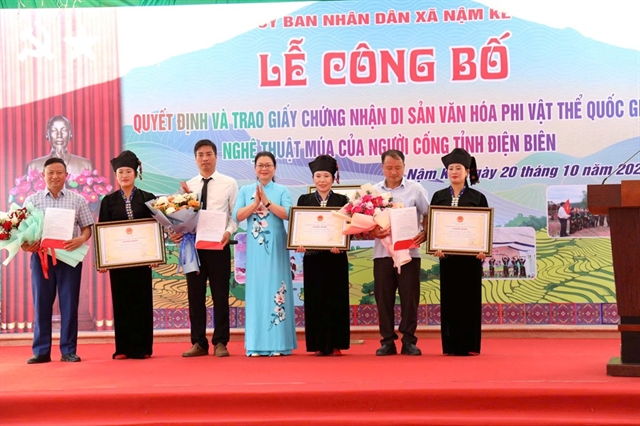
| Local authorities present the National Intangible Cultural Heritage certificate for the Cống ethnic group's traditional dance art during the ceremony in Điện Biên Province. — Photos baovanhoa.vn |
ĐIỆN BIÊN — The traditional dance art of the Cống ethnic minority group has been officially inducted into Việt Nam’s National List of Intangible Cultural Heritage. The milestone not only recognises the profound cultural identity of one of the country’s ethnic groups but also opens new avenues for community-based tourism and sustainable development in the remote borderlands.
The announcement and certification ceremony took place on October 20 in Nậm Kè Commune, in the northern mountainous province of Điện Biên. The milestone follows Decision No. 430/QĐ-BVHTTDL, issued by the Minister of Culture, Sports, and Tourism, which recognises the cultural values meticulously preserved, nurtured, and passed down through generations by the Cống community.
The living archive of an ancient identity
For the Cống people, traditional dance is far more than mere folk entertainment or a stage performance. It serves as a living archive of community memories, mirroring their spiritual world, agricultural cycles, and centuries-old customs. Through every rhythmic step, subtle hand gesture, and traditional melody, generations of Cống people have expressed their deepest emotions, consolidated community solidarity, and passed down ancestral wisdom.
In Điện Biên Province, this distinctive heritage remains deeply woven into the daily lives of communities residing across the communes of Nậm Kè, Mường Chà, and Thanh Yên. Keeping these dances alive through decades of historical turbulence has required the relentless, quiet dedication of village elders, master artisans, and countless local residents who refused to let their identity fade.
|
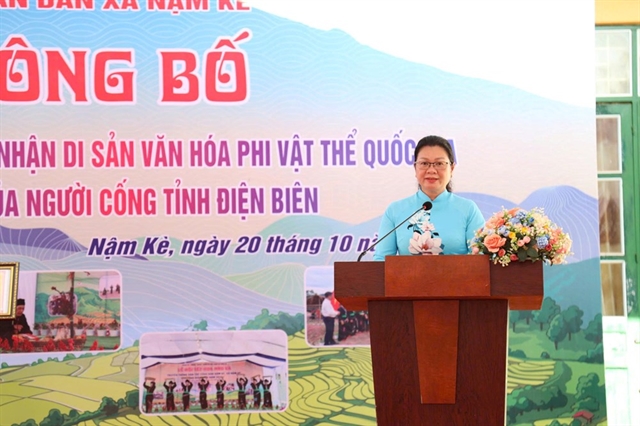
| Nguyễn Thị Thanh Chuyên, Deputy Director of the Điện Biên Department of Culture, Sports, and Tourism, outlines the province's long-term heritage conservation strategy at the announcement and certification ceremony. |
Speaking at the ceremony, Nguyễn Thị Thanh Chuyên, Deputy Director of the Điện Biên Department of Culture, Sports, and Tourism, emphasised that this national recognition is both a source of immense pride and a profound responsibility for local authorities, cultural experts, and the community itself.
"Securing a place on the National Heritage List is just the first step," Chuyên stated. "The real challenge lies in keeping the heritage alive and relevant."
She urged local authorities in regions with Cống populations to design concrete, practical conservation strategies tailored to the unique economic realities of each area. Key recommendations included maintaining and funding folk culture clubs, accelerating the digitalisation and documentation of oral histories, and creating favourable environments where older artisans can actively teach local youth.
Furthermore, Chuyên emphasised that preservation efforts should not be static. Instead, they must be seamlessly integrated into public school programmes, regular community activities, and responsibly managed tourism models. This approach ensures that indigenous people remain the primary guardians of their own culture while directly benefiting financially and socially from its promotion.
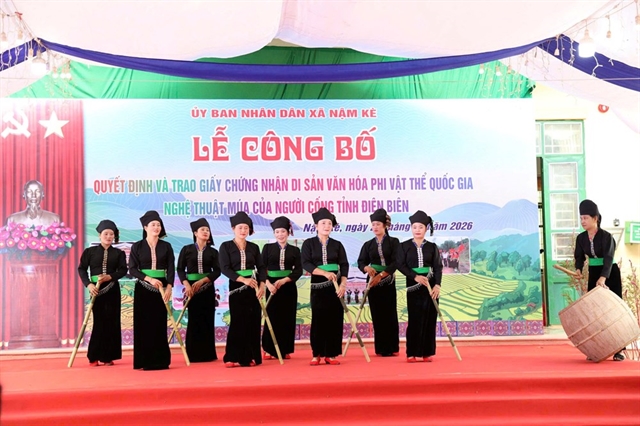
|
| The traditional dances of the Cống people serve as a powerful tool to foster community solidarity and preserve their ancestral identity in remote borderlands. |
Bridges to the future
Nguyễn Tiến Thành, Chairman of the Nậm Kè Commune People's Committee, noted that Nậm Kè is a mountainous, border region where multiple ethnic minorities coexist, creating a vibrant and diverse cultural tapestry. He redistributed emphasis to the fact that national recognition must catalyse practical, local action.
"A heritage can only survive long-term when it is genuinely cherished, practised, and celebrated daily by the community," Thành said. "The joy of state recognition must translate into everyday efforts – giving artisans the resources to teach and inspiring the younger generation to learn, so that these ancient dances continue to echo through our valleys."
Moving forward, the Nậm Kè Commune People's Committee plans to collaborate with specialised cultural bodies to launch broader public awareness campaigns, systematically record traditional dances, and establish specialised workshops. The commune also aims to encourage schools and families to prioritise cultural transmission, linking heritage preservation with eco-friendly community tourism that respects native customs and safeguards local interests.
With this new inscription, Điện Biên Province now boasts 24 national intangible cultural heritages. The province also recognises 41 Meritorious Artisans in the field of intangible heritage, including four distinguished individuals from the Cống ethnic group. Additionally, the region holds two prestigious UNESCO-recognised heritages: the Xòe Thái dance and the Then practice of the Tày, Nùng, and Thái ethnic groups.
The official recognition of the Cống traditional dance marks a crucial turning point for Điện Biên’s cultural landscape. By fostering ethnic pride and bridging generational divides, the designation ensures that Việt Nam's diverse cultural fabric remains intact, turning ancestral heritage into a powerful engine for sustainable tourism and rural revitalisation. — VNS
Life & Style
 Life & Style
 Life & Style
 Life & Style
 Life & Style
 Life & Style
 Life & Style
 Life & Style
 Life & Style
 Life & Style
 Life & Style
 Life & Style
 Life & Style
 Life & Style
 Life & Style