 Life & Style

Joint replacement: AI moves towards more personalised treatment
1.
|
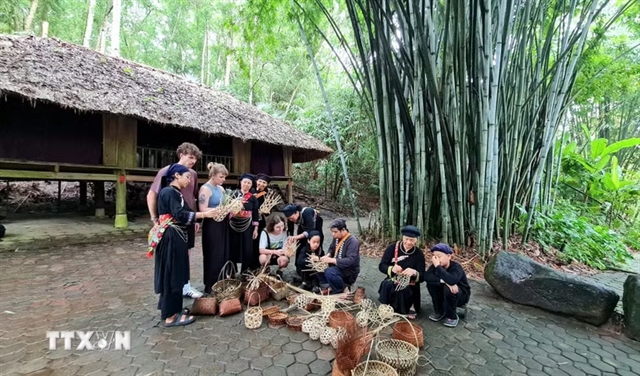
| Foreign tourists visit Thái Hải Village in Tân Cương Commune. Photo VNA/VNS |
THÁI NGUYÊN — The northern province of Thái Nguyên is promoting green and sustainable tourism by developing local cultural experiences, improving quality of tourism products and expanding international markets, towards becoming an attractive destination for foreign visitors.
Green tea hills and unique local experiences
In the Tân Cương tea-growing area, visitors can explore lush tea hills, enjoy fresh air, and experience traditional tea production. For Rudige, a German tourist, a visit to the Tiên Yên Tea and Community Tourism Cooperative offers more than scenic views, allowing him to learn about the traditional craft firsthand.
Joining local residents in picking young tea buds and learning how to roast and roll the leaves by hand, he gained a deeper appreciation of the skill and care involved in each stage of production. Making tea himself and tasting the finished product in Thái Nguyên, known as Việt Nam’s tea capital, offered an experience beyond simply drinking tea.
“I really enjoy the green surroundings and fresh air here. Taking part in every stage of tea production helped me understand the meticulous work involved in this traditional craft,” he said.
For Xiuliu, a Chinese visitor, who spent two days at Tiên Yên, explored the local tea culture through food and outdoor activities. She sampled dishes made with fresh tea buds and green tea peanut candy, and cycled through the tea hills early in the morning.
“I am impressed by the green tea hills and the simple lifestyle of local people. Tea is not just a drink but also part of local cuisine and culture. These hands-on experiences make the trip more memorable,” she said.
According to Bùi Trọng Đại, Director of the cooperative, his family has developed more than three hectares of land into a tourism site featuring tea gardens, ponds, wooden bridges, resting huts, experience areas and six accommodation rooms. The cooperative has also worked with local households, bringing its total tea-growing area to 30 hectares, including five hectares certified as organic and cultivated under VietGAP standards. It welcomes around 10,000 visitors annually, about 30 per cent of them international tourists.
While Tiên Yên showcases tea culture, Thái Hải Village in Tân Cương Commune offers visitors an insight into Tày ethnic traditions through its Tày ethnic cultural tourism product, which has received a national five-star OCOP rating. Traditional stilt houses, costumes, cuisine, rituals and folk songs remain integral to community life.
Lê Thị Nga, deputy head of the village, said preserving traditional culture is key to attracting tourists, particularly international visitors, and promoting Thái Nguyên’s people and cultural identity.
Ba Bể Lake is another attraction, drawing visitors with its pristine landscapes and diverse ecosystem. Local homestays offer boat trips, traditional cuisine, cultural performances and campfires. Since the beginning of 2026, the destination has welcomed nearly 35,000 visitors, including more than 4,000 international arrivals.
These nature- and culture-based tourism models offer opportunities for sustainable growth while highlighting the importance of environmental protection and cultural preservation.
Improving competitiveness and expanding international markets
Thái Nguyên boasts diverse tourism resources, ranging from natural landscapes and ethnic cultures to revolutionary and historical heritage, traditional craft villages, agriculture, and cuisine.
The locality welcomed more than 7.3 million visitors in 2025, including around 292,000 foreigners. In the first nine months of 2026, it received an estimated 7.3 million visitors, up 15.4 per cent year-on-year. International arrivals exceeded 301,000, rising 24.8 per cent, while domestic visitors topped 7 million, up 15 per cent. Tourism revenue reached nearly VNĐ10.5 trillion (US$405.8 million), an increase of 61.7 per cent.
Nguyễn Mỹ Linh, Deputy Director of the provincial Department of Culture, Sports and Tourism, said Thái Nguyên aims to build a green, sustainable, innovative and competitive tourism sector, with culture as its foundation, people at its centre, businesses as a driving force and local communities as key participants.
The province is prioritising tea culture, revolutionary and historical heritage, lakes, forests, mountains and ethnic identities, while diversifying its offerings to include ecological, resort, cultural, community-based, agricultural, MICE, sports and nature-based tourism.
Other priorities include digital transformation, improved service quality and stronger links with major tourism hubs. The province is also modernising promotion activities to suit individual markets and strengthening cooperation with travel companies and domestic and international partners to develop tours and attract more visitors.
By 2030, Thái Nguyên aims to welcome around 12 million visitors, including 1 million international arrivals, generate approximately VNĐ25 trillion in tourism revenue and create jobs for about 10,000 workers.
Its key markets are the Republic of Korea, Japan, China, Europe and ASEAN, with plans to expand into India, Australia, the US and Canada. The province is targeting visitors interested in culture, nature, green tourism and MICE. — VNA/VNS
Life & Style
 Life & Style
 Life & Style
 Life & Style
 Life & Style
 Life & Style
 Life & Style
 Life & Style
 Life & Style
 Life & Style
 Life & Style
 Life & Style
 Life & Style
 Life & Style
 Life & Style
.jpg)