 Life & Style

Liechtenstein PM’s Việt Nam visit a success on every front: Deputy FM
1.

|
| Visitors pose for souvenir photos with Lô Lô ethnic children in Lô Lô Chải Village, Lũng Cú Commune, Tuyên Quang Province. — VNA/VNS Photo Minh Tâm |
TUYÊN QUANG — Nestled beneath the rugged peaks of Việt Nam’s northernmost highlands, Lô Lô Chải is a village of earthen-walled houses, yin-yang tiled roofs and stone fences that preserve the distinctive character of the Lô Lô ethnic community. Its traditional architecture, costumes and customs offer visitors a glimpse of a way of life shaped by generations of cultural inheritance.
In 2025, the village was recognised by UN Tourism as one of the Best Tourism Villages, bringing international attention to its community-based tourism. The recognition also highlights a challenge facing Lô Lô Chải as tourism grows: how to embrace modern technology without losing the qualities that make it special.
For local residents, digital transformation is not simply about promoting homestays online or making payments more convenient. It is also about ensuring that tourism development improves livelihoods while keeping the village’s cultural identity intact.
Modern comforts, enduring traditions

|
| A young Lô Lô woman in traditional dress reflects the cultural identity the community seeks to preserve as tourism creates new opportunities for the village. — VNA/VNS Photo Minh Tâm |
Sình Dỉ Gai, head of Lô Lô Chải Village and a member of its community digital technology team, believes that improving living standards need not mean sacrificing cultural identity.
Households can improve hygiene by reorganising livestock areas and make homestays more comfortable with better bedding, bathrooms and hot water. Smartphones can help owners manage bookings, communicate with guests and promote their services online.
Traditional architecture and cultural practices, however, require a different approach. Earthen houses, tiled roofs, stone fences, the Lô Lô language, traditional costumes and important rituals remain integral to the village’s identity.
“We should embrace whatever makes life cleaner and more convenient. But if we lose our language, costumes and rituals, or demolish all our earthen houses, what would visitors still come to Lô Lô Chải to see?” Gai said.
His concern reflects a wider challenge facing community-based tourism. As popular destinations gain attention on social media, local businesses may imitate fashionable designs and services, gradually making places look alike.
For Lô Lô Chải, whose appeal rests on its distinctive cultural landscape, protecting that difference is essential. The goal is not to freeze the village in the past, but to balance residents’ aspirations for modern comforts with the preservation of their architectural and cultural heritage.
Digital tools serve a living heritage
The Politburo’s Resolution No. 57-NQ/TW identifies science and technology, innovation and digital transformation as key drivers of national development. In Lô Lô Chải, this direction offers opportunities to improve tourism management, expand livelihoods and introduce local culture to wider audiences.
Digital platforms can help households manage bookings, communicate with visitors and reach potential customers beyond the region. They can also support cultural preservation by documenting traditional crafts, recording the stories of older residents and explaining the significance of local architecture, costumes, food and rituals through photographs, audio and video.
For younger residents, these tools offer ways to share their heritage with domestic and international audiences. They can help record elders’ knowledge, introduce traditional practices in different languages and make cultural information accessible to visitors before they arrive.
Yet technology alone cannot keep traditions alive. A video may preserve the appearance of a ritual, but its meaning depends on the people who continue to practise it and understand its place in community life.
Gai believes residents must have a say in how their culture is recorded and presented. Without their participation, traditions risk being reduced to attractive images for online promotion, stripped of the context that gives them meaning.
This is where Resolution No. 57 becomes relevant to heritage conservation: technology should strengthen communities’ ability to protect and develop their own cultural resources, rather than replace their knowledge or control over their stories.
Making conservation sustainable
|
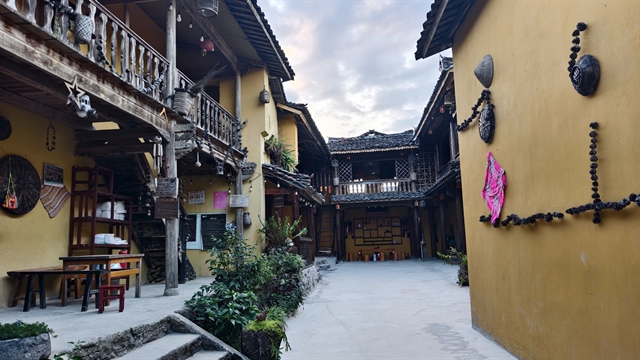
| Traditional earthen houses with yin-yang tiled roofs preserve the distinctive architectural character of Lô Lô Chải, an internationally recognised community-based tourism destination. — VNA/VNS Photo Huy Thông |
Preserving heritage also requires an economic foundation. Traditional houses remain family homes, and residents need comfortable living conditions and reliable incomes. If maintaining old buildings and cultural practices brings additional costs without tangible benefits, conservation becomes difficult to sustain.
Tourism can help bridge this gap by creating opportunities for families, artisans and cultural practitioners to earn income from the heritage they protect. Homestays, local food, traditional crafts and cultural experiences can all contribute to livelihoods while giving visitors a deeper connection with village life.
However, commercial interests must not dictate every aspect of local culture. Rituals should not be performed solely to fit tour schedules, and residents should retain the right to decide which traditions can be shared with visitors and how.
Lô Lô Chải’s competitive advantage lies not simply in the number of rooms it offers, but in the experience of entering a living Lô Lô village. If traditional houses are replaced by buildings resembling those elsewhere, or cultural practices become performances staged only for tourists, the village risks losing what distinguishes it.
When tourism generates tangible benefits for residents who maintain traditional houses, practise crafts and pass on their knowledge, heritage conservation becomes a more viable long-term choice.
Keeping the community at the centre
For Lô Lô Chải, the next stage of digital transformation is not measured simply by the number of applications villagers use. More important is whether technology helps residents manage tourism, communicate with visitors and make informed decisions about their cultural future.
Young people can bridge traditional knowledge and contemporary communication, presenting their community to the world without reducing its culture to stereotypes. Digital platforms can expand the reach of local stories, but the people whose lives give those stories meaning must remain their primary storytellers.
Lô Lô Chải has evolved from a little-known highland settlement into an internationally recognised tourism destination. Its next challenge is to engage with digital markets while preserving the traditions and distinctive landscape that draw visitors in the first place.
Technology can improve business operations and promote local culture, but sustainable development ultimately depends on the community’s ability to protect its heritage and benefit from it.
When digital transformation strengthens that ability, Lô Lô Chải can welcome the future without losing its soul. — VNS
Life & Style
 Life & Style
 Life & Style
 Life & Style
 Life & Style
 Life & Style
 Life & Style
 Life & Style
 Life & Style
 Life & Style
 Life & Style
 Life & Style
 Life & Style
 Life & Style
 Life & Style