 Life & Style

Vietnamese community in Macao strengthens solidarity, contributes to homeland
1.
|
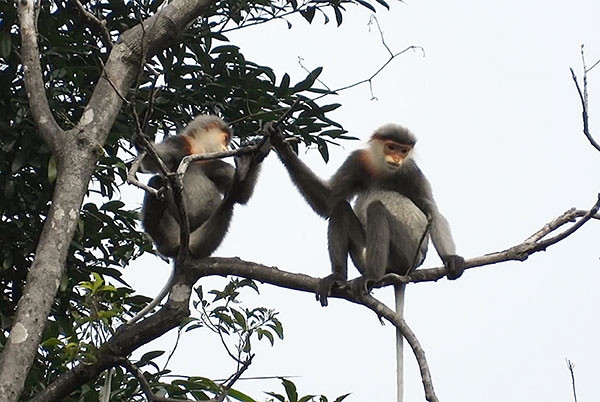
| Two grey-shanked douc langurs in a forest in Tam Mỹ Commune, Đà Nẵng. Those interested in wildlife photography could be guided to suitable observation spots to photograph the animals in the wild without disturbing their natural behaviour. — VNA/VNS Photo |
ĐÀ NẴNG — Tam Mỹ Commune is looking to develop tourism alongside habitat restoration, with activities including wildlife observation, photography tours and scientific research tourism centred on the grey-shanked douc langur.
Located at the southernmost tip of Đà Nẵng City, Tam Mỹ has set its sights on developing a green economy, sustainable agriculture and the effective use of local resources.
Among these resources, the grey-shanked douc langur, an endemic primate species found in Việt Nam, is regarded as a valuable ecological asset.
Tam Mỹ hopes to make habitat restoration a central part of its sustainable tourism development.
After spending a day observing grey-shanked douc langurs in the wild at Hòn Dồ Mountain in Tam Mỹ Commune, visitor Huỳnh Ngọc Kỳ from HCM City said the development of ecotourism products linked to habitat restoration for the species would be both meaningful and practical.
According to Kỳ, visitors could take part in tree planting to restore and expand the langurs' habitat. Such activities would combine experiential tourism with environmental responsibility.
"The area adjoining the Hòn Dồ, Dương Bông, Hòn Ông and Dương Bản Lầu mountain ranges serves as an extended habitat for the grey-shanked douc langur population.
Many visitors want to take part in activities to restore and improve the quality of the habitat by planting perennial trees that can provide food and shelter for the langurs while also creating landscapes for tourism.
"This is a suitable approach to biodiversity conservation while creating sustainable livelihoods for local communities," Kỳ said.
Unlocking potential
Võ Ngọc Danh, owner of Dung Danh Ecotourism Area in Tam Mỹ, said that, as increasing numbers of visitors from different localities had come to observe the grey-shanked douc langurs living in the mountain ranges, he had developed the more-than-10,000sq.m Dung Danh Ecotourism Area at the foot of the mountains.
The site serves as a link between tourism products in the lowlands, coastal and island areas and the southwestern part of Đà Nẵng.
"On average, hundreds of visitors come each day, while the number can reach thousands during holidays and Lunar New Year. They visit for sightseeing and relaxation, combined with observing grey-shanked douc langurs in the wild in the early morning or late afternoon,” Danh said.
“The grey-shanked douc langurs in Tam Mỹ are a particularly important link in the natural forest ecosystem that the community is working to protect and sustainably use. Therefore, developing tourism alongside the restoration and expansion of habitats for flora and fauna, especially the grey-shanked douc langur, is a practical approach. If each visitor planted a perennial tree, the natural habitat of this rare primate could gradually be expanded," he added.
Chairman of the Tam Mỹ Commune People's Committee Nguyễn Quang Thạnh said the locality was home to a population of around 75 individuals, alongside a forest ecosystem of high biodiversity value.
Human activities related to forest exploitation had gradually reduced the langurs' habitat, affecting the space available for the species to survive.
Developing ecotourism products linked to the restoration and expansion of the grey-shanked douc langur's habitat had therefore been identified as a suitable direction, contributing both to nature conservation and local livelihoods.
In 2026, the locality plans to provide partial funding and seedlings to support residents with more than 30ha of arable land surrounding the mountain ranges inhabited by grey-shanked douc langurs in converting from short-cycle acacia plantations to perennial trees.
At the same time, Tam Mỹ aims to develop accommodation, hospitality services, and guiding services for ecotourism and cultural tourism, linking tourism with habitat restoration.
The approach is expected to diversify ecotourism, cultural and community-based tourism products while contributing to the long-term conservation of the rare primate species.
Wildlife encounters
After spending several days observing grey-shanked douc langurs in their natural habitat, photographer Từ Kim Hưng proposed developing wildlife photography tourism centred on the species, combined with habitat restoration and improvement in the Hòn Dồ, Dương Bông, Hòn Ông and Dương Bản Lầu mountain areas and the population's extended habitat.
Under the proposal, visitors and those interested in nature and wildlife photography would be guided to suitable observation spots to photograph the grey-shanked douc langurs in the wild without disturbing their natural behaviour.
Lê Văn Minh, a member of the community's voluntary grey-shanked douc langur protection team and a tour guide, said the natural landscape where the primates lived remained relatively intact.
Tam Mỹ also has considerable forest areas and valuable natural landscapes, creating favourable conditions for biodiversity conservation and nature-based tourism.
|
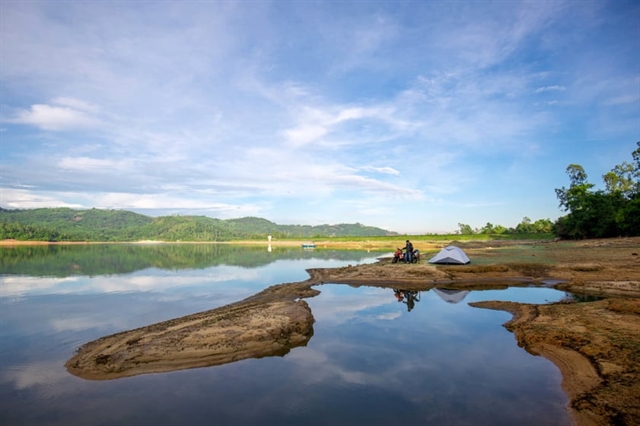
| Phú Ninh Lake and other scenic spots could be developed into a network of ecotourism routes linked to habitat restoration, making them valuable assets for green tourism. — Photo courtesy of vinwonders.com |
Besides areas inhabited by grey-shanked douc langurs, the locality is home to a number of attractions, including Phú Ninh Lake, Đồng Nhơn Lake, Chúa Mountain, the Trầu River and several scenic streams.
If these destinations were connected and developed into ecotourism routes linked to habitat restoration, they could become valuable assets for green tourism.
According to Phan Xuân Thanh, vice chairman of the Đà Nẵng Tourism Association, ecotourism is a form of tourism based on nature and local culture and organised responsibly towards the environment.
It contributes to conserving natural resources, maintaining biodiversity and bringing benefits to local communities.
Tourism linked to habitat restoration is a way of protecting and making sustainable use of natural resources. To develop such products, small-group tours should be organised, with strict compliance with regulations on observation distances, access times and visitor behaviour.
Impacts on the species and its habitat should be minimised, ensuring that the natural behaviour of the grey-shanked douc langurs is not disturbed.
Community benefits
Working with local authorities to develop tourism products linked to habitat restoration, Trần Hữu Vỹ, director of GreenViet, said the organisation would call on businesses and donors to provide financial support and work with authorities and communities to prepare perennial tree species suitable for local weather and soil conditions, allowing visitors to take part in tree planting as part of their experience.
According to Vỹ, as the potential of ecotourism was gradually being unlocked, developing tourism linked to habitat restoration would not only contribute to the effective conservation of the grey-shanked douc langur, but also help maintain ecological balance, diversify livelihoods for local communities and create additional high-quality tourism products.
According to Chairman of the Tam Mỹ Commune People's Committee Nguyễn Quang Thạnh, following the merger of administrative units, the commune is now located in an area with convenient connections to economic and tourism centres and well-known destinations in central Việt Nam.
This provides favourable conditions for attracting visitors, researchers and organisations interested in nature conservation.
In particular, community-based tourism linked to habitat restoration for the rare grey-shanked douc langur population is a new but promising direction that is receiving strong support from the local community.
According to experts, habitat-restoration tourism in areas inhabited by grey-shanked douc langurs holds considerable potential.
All tourism activities linked to habitat restoration should follow the principle of avoiding negative impacts on the species' natural habitat, behaviour and survival.
Local residents can participate by providing services such as local tour guides, homestays, farmstays, food and beverage services, transport and assistance for visitors seeking to experience local culture.
Such activities can help diversify livelihoods, increase community incomes and create new tourism products, enabling tourism linked to habitat restoration to become a sustainable reality. — VNS
Life & Style
 Life & Style
 Life & Style
 Life & Style
 Life & Style
.jpg) Life & Style
 Life & Style
 Life & Style
 Life & Style
 Life & Style
 Life & Style
 Life & Style
 Life & Style
 Life & Style
 Life & Style