 Life & Style
Ministry eyes data architecture as quality becomes key to deeper digital transformation
1.
|
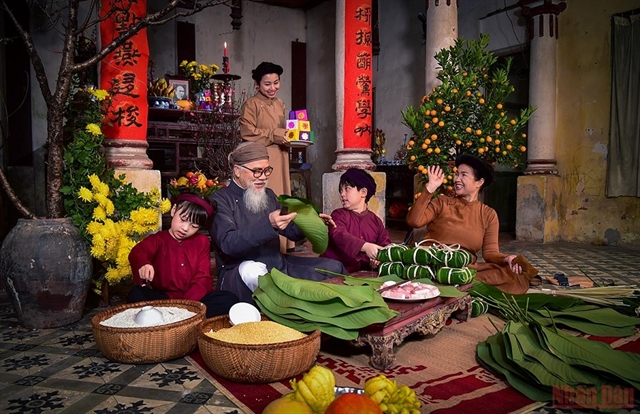
| People play a central role in value systems, serving as both the agents who practice and disseminate values and the ultimate goal of development. Photo baochinhphu.vn |
HÀ NỘI — The Government's plan to synchronously implement the national, cultural and family value systems, along with standards for Vietnamese in the new era, is a significant step toward realising the vision for the development of Vietnamese culture and people, experts have said.
The plan, released in early July this year, gives an opportunity to deeply embed those values into daily life and transform them into standards of action.
Professor Dr Phạm Hồng Tung from the Institute of Vietnamese Studies and Development Sciences, Việt Nam National University, Hà Nội, said: "The national, cultural, and family value systems, as well as the standards for Vietnamese people, are all forms of cultural value with their own unique features, and none spontaneously exert an impact in reality."
According to Tung, values only become effective through standards, norms, criteria and ethical principles; they are thereby transformed into ways of life and lifestyles, manifesting in the behaviours and conduct of individuals, organisations, businesses, and communities.
"In other words, these values must traverse various 'channels' and intermediate processes before they can truly be practised in life," he added.
The professor also highlighted the important role of the national value system, saying it serves as a cultural foundation and a standard and basis for forging consensus across the nation and among the people; at the same time, it establishes the shared goals and direction for the nation and its people to pursue throughout the processes of development and international integration.
|
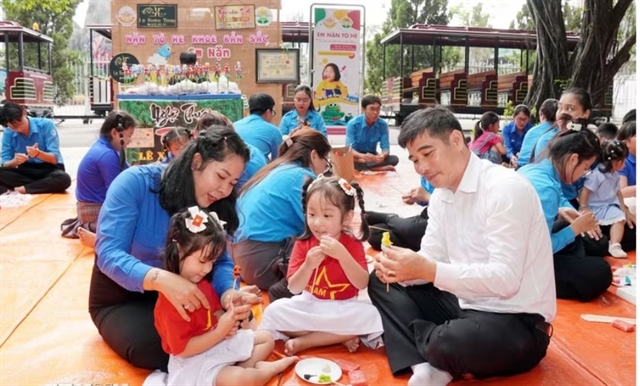
| Family is the first environment in which human personality is formed, nurtured and perfected. — VNA/VNS Illustration Photo |
He identified the national value system comprising peace, unity, independence, a prosperous people, a strong nation, democracy, equity, civilisation, and happiness, and it should be understood from two perspectives.
"First, it is recognised at the national level, serving as a guiding framework toward which national policies and strategies are oriented. Second, it encompasses both what currently exists and what we aspire to achieve," he said.
However, the expert also pointed out non-traditional challenges the national value system should face in the new era, such as climate change, cybersecurity, population ageing, and strategic competition among major power countries.
These require the system to adapt well to preserve and uphold tradition while remaining open, flexible, and innovative, Tung said.
Meanwhile, Dr Hoàng Thị Hiền, from the Việt Nam National University, Hà Nội, gave an analysis on the Vietnamese cultural value system, saying it is the 'crystallisation' of good traditional values such as patriotism, kindness, gratitude, solidarity, diligence, creativity and selective absorption of the quintessence of human culture.
In the new era, culture is not only the spiritual foundation of society but also an important endogenous resource promoting socio-economic development, she said.
According to Hiền, the process of international integration and socialist-oriented market economic development has provided conditions for the diversification of cultural values, but also poses the risk of commercialisation, hybridisation and erosion of traditional values.
"Therefore, the Vietnamese cultural value system should be built both rich in national identity and consistent with the progressive standards of the times."
Associate Professor Dr Bùi Hoài Sơn, Deputy Head of the Party Central Committee’s Commission for Publicity, who used to be a full-time member of the National Assembly's Committee on Cultural and Social Affairs, said the country needs a unified and coordinated implementation mechanism from the central to grassroots levels to turn the national value, cultural value and family value systems and standards for Vietnamese people in the new era from policy orientation into a genuine driver of national development.
Speaking to the Vietnam News Agency following the Government's decision on a plan to implement these value systems, Sơn described the document as marking a shift from defining and promoting values to embedding them across all aspects of society.
He said previous policies had established the need to build the four value systems but remained largely strategic, without a unified implementation mechanism.
The new plan, by contrast, clarifies the relationship among these systems. The national value system sets the country's development goals and aspirations; the cultural value system fosters an environment in which these values are embraced, practised and promoted; the family value system serves as the primary foundation for character formation; while the standards of the Vietnamese people serve both as the driving force behind these values and as the ultimate goal of development.
Deputy Prime Minister Phạm Thị Thanh Trà signed Decision No. 1189/QĐ-TTg on July 2, 2026, issuing the plan for the synchronous implementation of the national value system, cultural value system, family value system, and standards for Vietnamese people.
The plan aims to timely institutionalise and effectively implement the Resolution of the 14th National Congress of the Communist Party of Việt Nam, Politburo Resolution No. 80-NQ/TW dated January 7, 2026, Resolution No. 28/2026/QH16 of the 16th National Assembly dated April 24, 2026, and Government Resolution No. 30/NQ-CP dated February 24, 2026, on the development of Vietnamese culture.
It establishes an operational mechanism for the synchronous implementation of the value systems and standards for Vietnamese people from the central to the grassroots levels, while closely linking activities on institutional building and completion with the practical application of these value systems.
The plan also aims to embed value systems deeply into social life; promote the roles of culture, the family, and the Vietnamese people in socio-economic development, the assurance of national defence and security, and the country's rapid and sustainable development.
It strengthens the creation of a cultured, civilised, and wholesome environment; proactively prevents moral and lifestyle degradation; and enhances the public's resilience against negative influences.
Besides, the plan leverages endogenous resources and national competitive advantages – derived from Vietnamese culture and people – during the integration process, while promoting national cultural identity and diversity and positioning the national brand; this entails linking the implementation of value systems with the development of cultural industries, and accelerating the application of science and technology, innovation, digital transformation and international integration. — VNS
Life & Style
 Life & Style
 Life & Style
 Life & Style
 Life & Style
 Life & Style
 Life & Style
 Life & Style
.jpg) Life & Style
Life & Style
 Life & Style
 Life & Style
 Life & Style
 Life & Style
 Life & Style
 Life & Style