 Life & Style
Hà Nội exhibition brings forest experience to the city
1.
|
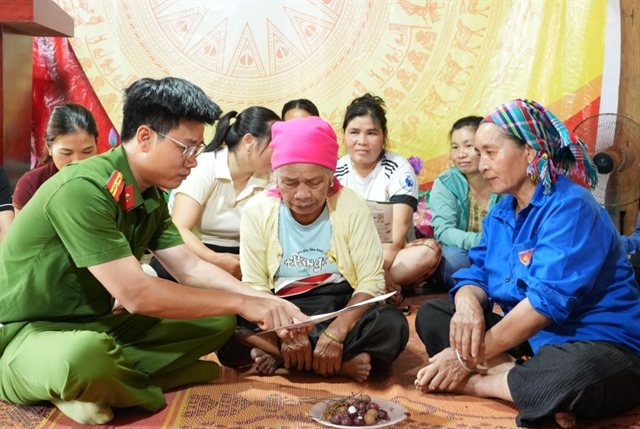
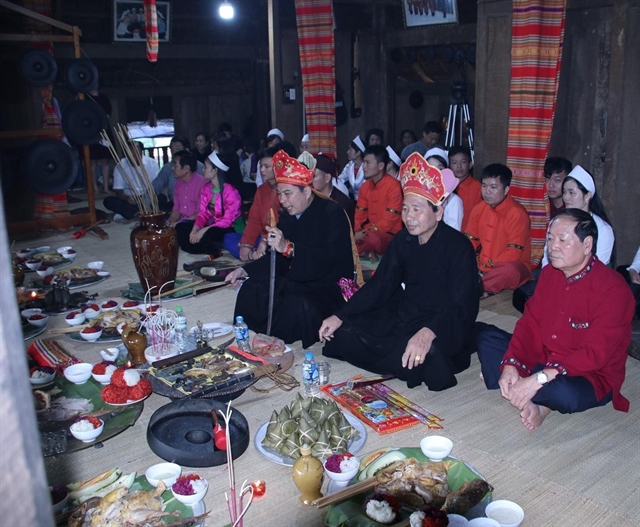
| Mo Mường is a unique folk ritual closely associated with the spiritual life of the Mường people. — Photo hanoimoi.com.vn |
PHÚ THỌ — As Việt Nam accelerates its digital transformation, efforts are underway to safeguard traditional cultural values increasingly under pressure from modern life.
In Phú Thọ Province, attention has turned to Mo Mường, a unique form of ritual chanting and folk knowledge central to the spiritual life of the Mường ethnic community.
Recognised as a National Intangible Cultural Heritage, Mo Mường is more than ceremonial texts. It preserves history, customs, beliefs and social values passed down through generations. However, the heritage now faces growing challenges as the number of practitioners declines and traditional spaces for performance become less common.
Under Resolution No 80-NQ/TW of the Politburo, Việt Nam aims to complete the digitisation of all nationally recognised cultural heritage by 2026, with further improvements planned through 2030. The policy reflects broader efforts to bring traditional cultural assets into the digital era. So digital technology is emerging as a practical tool to help preserve and promote Mo Mường in contemporary society.
In Mường communities across Phú Thọ, including Thượng Cốc and Đại Đồng, Mo Mường remains closely linked to community life and spiritual practices. The chants performed during ceremonies serve not only religious purposes but also act as records of collective memory, preserving stories about origins, customs and the worldview of the Mường people.
According to People's Artisan Bùi Văn Minh of Thượng Cốc Commune, each chant carries cultural meaning beyond ritual use.
“For the Mường people, Mo Mường is not simply a prayer recited during ceremonies. It contains the cultural identity and knowledge accumulated by the community over many generations,” he said.
For years, artisans have played a central role in preserving this heritage. However, most Mo Mường texts are still transmitted orally. Many experienced practitioners are now elderly, while younger successors remain limited.
At the same time, socio-economic changes have altered how traditional ceremonies are organised. Some rituals are now held less frequently, reducing opportunities for Mo Mường to be practised and naturally passed on.
“These are among the biggest challenges facing Mo Mường today,” Minh said.
“Many valuable forms of folk knowledge still exist mainly in the memories and experiences of artisans.”
To address these concerns, local authorities and cultural organisations have stepped up efforts to collect, record and archive materials related to Mo Mường. Audio recordings, photographs and videos are being created to document ceremonies and practices before they fade.
Digital technology has become an increasingly effective solution. Many artisans now use smartphones and recording devices to document performances, storing and sharing materials online to reach wider audiences.
Minh noted that platforms such as Zalo and Facebook have brought clear benefits.
“Digital platforms help preserve materials while also making them more accessible to people interested in learning about Mo Mường,” he said.
Technology has also helped connect practitioners across different localities, enabling them to exchange experience and support one another in preserving traditions.
For younger practitioners, digital tools provide access to learning materials that may otherwise be difficult to obtain.
Bùi Văn Hùng, a young practitioner from Đại Đồng Commune, said training courses have helped artisans develop skills in recording and sharing content.
“The guidance has helped us learn how to record and share Mo Mường activities more effectively,” Hùng said.
“It allows us to introduce the heritage not only to the Mường community but also to the wider public.”
Experts stress that digitisation should go beyond simple recording. The process needs to be systematic to ensure authenticity and preserve the original characteristics of the heritage.
Folk culture researcher Bùi Huy Vọng said digitising Mo Mường should be viewed as a long-term task.
“The disappearance of Mo Mường is happening at a very rapid pace,” he said.
“Protecting and promoting its values is also a way of safeguarding the cultural foundations of Việt Nam.” — VNS
Life & Style
 Life & Style
 Life & Style
 Life & Style
 Life & Style
 Life & Style
 Life & Style
 Life & Style
 Life & Style
Life & Style
Life & Style
 Life & Style
 Life & Style
 Life & Style
 Life & Style
 Life & Style