 Life & Style

AIMCONNECT 2026 Held in Singapore, Bringing Global Automotive Leaders Together to Explore the Future of AI, Trust and Connected Mobility
1.
|
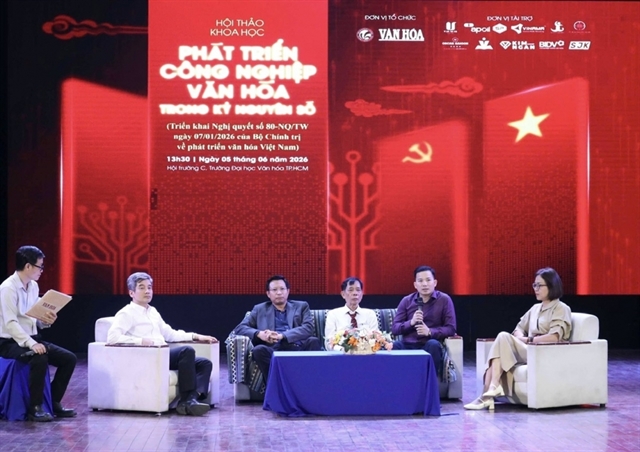
| Experts discuss solutions for developing cultural industries at the seminar "Developing Cultural Industries in the Digital Era" held in HCM City on June 5. — Photo tapchikinhtetaichinh.vn |
HCM CITY — From blockbuster films and digital entertainment to cultural tourism and creative design, cultural industries are increasingly being recognised as a strategic driver of economic development around the world.
For Việt Nam, a country endowed with a rich cultural heritage and a growing creative workforce, the challenge is no longer whether cultural industries should be developed, but how to unlock their full potential.
The issue has gained renewed attention following the issuance of Resolution No. 80-NQ/TW by the Politburo, which identifies culture as a fundamental source of national strength and calls for stronger efforts to transform cultural resources into drivers of sustainable growth.
Experts say the resolution provides an important policy foundation for accelerating the development of cultural industries at a time when the global economy is increasingly shaped by creativity, innovation and digital technology.
Turning cultural assets into economic resources
Unlike traditional industries that rely heavily on natural resources or physical capital, cultural industries create value through creativity, intellectual property, knowledge and cultural identity.
Việt Nam possesses significant advantages in this field.
The country is home to thousands of historical and cultural relics, diverse ethnic traditions, rich performing arts, traditional handicrafts, cuisine and a rapidly expanding digital ecosystem.
According to Associate Professor Dr. Bùi Hoài Sơn, permanent member of the National Assembly's Committee for Culture and Society, Resolution 80 reflects a major shift in development thinking.
"For many years, culture was often viewed primarily as a social and spiritual foundation. The new approach recognises culture not only as a development objective but also as an economic resource capable of creating new growth momentum," Sơn said.
He noted that many countries have successfully transformed cultural resources into globally competitive industries.
South Korea's cultural exports, including films, music and digital content, have become major contributors to economic growth while simultaneously strengthening the country's international influence.
"Việt Nam possesses unique cultural assets and a talented young generation. The key challenge is how to convert those advantages into products and services that generate economic value and compete in international markets," he said.
According to the Ministry of Culture, Sports and Tourism, cultural industries have recorded positive growth in recent years, particularly in sectors such as cinema, advertising, design, publishing, performing arts and cultural tourism.
The rapid expansion of digital platforms has also created new opportunities for Vietnamese creators to access audiences beyond national borders.
Considerable potential remains untapped
Despite encouraging progress, experts believe the contribution of cultural industries to the national economy remains below potential.
Professor Từ Thị Loan, a leading cultural researcher, said many localities continue to focus primarily on preserving cultural heritage without fully exploring opportunities to create high value cultural products and services.
"Heritage conservation is important, but preservation alone does not generate sustainable economic benefits. Cultural values need to be transformed into products that can attract consumers, visitors and investors," she said.
According to Loan, many cultural enterprises remain small in scale and face difficulties in accessing financial resources.
Creative projects often struggle to secure investment because cultural industries are still perceived as high risk sectors.
She also pointed to the limited connection between culture and other economic sectors.
"In many cases, culture, tourism, technology and business development operate separately. What we need is an integrated ecosystem where these sectors complement and support one another," she said.
Industry observers note that while Việt Nam has no shortage of creative talent, the country continues to face challenges related to market development, intellectual property protection and business management capacity.
Many artists and creators possess strong professional skills but lack experience in commercialisation, branding and international market expansion.
|
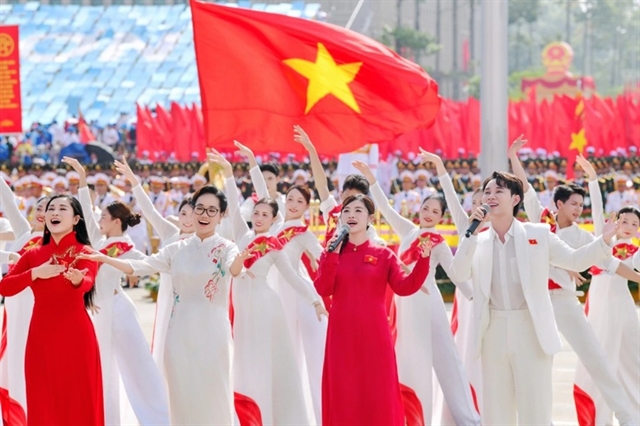
| Resolution No. 80-NQ/TW identifies people as the focus of cultural development and sustainable national growth. — Photo mst.gov.vn |
Digital transformation reshaping the sector
The rise of digital technology is creating unprecedented opportunities for cultural industries worldwide.
Streaming services, online gaming, virtual reality and artificial intelligence are transforming how cultural products are produced, distributed and consumed.
According to experts, digital transformation could become one of the most important catalysts for the growth of Việt Nam's cultural industries in the coming decade.
Associate Professor Dr. Phạm Hồng Long from the University of Social Sciences and Humanities said digital technology enables cultural products to reach audiences on a scale that was unimaginable just a decade ago.
"Technology is changing the entire value chain. A creative product developed in Việt Nam can now reach global consumers through digital platforms almost instantly," Long said.
He added that digital tools can also help preserve and promote cultural heritage through virtual exhibitions, digital museums and interactive educational content.
However, experts caution that digitalisation also presents new challenges.
The growing dominance of global platforms has intensified competition, making it more difficult for domestic content producers to secure market share.
Copyright infringement remains another major concern.
According to Bùi Hoài Sơn, stronger intellectual property protection will be essential if Việt Nam hopes to build internationally competitive cultural industries.
"Creative individuals and enterprises need confidence that their intellectual property will be protected. Without that protection, investment and innovation will be discouraged," he said.
Building a creative ecosystem
Experts agree that achieving the objectives outlined in Resolution 80 will require more than isolated policy measures.
Instead, they advocate the development of a comprehensive creative ecosystem linking artists, businesses, investors, educational institutions and technology companies.
This includes improving access to finance for creative enterprises, developing specialised training programmes and encouraging greater collaboration between cultural and technology sectors.
Professor Loan said human resources represent one of the most important factors for future growth.
"Cultural industries require not only artistic talent but also professionals with skills in management, marketing, digital technology and international business," she said.
She called for stronger cooperation between universities, businesses and cultural organisations to develop a workforce capable of meeting the demands of an increasingly competitive global market.
Local governments also have an important role to play.
Rather than relying on uniform development models, experts suggest that provinces and cities should identify their unique cultural strengths and build distinctive cultural brands.
Such an approach could help attract investment, stimulate tourism and create new opportunities for local communities.
A source of economic growth and soft power
Beyond economic benefits, experts emphasise that cultural industries contribute to the country's soft power and international image.
In an era of globalisation, cultural influence has become an increasingly important component of national competitiveness.
Films, music, literature, design and digital content not only generate revenue but also shape international perceptions and strengthen cultural connections.
For Việt Nam, this represents an opportunity to share its history, traditions and contemporary achievements with global audiences.
According to Bùi Hoài Sơn, the development of cultural industries should be viewed as a long-term national strategy rather than a short-term economic initiative.
"Culture is a unique resource because it creates both economic and social value. If we invest effectively, cultural industries can become a major source of growth while also preserving and promoting national identity," he said.
As Resolution 80 begins to guide policy implementation across the country, expectations are growing that cultural industries will move from the margins of economic planning to become a central pillar of development.
With appropriate institutions, stronger investment and deeper integration of culture with technology and innovation, experts believe Việt Nam has an opportunity to build a thriving creative economy capable of generating jobs, attracting investment and enhancing the country's standing on the global stage.
In the years ahead, the success of cultural industries may ultimately be measured not only by their contribution to GDP, but also by their ability to transform Việt Nam's cultural richness into a lasting source of prosperity, influence and national confidence. — VNS
Life & Style
 Life & Style
 Life & Style
 Life & Style
 Life & Style
 Life & Style
 Life & Style
 Life & Style
 Life & Style
 Life & Style
 Life & Style
 Life & Style
 Life & Style
 Life & Style
 Life & Style