 Life & Style
National Obstetrics and Gynaecology Hospital officially opens its second campus in Hà Nội
1.
HCM CITY — In recent years, Việt Nam has seen a strong rebound in international tourism, with HCM City at the centre of this resurgence. Alongside its well-known attractions of street food, nightlife and historical sites, a new reason for visiting is taking shape: fashion.
“More and more, we’re seeing tourists arrive in HCM City with a shopping wish list already on their phones," said Rebecca Morris, an expert who has worked in Việt Nam’s retail sector for nearly 20 years.
"They walk into independent stores with TikTok videos and Instagram posts saved, asking specifically for trendy Vietnamese brands they have discovered online."
On platforms like TikTok and Instagram, hashtags such as #vietnamshoppinghaul and #vietnamlocalbrand showcase hype streetwear, traditional clothing with a contemporary edge, and trendy outfits from local labels.
TikTok Shop further blurs the line between content and commerce, making it easy for international users to discover and buy from Vietnamese brands.
According to Corinna Joyce, Programme Manager of the Bachelor of Fashion (Enterprise) at RMIT Vietnam and a fashion business consultant, this shift signals more than just a passing trend.
“Việt Nam has long been known as a manufacturing base for global fashion brands,” she noted. “What we are seeing now is a move towards recognition of Việt Nam as a source of original fashion design, especially among younger, social media-savvy travellers.”
Fashion tourism in HCM City
Behind the social media buzz is a measurable trend. Several fashion retailers and independent labels in central HCM City said that a majority of their in-store customers are visitors from overseas, including tourists, short-term travellers and regional visitors from around Asia.
Some brands estimate that between 60 and 70 per cent of their customers are international – a figure that underscores the growing role of fashion as part of the city’s tourism offerings.
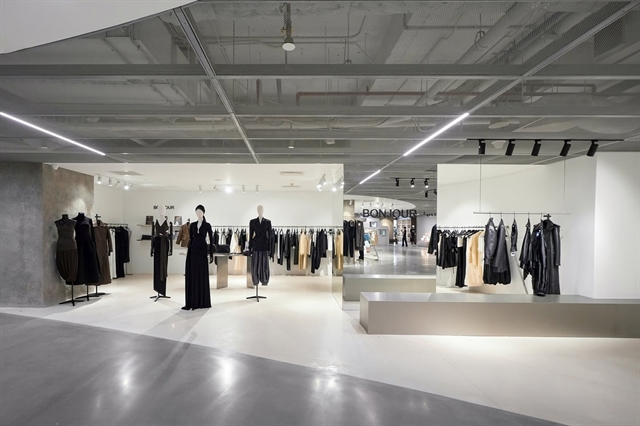
At multi-label concept store Rue Miche, international shoppers now form a significant share of daily foot traffic.
|
| The Rue Miche L'Édition retail hub in Union Square, HCM City. Photo Rue Miche |
“On weekends, it’s not uncommon for us to see more foreign customers than locals,” said Christina Vũ, co-founder of Rue Miche.
“Many of them tell us they discovered our store or one of the brands we stock on TikTok or through fashion influencers. They come specifically to find something trendy they can’t get back home.”
Vũ added that tourists from all over the world visit their Union Square store, but their boutique store on Phùng Khắc Khoan street welcomes mostly Asian tourists.
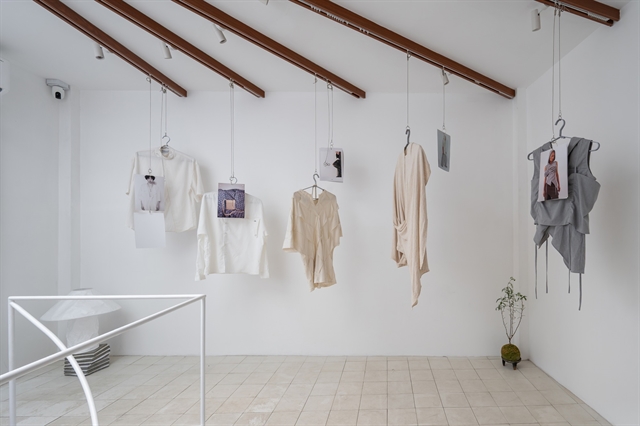
HCM City-based gender-neutral fashion brand The Idiot has experienced a similar pattern.
“We used to think of tourists as a small bonus, but now they are one of our main customer groups,” Huỳnh Đăng Quế, founder of The Idiot, explained. “People come in with screenshots from social media and ask for particular pieces they’ve seen online. They’re interested in the story behind the brand as much as the clothes themselves.”
According to Morris, this represents a new kind of visitor behaviour. “These aren’t just casual souvenir shoppers,” she said. “They are building their trip around discovering local brands, exploring specific neighbourhoods and taking home a piece of contemporary Vietnamese style.”
|
| Designs by HCM City-based fashion brand The Idiot. Photo The Idiot |
Fashion tourism as place branding
For place branding experts, this organic rise in fashion tourism opens up a strategic opportunity.
“Place branding is about more than logos and slogans,” said Associate Professor Giannina Warren, place branding scholar and Senior Programme Manager of the Professional Communication programme at RMIT Vietnam.
“It’s about the lived experiences and stories that visitors take home and share. Fashion tourism fits naturally into a broader narrative of HCM City as a young, creative and entrepreneurial city.”
She noted that Việt Nam is already exploring more established forms of tourism, from food and coffee culture to medical tourism, as ways to diversify its offerings and strengthen its image. Fashion can play a similar role.
“When international visitors discover independent Vietnamese brands and share their experiences online, they are contributing to a new story about Việt Nam,” Warren said. “It is no longer only ‘made in Việt Nam’ for global labels, but ‘designed in Việt Nam’ by local creatives.”
According to the RMIT academic, aligning this emerging fashion tourism with Việt Nam’s broader creative economy agenda could bring both economic and reputational benefits. Local designers and small brands gain new markets, while the country enhances its soft power by showcasing its cultural and creative capabilities.
Turning a trend into a strategic advantage
To fully harness this momentum, coordinated efforts between tourism authorities, local government and industry could help transform scattered success stories into a recognisable city and national brand.
One opportunity lies in developing fashion-focused experiences for visitors to HCM City, such as curated maps of local fashion streets, guided shopping tours or collaborations with key retailers to create shopping routes. Another is to support city-wide fashion events that highlight young Vietnamese designers to international audiences, particularly in districts already popular with tourists.
“Many of these initiatives are already happening informally,” Morris observed. “But with more structured support – for example, promotions through official tourism channels or partnerships with hotels and tour operators – they could have a much bigger impact.”
At the same time, universities and education providers have a role to play in sustaining this ecosystem. Programmes such as the Bachelor of Fashion (Enterprise) at RMIT Vietnam are training students in fashion business, branding and retail, equipping graduates to work with or launch local labels that can compete in both domestic and international markets.
“Our graduates are entering an industry that is changing rapidly,” Joyce said. “They are not only thinking about how to sell in Việt Nam, but how to speak to global audiences through digital platforms. That mindset is essential if HCM City is to maintain and grow its reputation as a fashion destination.”
For Warren, the key is to recognise that the trend is already underway.
“International visitors are voting with their feet and their wallets. They are coming to HCM City to discover Vietnamese fashion. With coherent communication, supportive policy and continued investment in creative talent, Việt Nam can turn this organic wave of interest into a long-term advantage for both its tourism sector and its national brand,” she concluded. — VNS
Life & Style
 Life & Style
 Life & Style
 Life & Style
 Life & Style
 Life & Style
 Life & Style
 Life & Style
Life & Style
Life & Style
 Life & Style
 Life & Style
 Life & Style
 Life & Style
 Life & Style
 Life & Style