 Life & Style
Đà Nẵng aims to become a world-class green tourism destination
1.

|
| Artists perform with traditional instruments of Gia Lai's people on February 1 in Hà Nội. — Photo vov.vn |
Thanh Hà
HÀ NỘI — Gongs, martial arts, tuồng and coffee brought the flavours and rhythms of the Central Highlands to the capital during Gia Lai Tourism Day, where traditional crafts also took centre stage.
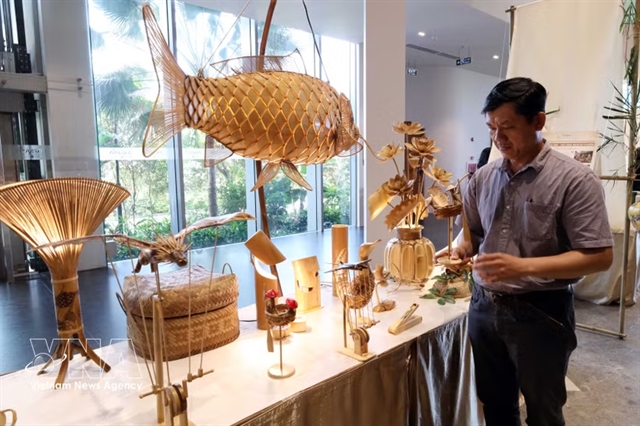
Travelling more than 1,000km from Ia Bang Commune, Rinh and Hyoi, two men of the Jrai ethnic minority, wanted to showcase their village's bamboo weaving craft.
Rinh takes bamboo strips of different sizes and weaves a small basket backpack. Half an hour later, he is halfway to finishing the beautiful item that receives admiration from visitors.
"Weaving is easy, the challenge is how to make the strips, which really takes time and requires our skills," Rinh tells Việt Nam News.

|
| Rinh and his bamboo weaving products. — Photo laodong.vn |
"We have been learning weaving since we were small. The more we weave, the better the products are. Now we can make many things from bamboo, like what you can see here."
On the wall behind the man hung functional baskets and trays of different sizes, handbags and birds as decorative items.
He says these weaving activities were for family purposes in the past but are now aimed at boosting the family’s economy. His villagers can meet customers’ demands, weaving anything people order and producing many items to sell as souvenirs for tourists.
At other booths, Rơ Châm Guk and Rơ Châm Chốt of the Jarai people are preparing their musical instruments.

|
| Rơ Châm Guk and his Goong. — VNS Photo Thanh Hà |
Chốt is working with his T’rưng, a traditional bamboo tube xylophone arranged horizontally and held together by two strings.
He then uses sticks to perform for surrounding visitors. The sound of the T’rưng is strong, cheerful, majestic and clear as a stream.
Guk, meanwhile, introduces his Goong, an instrument made from long bamboo tubes and dried gourds that resonate, creating a melodious, far-reaching sound.
The player rests the base of the instrument against their stomach, one hand supporting the body, the other plucking the strings.
He says it was difficult to make and play the Goong, which is not only a musical instrument but also a cultural treasure, embodying the joys and sorrows of his people.
He himself spent years becoming a skilled player and has now been performing for more than a decade. He is invited to perform at many small and large festivals in the province and now has the chance to play in Hà Nội.
In another corner, Trần Ngọc Vân is instructing some children to draw masks of characters from tuồng or hát bội (classical drama).

|
| Trần Ngọc Vân and children in his Hà Nội's mask-drawing class. — VNS Photo Thanh Hà |
He tells Việt Nam News that tuồng is the traditional art of his Bình Định (now Gia Lai) hometown. The masks are designed specifically to instantly reveal the identity, personality, moral standing and social role of characters.
Instead of relying on dialogue to slowly unfold who a character is, the audience can look at the face paint and immediately know if the person is good or evil, loyal or treacherous.
This time, Vân brings the mask-drawing class to Hà Nội, introducing the art to the city while drawing wider attention to tuồng and the unique craft of mask drawing.
The most crowded place in the area is the coffee booth.
"It is no doubt that this is the best coffee that I have tasted," Bùi Tuyết Vân says to her friends after taking a small sip.
"I have drunk coffee from different areas in Việt Nam and now Gia Lai is my top pick."
The Gia Lai Department of Industry and Trade also brings their pepper, macadamia nuts, beef jerky and rice paper for visitors to taste free of charge at the event.
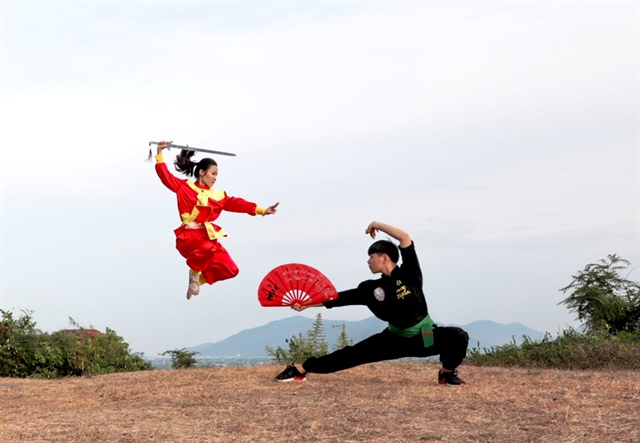
Other features include Bình Định traditional martial art ensemble displays and art and music performances with gongs and T’rưng during the day.

|
| Artist perform an excerpt of tuồng on the stage of the Gia Lai Day in Hà Nội. — VNS Photo Thanh Hà |
The Gia Lai Day is one of the activities aimed at promoting tourism, attracting visitors from Hà Nội and the northern provinces, as the province has been selected to host the National Tourism Year 2026.
Provincial Vice Chairwoman Nguyễn Thị Thanh Lịch says the newly merged Gia Lai has opened up a vast, diverse and complementary tourism development space, bringing together many unique resources of the region and the country.
Gia Lai possesses a rich system of natural tourism resources, stretching from basalt plateaus, forests, rivers and agricultural ecosystems, to midlands, coasts and islands.
The province is also home to many revolutionary historical relics, tangible and intangible cultural heritage, traditional cultural values, festivals, craft villages, cuisine and community life.
The cultural values of the Central Highlands play a particularly important role, contributing to enriching the tourism identity of Gia Lai.
“Today, we are sending a clear message about a dynamic, friendly Gia Lai, rich in identity, ready to integrate and ready to welcome domestic and international tourists on the journey towards the National Tourism Year 2026,” Lịch says. — VNS
Life & Style
 Life & Style
Life & Style
Life & Style
 Life & Style
 Life & Style
 Life & Style
 Life & Style
 Life & Style
 Life & Style
 Life & Style
 Life & Style
.jpg) Life & Style
Life & Style
 Life & Style
 Life & Style
 Life & Style