 Life & Style

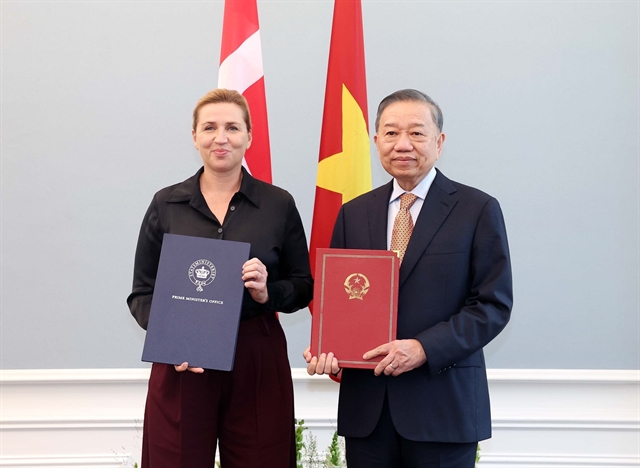
Việt Nam, Denmark issue joint statement on establishment of Comprehensive Strategic Partnership
1.

|
| Hưng Tâm Garden has drawn attention with large-scale artistic creations made from ancient mandarin trees, notably the work Mã Đáo Thành Công (Horse returns, success comes). — VNA/VNS Photo Nguyễn Công Hải |
HÀ NỘI — As the Lunar New Year (Tết) 2026 approaches, flower and ornamental plant villages nationwide are entering their peak season, with the market showing a mix of vibrant prospects and mounting challenges.
In Hưng Yên Province, the flower and ornamental village of Mễ Sở (Hưng Yên) is buzzing with activity as growers rush to meet Tết demand. Hưng Tâm Garden has drawn attention with large-scale artistic creations made from ancient mandarin trees, notably the work Mã Đáo Thành Công (Horse returns, success comes), featuring eight meticulously shaped horses symbolising prosperity and good fortune. According to garden owner Nguyễn Văn Hưng, the 15-tonne installation uses eight rare kumquat trunks with bright red fruit, conveying wishes for wealth and success in the new year.
Also in Hưng Yên, taking advantage of fertile alluvial soil along the Red River, farmer Trịnh Ngọc Tiệp in Hiệp Cường Commune has pioneered large-scale flower cultivation. Investing over five hectares in chrysanthemum production, he is currently selling flowers at VNĐ4,000 (US$0.15) per stem, achieving profits more than double traditional crops while creating stable jobs for 10 local workers.
Hưng Yên now has more than 3,300 ha of flowers and ornamental plants. Nguyễn Thị Thu, Deputy Director of the provincial Sub-Department of Crop Production and Plant Protection, said flower growing has become a high-value economic sector, generating hundreds of millions to billions of VNĐ per hectare annually. The province is pursuing a sustainable development strategy that prioritises quality and branding over rapid expansion, strengthening key production hubs for domestic and export markets.
In contrast, growers in Đà Lạt, Lâm Đồng Province, are facing losses as cymbidium orchids bloom prematurely, nearly a month ahead of Tết. Many gardens have seen 80–90 per cent of orchids flower early, forcing farmers to cut stems for retail sale at much lower prices. Trần Anh Huy, an orchid grower in Langbiang ward, said his family must sell cut flowers for VNĐ40,000–50,000 per stem instead of whole pots that could fetch several million VNĐ if sold during Tết.
According to the Đà Lạt Flower Association, the Đà Lạt area currently has around 35 ha under cymbidium orchid cultivation, with annual output exceeding 250,000 stems. During the peak Tết season each year, potted cymbidium orchids command very high prices, averaging VNĐ300,000 per stem, while premium varieties favoured by the market can fetch VNĐ900,000 or even more than VNĐ1 million per stem.

|
| A chrysanthemum grower in Chợ Lách District in Vĩnh Long Province. — VNA/VNS Photo Huỳnh Phúc Hậu |
Meanwhile, in Vĩnh Long Province, early blooming has also affected chrysanthemum growers in Chợ Lách District. Many have proactively sought alternative sales channels to minimise losses, while carefully tending remaining plants expected to bloom on schedule. At the Phước Định yellow apricot village in An Bình Commune, growers are closely monitoring buds and timing leaf removal in hopes of a stronger Tết market, despite currently subdued demand.
According to the Vĩnh Long Department of Agriculture and Environment, local farmers produce 10–12 million flower and ornamental products each Tết season, mainly traditional varieties such as chrysanthemums, marigolds and yellow apricot blossoms. For many growers, Tết remains the most important crop of the year, carrying hopes for favourable prices, stable incomes and a prosperous start to the new year. — VNA/VNS
Life & Style
 Life & Style
 Life & Style
 Life & Style
 Life & Style
 Life & Style
 Life & Style
 Life & Style
 Life & Style
 Life & Style
 Life & Style
 Life & Style
 Life & Style
 Life & Style
 Life & Style