 Life & Style
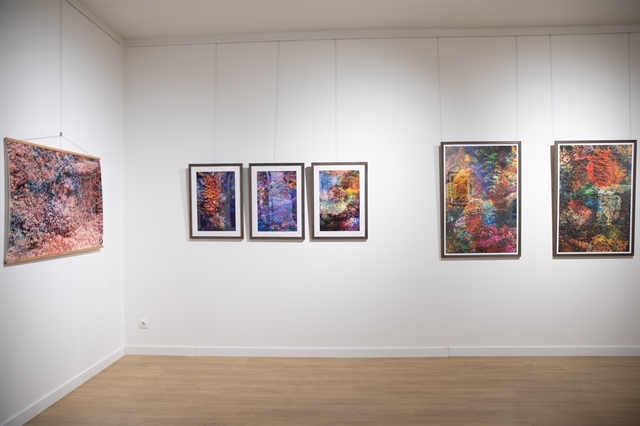
Artist explores boundaries between reality and dreams in solo debut
1.
 |
| To ensure agricultural tourism develops sustainably, Khánh Hòa is formulating a “Green Tourism Standards Set". Photo bvhttdl.gov.vn |
KHÁNH HOÀ — Khánh Hòa is positioning local agricultural and craft products as quiet storytellers and cultural messengers – “silent ambassadors” – in its tourism development strategy, as the province targets double-digit economic growth and an ambitious visitor target of 20.5 million visitors by 2030.
The province has set a clear target for increasing tourist numbers by 15 per cent per year, reaching a total of 20.5 million visitors by 2030, including 10.5 million international arrivals. Tourism is expected to contribute 15 per cent to GRDP and 20 per cent to budget revenue.
Developing eco-tourism and community-based tourism linked with distinctive agricultural advantages has been identified as both a strategic choice and a natural evolution for Khánh Hòa to “refresh” its tourism products.
To ensure agricultural tourism develops sustainably, rather than following short-lived trends, Khánh Hòa is formulating a “Green Tourism Standards Set” and an action plan entitled "Developing OCOP Products as Tourism Ambassadors of Khánh Hòa Province, 2026–2030".
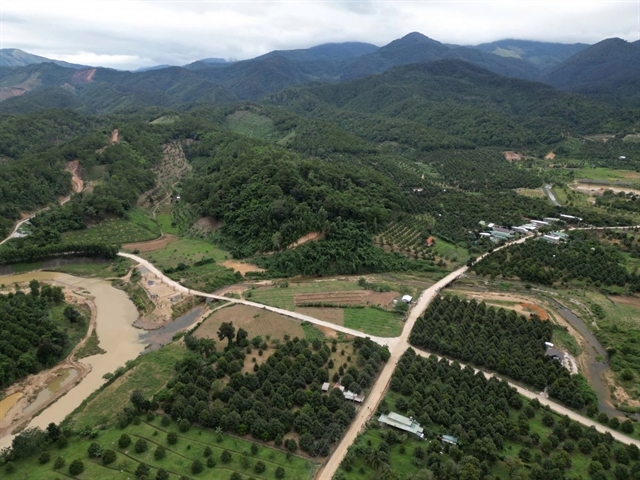 |
| Khánh Hòa is developing the project 'Developing OCOP Products as Tourism Ambassadors of Khánh Hòa Province'. — VNA/VNS Photo |
'Silent ambassadors'
After a three-day, two-night holiday in Khánh Hòa with his family, Park, a tourist from South Korea, who gave only one name, spent a considerable amount of time choosing gifts to take home.
He carefully packed each bag of dried grapes and soft-dried jujubes, both as presents for relatives and as a way to preserve the taste, memory and atmosphere of his trip.
“We saw with our own eyes the plump bunches of grapes and the crisp, sweet jujubes. These gifts will definitely be well received by friends. My family will tell others about the wonderful experiences we had here. And perhaps, when enjoying these gifts, people will be inspired to visit Khánh Hòa again,” Park said.
Not only Park, but many travellers seek out local produce wherever they go, both to enjoy and to bring home as gifts. When suitcases carry products originating from the places visited, tourism branding is quietly, organically and persuasively carried to far-flung regions.
With around 600 OCOP products, Khánh Hòa has set a new goal: turning agricultural products and traditional craft villages into recognisable and trustworthy “tourism ambassadors”.
In the specialised mango-growing areas of Cam Lâm and Suối Dầu, dried mango has become a typical three-star OCOP product and a popular choice among tourists.
This shift not only increases the value of mangoes but also opens up a new approach: linking agricultural processing with tourism experiences.
Visitors to Cam Lâm can tour mango orchards, pick fruit themselves, enjoy its distinctive sweetness, and observe the cleaning, drying and packaging processes on site.
This experience elevates Cam Lâm mangoes beyond a simple agricultural product, making them a sensory anchor within the tourism journey.
According to Đặng Thế Truyền, director of CAMLAMONLINE Company in Cam Lâm Commune, visitors learn how farmers cultivate and care for mangoes and witness clean, safe processing first-hand.
As a result, they trust the product and are willing to buy it as a gift. More importantly, they take the story of Cam Lâm mangoes with them wherever they go, which is the most sustainable way for businesses to expand markets.
As part of its long-term strategy, Khánh Hòa is developing the project "Developing OCOP Products as Tourism Ambassadors of Khánh Hòa Province, 2026–2030", with an estimated total budget of nearly VNĐ98 billion (US$4.1 million).
The project aims for revenue from tourism-linked OCOP products to account for at least 15 per cent of total provincial OCOP revenue, and for at least 30 OCOP introduction and experience sites combined with tourism to be established, evenly distributed between the northern and southern areas.
Signature products made from sea grapes, grapes, jujubes, sheep, bird’s nest and others will be prioritised for brand storytelling linked to the identity of each locality.
 |
| A new suite of measures is expected to help OCOP products reach tourists more effectively through digital platforms. — Photo bvhttdl.gov.vn |
Digital pathways
To transform OCOP local gifts into true “tourism ambassadors”, Khánh Hòa plans to develop a digital OCOP map linked with tourism, implement QR codes for origin traceability for 100 per cent of products, and apply 3D technology and 360-degree videos in promotion.
These measures will help OCOP products reach tourists more effectively through digital platforms.
Listing speciality products on e-commerce platforms will also expand distribution channels, bringing local agricultural produce closer to domestic and international consumers.
“Each OCOP product should not just be a commodity, but a story of the land. When tourists hold a product in their hands, they should know where it comes from, who made it, and under what natural and cultural conditions. From the digital OCOP map linked with tourism to e-commerce platforms, we are shortening the distance between producers and visitors," said Võ Văn Công, deputy director of the Khánh Hòa Department of Agriculture and Environment.
"These are the values Khánh Hòa is striving for in defining the role of OCOP in sustainable tourism development,” he added.
The combination of tourism and agriculture is not merely a mechanical addition, but a careful weaving of values.
Analysing this issue in depth, Phạm Thanh Tùng from the Institute of Agricultural Economics and Tourism noted that organic agricultural tourism was not only about farm visits and cultivation experiences, but also a vital bridge between consumers and clean agricultural products.
This model would bring clear dual benefits: it helps farmers sell products on site at higher prices while reducing intermediary costs, and, importantly, preserves original values.
Visitors would not only eat and drink but also participate in cultural activities such as gong dances and folk festivals, experiencing the lifestyle of local communities. Thanks to tourism, indigenous culture would have space to “live”, be protected and avoid being eroded by urbanisation.
Green benchmark
Khánh Hòa’s tourism relies heavily on natural environmental resources. Therefore, linking tourism with ecological and high-tech agriculture for green development is a suitable choice.
To prevent uncontrolled, spontaneous development that could damage the environment, a “Green Tourism Standards Set” has been formulated, creating a clear, measurable and enforceable “benchmark” for service providers to apply.
According to Phạm Minh Nhựt, chairman of the Nha Trang – Khánh Hòa Tourism Association, the “Green Tourism Standards Set” includes stringent requirements, with 102 criteria for accommodation establishments and 100 criteria for tourist attractions.
The focus is on environmental protection, with service quality and visitor satisfaction at its core. This will serve as a “filter” to eliminate short-term, opportunistic business models, while helping enterprises optimise costs and improve operational efficiency.
To ensure that tourism linked with agriculture does not develop in a fragmented or spontaneous manner, the guiding role of the State is particularly important.
In reality, once agricultural products have established their value, the next challenge is not only production, but also organising tourism spaces, building brands and connecting markets.
According to Nguyễn Văn Hòa, director of the Khánh Hòa Department of Culture, Sports and Tourism, the province’s tourism sector is proactively strengthening linkages to form a sustainable value chain.
The tourism sector acts as a connector, promoting destinations and organising tours and routes. The agricultural sector ensures product quality.
Local authorities and residents are the direct participants. When these links are synchronised, tourism can retain visitors.
Building brands for agricultural products linked with tourism not only increases product value, but also helps position Khánh Hòa as a multi-experience destination, where visitors can “go to the beach, return to the gardens, head into the forests” in a single journey.
With hundreds of OCOP products, local gifts are expected to help spread and build a sustainable tourism brand for the "Land of Agarwood". — VNS
Life & Style
 Life & Style
 Life & Style
 Life & Style
 Life & Style
 Life & Style
 Life & Style
 Life & Style
 Life & Style
 Life & Style
 Life & Style
 Life & Style
 Life & Style
 Life & Style
 Life & Style