 Environment

Top leader hails friendship association's role in nurturing Việt Nam–Denmark ties
1.
 |
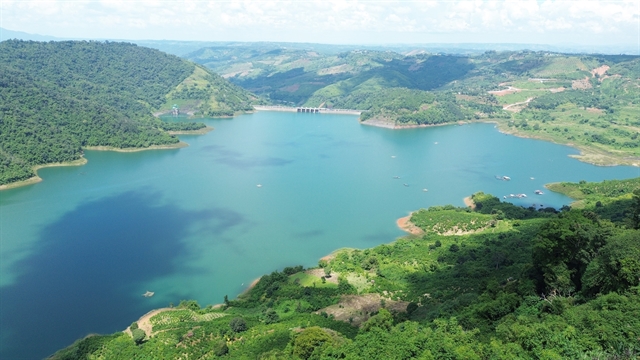
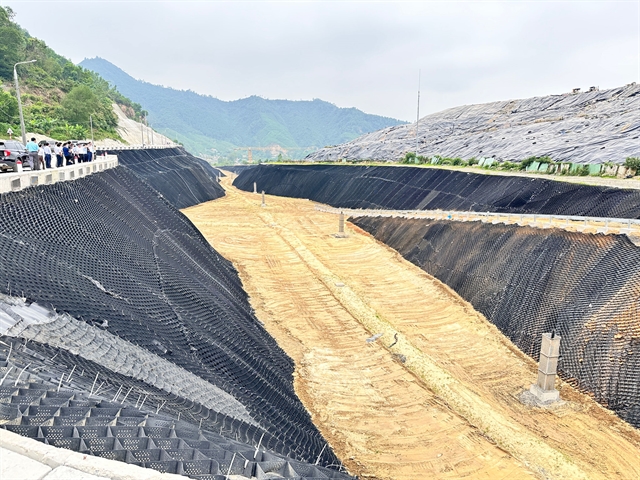
| The waste conveyor system at the Bảo Lộc Solid Waste Treatment Plant in Lâm Đồng Province. VNA/VNS Photo |
HÀ NỘI — The Ministry of Agriculture and Environment has announced that provincial authorities will take responsibility for the treatment, remediation and restoration of areas suffering from particularly severe soil contamination from January 29.
This provision is stipulated in Decree 48/2026/NĐ-CP recently issued by the Government, which amends and supplements several articles in Decree 08/2022/NĐ-CP guiding the implementation of the Law on Environmental Protection.
The new decree underscores the Government’s orientation toward decentralisation coupled with accountability, aiming to enhance local initiatives in environmental management while strengthening oversight, inspection and pollution control.
Previously, the Ministry of Natural Resources and Environment (now the Ministry of Agriculture and Environment) took the lead in drafting such plans and submitting them to the Prime Minister for approval.
However, practical implementation has shown that most soil contamination sites are local in nature, closely linked to each area’s socio-economic development history, production activities and natural conditions. Reliance on central-level planning and approval has resulted in delays and limited flexibility in many cases.
Under the new regulations, provincial People’s Committees will be directly responsible for developing, issuing and carrying out plans to address particularly severe soil contamination. Implementation results must be consolidated in annual provincial environmental protection reports and submitted to the Ministry of Agriculture and Environment for monitoring and synthesis.
This decentralisation not only enhances local autonomy, but also clarifies the accountability of local leaders, helping to overcome the longstanding practice of waiting for central directives when environmental issues arise at the local level.
In addition, Decree 48/2026/NĐ-CP revises and supplements regulations on the establishment and recognition of national natural heritage sites, ensuring consistency with the Law on Environmental Protection and related specialised laws.
Under the new framework, for natural heritage sites located within a single province, the chairperson of the provincial People’s Committee will assign specialised agencies to develop establishment proposals, organise appraisals and decide on recognition. This approach is expected to streamline administrative procedures, enhance flexibility and directly link conservation responsibilities with local authorities.
For natural heritage sites spanning two or more centrally-governed cities and provinces, or located in marine areas where administrative management responsibilities remain unclear, the Minister of Agriculture and Environment will consider and decide on recognition. This clearer division of authority aims to ensure consistency, objectivity and balanced interests among localities, while avoiding overlap and prolonged processing times.
Another notable change introduced by the decree is the decentralisation of authority to provincial People’s Committee chairpersons to appraise environmental impact assessment reports and issue environmental permits for certain categories of investment projects previously under the ministry’s jurisdiction.
Specifically, this authority applies to public investment projects not subject to investment policy approval by the National Assembly or the Prime Minister; projects classified solely based on requirements for land-use conversion in conservation areas; hydropower projects outside central-level authority; and projects involving crude oil and natural gas exploitation.
Decentralisation is expected to accelerate administrative processing, ease the workload of central agencies and enable localities to take a more proactive role in environmental management aligned with socio-economic development goals.
Furthermore, the decree amends Article 30 on the reissuance, adjustment, renewal and revocation of environmental permits, clarifying cases in which project owners and facilities must adjust permits during their validity period.
Specifically, environmental permits must be adjusted when projects change in scale, capacity or production technology in ways that generate new licensed activities; when additional wastewater transfer, reception or reuse schemes are introduced; or when other changes affect previously approved permit contents.
These provisions aim to strengthen control over environmental impacts during project operation while enhancing transparency and accountability among investors. — VNS
Environment
 Environment
 Environment
 Environment
 Environment
 Environment
 Environment
 Environment
 Environment
 Environment
 Environment
 Environment
 Environment
 Environment
 Environment