 Environment

Top Vietnamese leader meets with Belgian Senate Speaker, House President
1.
|
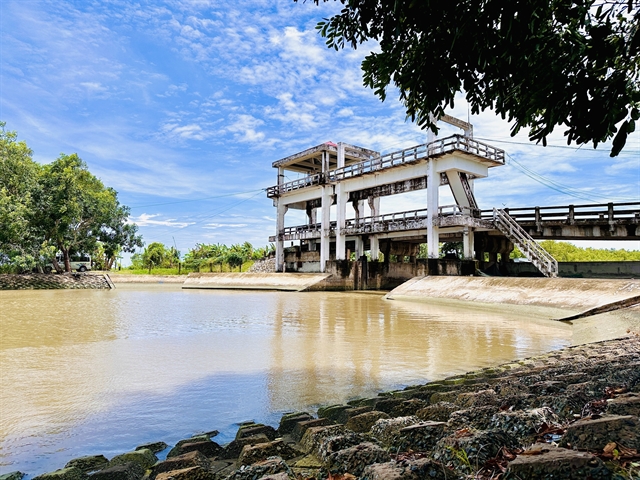
| Irrigation works in Cà Mau Province, including sluice gates and river embankments, keep out saltwater and help retain freshwater. — VNA/VNS Photo Huỳnh Anh |
CÀ MAU — With unpredictable weather forecast in 2026, the Mekong Delta province of Cà Mau is prioritising proactive disaster prevention to limit losses and protect livelihoods.
With three sides bordering the sea, low-lying terrain, weak geological foundations, and a dense network of rivers and canals, the country’s southernmost locality is frequently affected by high tides, flooding and riverbank and coastal erosion.
“Cà Mau is committed to stepping up investment and upgrading infrastructure for disaster prevention and control, particularly unfinished sections of the eastern and western sea dykes, while promoting the use of technology and artificial intelligence for monitoring and forecasting,” Lê Văn Sử, deputy chairman of the provincial People’s Committee, said.
Raising community awareness through communication, training and regular drills remains a key task, he said.
The province plans to develop a disaster prevention and control plan for 2026–30, he said.
Cà Mau would mobilise and effectively integrate resources from the state budget and its disaster prevention and control fund and support from international organisations to implement climate change adaptation projects, he promised.
In Cà Mau, the rainy season begins in the first half of May and ends in mid-November, and is marked by dangerous phenomena such as storms, lightning and heavy rains.
High tides at the end of 2026 are forecast to be as severe as a year earlier, requiring great effort to protect dykes and mitigate floods.
According to the People’s Committee, the province was hit by record-high tides, prolonged heavy rains, thunderstorms, and riverbank and coastal erosion last year.
These caused seven deaths, injured two other people, left five fishermen missing and sank 14 fishing boats.
They also destroyed 52 houses, blew away the roofs of 179 others and left 781 severely flooded.
Riverbank erosion occurred along more than 35 kilometres last year, damaging 26.59 kilometres of roads.
More than 1,000ha of rice, other crops and orchards and 35ha of aquaculture ponds were damaged. Total property losses were estimated at around VNĐ30.34 billion (US$1.16 million).
The province has earmarked more than VNĐ26.8 trillion ($1.02 billion) to carry out 29 projects to prevent coastal and riverbank erosion in 2026–30 to protect residential areas and infrastructure, including more than 300 kilometres of coastal and river dykes.
Between 2011 and 2025 coastal erosion caused the loss of 6,250ha of land including protective forests and severe damage to sea dykes, sluices and transport infrastructure and directly affected people’s lives. — VNS
Environment
 Environment
 Environment
 Environment
 Environment
 Environment
 Environment
 Environment
 Environment
 Environment
 Environment
 Environment
 Environment
 Environment
 Environment