 Environment

AIMCONNECT 2026 Held in Singapore, Bringing Global Automotive Leaders Together to Explore the Future of AI, Trust and Connected Mobility
1.
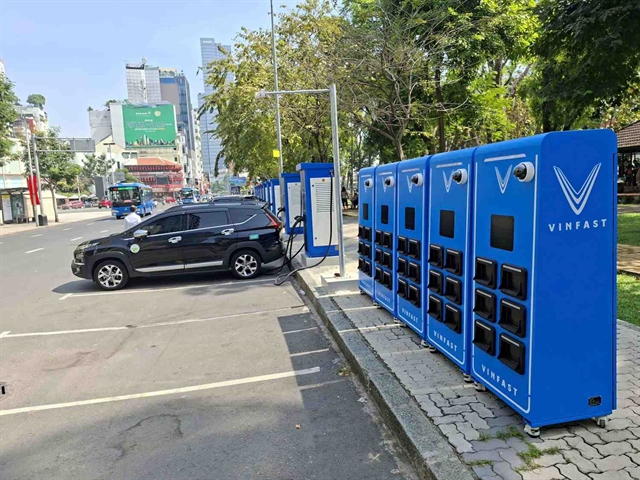 |
| Battery-swapping facilities combined with electric car charging poles are being installed along a sidewalk in HCM City. — VNA/VNS Photo |
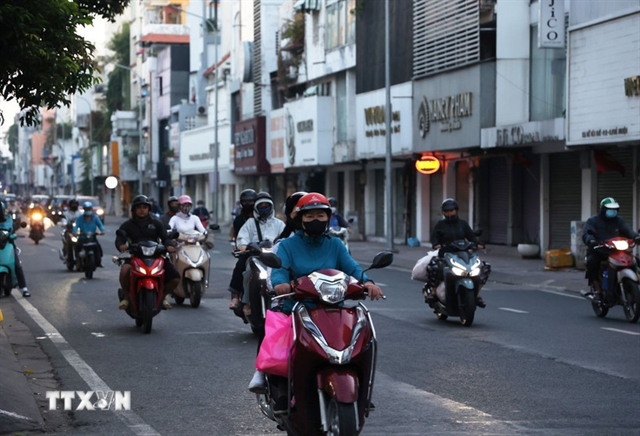
HCM CITY — HCM City will allow the installation of electric motorbike battery-swapping facilities on sidewalks starting this month, with priority given to locations that already have charging stations and bus shelters, according to the city’s Department of Construction.
In a notice sent to businesses and relevant agencies on January 22, the department said enterprises will be fully responsible for investment, installation, operation and safety, including fire prevention and urban aesthetics, and must bear all liabilities in case of incidents.
The Department of Construction is expected to publish an initial list of streets and locations eligible for installing battery-swapping cabinets on its official website.
Based on this list, enterprises will be required to submit detailed installation and operation plans for review and approval.
Under the regulations, enterprises must fully cover all costs related to investment, equipment installation, power connection and operation.
They must demonstrate experience in providing and operating battery-swapping infrastructure and have sufficient financial capacity to deploy installations immediately after approval.
Public liability insurance for third-party risks in the event of fire or explosion is also mandatory.
All equipment must meet quality standards and fire safety certifications, and be fitted with automatic cut-off systems and temperature warning devices.
Battery-swapping cabinets must be designed and appraised by qualified units, undergo periodic inspections and carry valid electrical safety certification labels.
They are required to meet minimum ingress protection standards, such as IP65 or IP67, to ensure absolute electrical safety and prevent leakage during heavy rain or flooding.
The facilities must be flexible, either supporting standardised batteries compatible with multiple vehicle brands or committing to open connection protocols.
Locations of charging and swapping facilities will be integrated into the city’s traffic information platform.
Enterprises are required to respond to technical incidents within two to four hours, ensuring traffic safety, environmental hygiene and urban aesthetics.
Advertising is prohibited on the facilities, except for brand identification logos.
Each installation area must be equipped with 24/7 surveillance cameras and remote data connections to monitor battery conditions and promptly detect risks.
In addition, enterprises must complete all procedures related to construction permits, temporary use of sidewalks or road space, fee notifications, sidewalk upgrades (if any), and traffic safety measures.
They must cease operations when required by competent authorities and may not seek compensation or lodge complaints in such cases.
Battery-swapping cabinets may be installed on sidewalks, green strips, power poles, lighting poles and roadside green spaces, including areas adjacent to factories, offices, schools, supermarkets, export processing zones and industrial parks.
The minimum distance between installations must exceed 500 metres, except in special cases based on actual demand.
To ensure visibility and pedestrian safety, the outer edge of a cabinet must be at least 0.5 metres from the curb.
Cabinets must be placed parallel to the roadway, avoiding perpendicular layouts that obstruct sightlines.
At roadside locations, the battery access side must face residential areas, requiring users to move their vehicles onto the sidewalk during battery swapping.
Installations are prohibited at intersections, entrances and exits, pedestrian crossings, access routes for people with disabilities, in front of residential façades, or in areas with dense existing technical infrastructure. Facilities must not reduce clear sidewalk width below 1.5 metres for pedestrians or be located in areas prone to frequent flooding.
Priority will be given to locations near existing charging stations and alongside bus shelters. — VNS
Environment
 Environment
 Environment
 Environment
 Environment
 Environment
 Environment
 Environment
 Environment
 Environment
 Environment
 Environment
 Environment
 Environment
 Environment