 Economy


Philippines and Việt Nam mark 50 years of bilateral relations
1.
|
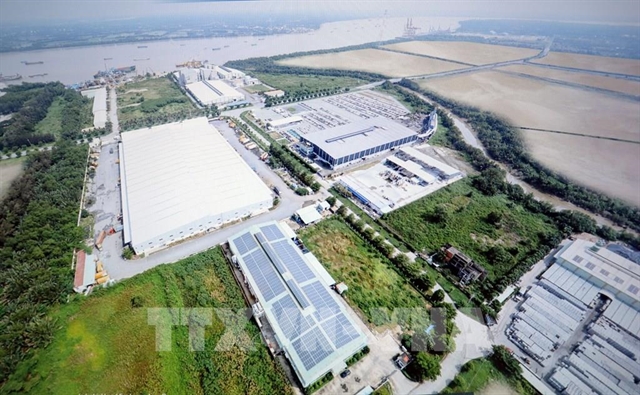
| A corner of Hiệp Phước Industrial Park in HCM City. — VNA/VNS Photo |
HCM CITY — The southern industrial market is entering a recovery phase after a period of adjustment driven by tariff pressures and global trade uncertainty, according to a report released by the real estate services company Cushman & Wakefield.
The recovery phase is supported by resilient demand across industrial land, ready-built factories (RBF), and ready-built warehouses (RBW), the Q4 2025 Southern Việt Nam Industrial MarketBeat Report showed.
Total supply of industrial land increased 28 per cent year-on-year, one of the sharpest expansions in recent years, while both RBF and RBW segments showed strong occupancy at over 90 per cent.
“While occupiers remain cautious in the short term, demand fundamentals are strengthening, particularly for well-located industrial land, ready-built factories, and modern logistics facilities that enable faster market entry and operational efficiency,” said Chương Quốc Đoan, senior manager of industrial leasing at Cushman & Wakefield Việt Nam.
“This renewed activity reflects how manufacturers are recalibrating supply chains, prioritising flexibility, cost optimisation, and ESG compliance, and positioning Việt Nam as a long-term production and logistics hub within regional and global networks,” Đoan said.
In Q4 2025, the market recorded an impressive entry of new supply with 2,000ha from Phase 1 of two large-scale projects in Đồng Nai: Bàu Cạn-Tân Hiệp Industrial Park and Xuân Quế-Sông Nhạn Industrial Park.
This strategic addition raised total accumulated existing industrial land supply in the Southern Key Economic Zone to 36,400ha, reflecting a 5.8 per cent increase compared to the previous quarter and a sharp rise of nearly 28 per cent compared to the same period in 2024.
Regarding market structure, HCM City maintained its leading position with a 45 per cent share, while Đồng Nai rose strongly to account for 33 per cent thanks to new supply, reaffirming its role as a key industrial hub alongside Tây Ninh, which holds a 22 per cent market share.
The overall market occupancy rate in Q4 adjusted to 74 per cent. This decline in the actual occupancy rate reflects the massive influx of new supply entering the market, outstripping current absorption speeds.
Net absorption was modest at only 45ha, indicating that businesses are remaining very cautious about expanding their scale or leasing new land during this period.
The southern industrial land market for the 2026–29 period is on the threshold of a powerful breakthrough with the formation of green industrial mega-urban models, which deeply integrate Environmental, Social, and Governance (ESG) standards to attract high-quality foreign direct investment (FDI).
With a total projected supply boom of nearly 3,800ha, in which HCM City plays the core role with nearly 2,600ha, the region is transforming from pure manufacturing zones into modern industrial-service ecosystems.
The combination of Research and Development (R&D) capabilities in the city centre and green manufacturing clusters in satellite areas will not only optimise the value chain but also fully meet the strict emission reduction requirements of multinational corporations, turning Việt Nam into a leading high-tech manufacturing stronghold in Southeast Asia.
The medium-term vision is further bolstered by strategic transport infrastructure, featuring a network of expressways, ring roads, and Long Thành International Airport directly connecting to the Cái Mép-Thị Vải port system.
This seamless regional connectivity will dissolve geographical barriers, turning potential land funds in Tây Ninh or Đồng Nai into vital logistics links, significantly reducing supply chain costs.
The synchronised development of transport infrastructure and next-generation industrial parks will create a bountiful and sustainable supply map, meeting not only the demand for space but also creating outstanding value-added for the entire Southern Key Economic Zone in the near future. — VNS
Economy
 Economy
 Economy
 Economy
 Economy
 Economy
 Economy
 Economy
 Economy
 Economy
 Economy
 Economy
 Economy
 Economy
 Economy
.jpg)