 Economy


Draft law proposes to expand eligible tissue and organ donors
1.
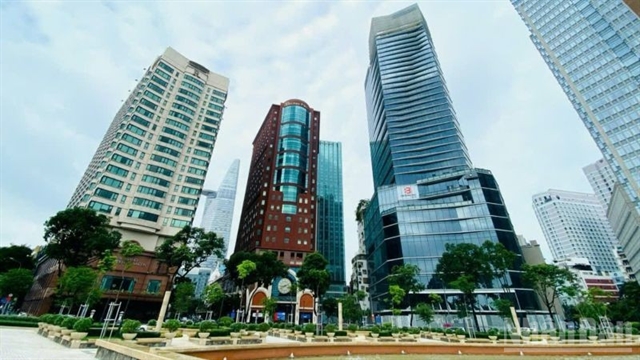 |
| HCM City is emerging as a long-term strategic destination for multinational corporations expanding their global operations. — Photo nhandan.vn |
HCM CITY — High-quality human resources, competitive operating costs and a growing supply of ESG-compliant Grade A office space are positioning HCM City as a preferred destination for next-generation Global Capability Centres (GCCs) in the long-term expansion strategies of multinational corporations.
According to Savills Vietnam, as multinational groups restructure their global operating models, GCCs are gradually evolving from traditional back-office units into technology-driven hubs for innovation, research and strategic operations.
In Việt Nam, the city is emerging as a leading destination for this new wave of GCCs, thanks to its combined advantages in talent availability, cost efficiency and high-quality office supply.
Lại Thị Như Quỳnh, deputy director of Commercial Leasing Services at Savills HCM City, said the growth of GCCs is not only creating new demand for office space but is also reshaping standards, layouts and development strategies in the city’s office market over the medium and long term.
“In the past, most GCCs in Việt Nam were established primarily to optimise costs for support functions. That model is changing rapidly,” Quỳnh said.
“New-generation GCCs are increasingly taking on strategic roles, focusing on technology, research and development, data and innovation – all of which are core functions within global value chains.”
Savills experts noted that GCCs typically start operations with floor areas ranging from 1,000 to 3,000 square metres, before expanding to 5,000-20,000 square metres or more once they reach a stable scale. Notably, long lease terms of five to ten years reflect the high level of commitment and long-term investment orientation of this tenant group.
This trend is also evident in the city’s office leasing transactions. In the first nine months of 2025, Savills recorded 145 office leasing deals across all grades.
Information technology tenants accounted for 37 per cent of total newly leased area, with an average transaction size of up to 924 square metres.
This sector is closely linked to the development of next-generation GCCs.
According to Quỳnh, high-quality human resources are the most critical factor underpinning the city’s attractiveness to large-scale GCCs.
The city boasts a young and abundant workforce with strong foundations in technology and engineering, along with solid foreign-language skills.
It is also home to the country’s largest concentration of universities, training institutions and technology ecosystems, providing a compelling talent base for multinational corporations.
In addition to human capital, Grade A office rents in the city remain competitive within the region.
Compared with major hubs such as Singapore, Hong Kong (China) and Tokyo (Japan), rental levels in HCM City are significantly lower, enabling companies to optimise long-term operating costs while still meeting international standards.
By the end of the fourth quarter of 2025, the city’s total office supply reached approximately 2.9 million square metres, of which Grade A offices accounted for about 17 per cent, or more than 490,000 square metres.
Within the Grade A segment, 76 per cent of supply has obtained green certifications, highlighting the market’s rapid move towards higher sustainability standards.
The rise of next-generation GCCs is directly influencing the structure and quality benchmarks of the city’s office market, particularly in the Grade A and A+ segments.
“Based on Savills’ observations, GCCs are almost exclusively targeting Grade A buildings, with a strong preference for projects holding green certifications such as LEED, WELL or Green Mark, along with robust IT infrastructure, smart building management systems and flexible expansion potential,” Quỳnh said.
Geographically, GCCs are adopting increasingly clear location strategies.
The traditional central business district continues to be favoured for management, leadership and international transaction functions, while emerging central areas such as Thủ Thiêm and parts of Thủ Đức have become attractive destinations for large-scale GCCs, R&D centres and delivery hubs, thanks to their greater space flexibility and lower cost pressures.
“GCCs are not a short-term trend. They represent a strategic tenant group with clear expansion plans and high quality requirements,” Quỳnh stressed.
“Over the long term, their presence will help elevate market standards and drive the development of internationally compliant office projects in HCM City.” — VNS
Economy
 Economy
 Economy
 Economy
 Economy
 Economy
 Economy
 Economy
 Economy
 Economy
 Economy
 Economy
 Economy
 Economy