 World
World

Solcis launches open compliance layer for AI agents on NVIDIA OpenShell
1.
|
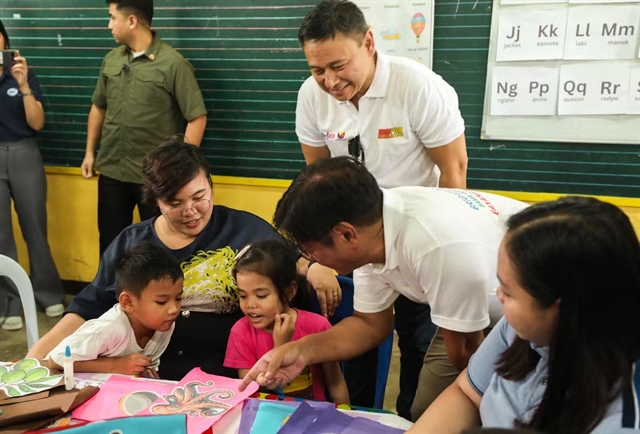
| Under the partnership, average class size is projected to be reduced to around 39 learners from 50 per class, creating safer and more conducive environments for learning and classroom interaction. — INQUIRER/ANN Photo |
MAKATI CITY — Determined to break the cycle of overcrowded classrooms and stop treating school infrastructure as a slow-moving problem, Philippine education secretary Sonny Angara is leading the rollout of a PHP105.7-billion (US$1.8 billion) school infrastructure public-private partnership (PPP) designed to build a total of 16,459 new classrooms in high-need areas.
Education secretary Sonny Angara and the Department of Education (DepEd) team recently secured the approval for the Public-Private Partnership for School Infrastructure Project Phase III (PSIP III) from the Economy and Development Council (ED Council), chaired by President Ferdinand R. Marcos Jr.
Angara pointed out that PSIP III is part of a broader reforms towards speeding up classroom construction and improving governance in school infrastructure.
This includes the nearly 24,000 classrooms already programmed for 2026 under the national budget, as well as projects that allow local government units to directly build classrooms, as the department works to cut the country’s estimated 165,000-classroom backlog.
“Through PSIP III, we are opening the door to a whole-of-nation approach – working with the private sector to deliver classrooms faster, more efficiently, and boost local industry,” he added, highlighting that more than 57,000 jobs can be generated from the construction projects.
Angara noted that the DepEd team, working closely with the economic team and the PPP Center, as well as experts from the Asian Development Bank, are expediting the construction of PPP classrooms as part of President Marcos’ call for a greenlane for DepEd’s PPPs.
Once fully operational, the new classrooms are expected to directly benefit up to 800,000 learners annually, while millions more indirectly through the decongestion of over 1,000 public schools.
Average class size is projected to be reduced to around 39 learners from 50 per class, creating safer and more conducive environments for learning and classroom interaction.
In addition, by easing congestion and eliminating multiple-shift schedules, PSIP III is expected to increase student contact time, reduce fatigue, and improve overall school operations and campus safety.
Beyond its impact on school communities, PSIP III is projected to generate significant savings for the government.
Estimates show that the government can save approximately PHP40.15 billion ($676.3 million).
The project will be implemented through a solicited public-private partnership using a build lease-and-transfer scheme, with DepEd overseeing implementation and ensuring compliance with education standards and timelines.
This comes over a decade after the implementation of PSIP I and II, which together delivered 13,391 classrooms.
In an effort to deliver a critical mass in classrooms, PSIP III is set to become the largest classroom PPP in the country’s history.
Based on the indicative timeline, bidding for PSIP III is expected to begin by March 2026, following its approval in January.
Contract signing is targeted by August 2026, with construction scheduled to start by March 2027, in line with the Public-Private Partnership Code.
All classrooms are targeted to be completed within 19 months after contract signing, with full completion expected by March 2028. — INQUIRER/ANN
World
 World
World
 World
World
 World
World
 World
World
 World
World
 World
World
 World
World
 World
World
 World
World
 World
World
 World
World
 World
World
 World
World
 World
World