 World
World
Greening Hà Nội's streets
1.
|
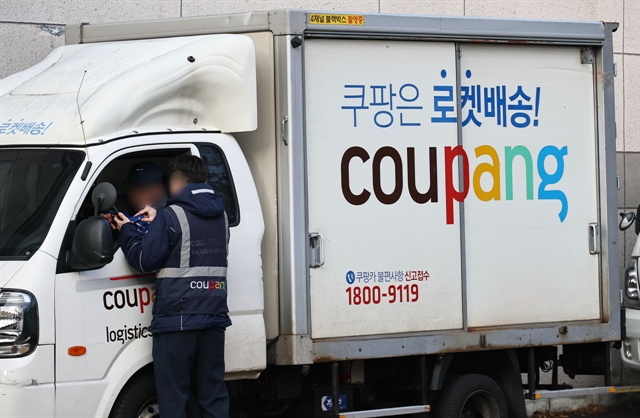
| A parcel delivery driver speaks to a co-worker at a Coupang delivery truck in Seoul. — YONHAP/VNA Photo |
SEOUL – As the conflict involving the United States, Israel and Iran shows signs of prolonging, the ripple effects of soaring global oil prices are being felt acutely across South Korea, especially hitting workers in transport, agriculture, fisheries and island communities, whose livelihoods depend heavily on fuel.
For many, the crisis triggered by the Middle East conflict is materialising in the form of rising operational costs that cannot be passed on to consumers.
Truck drivers and delivery workers, who rely on diesel to operate, say the spike has become unbearable.
A 51-year-old cargo truck driver who runs routes between Daegu and Greater Seoul said the price of diesel had risen by nearly 200 won per liter in just one week.
“I normally consume about 4,000 liters a month, which means fuel alone now costs an additional 800,000 won (US$520),” he told The Korea Herald. “We can’t immediately raise our fees, so we are forced to shoulder the losses ourselves. Some colleagues say they will stop driving altogether if diesel exceeds 2,100 won per liter.”
As of Tuesday, the average diesel price had surged 21 percent, climbing from 1,597 won to 1,931.91 won per liter in less than two weeks, according to Opinet, the Korea National Oil Corp.’s oil price information service.
Farmers heading into the peak planting season are also on edge, as the cost of tax-exempt agricultural diesel and kerosene – which are not subject to government fuel tax cuts – is rising alongside global oil prices.
According to data from Opinet, the price of tax-exempt diesel rose 26.3 won to 1,293.24 won per liter, while tax-exempt kerosene increased 13.87 won to 1,173.08 won. With demand for farm machinery expected to grow from May, when rice planting begins in many regions, local governments warn farmers’ fuel expenses could climb sharply unless prices stabilize.
Greenhouse growers, who must run heaters overnight to maintain temperatures for their crops, are seeing costs soar. A strawberry farmer in North Chungcheong Province said his kerosene supplies were running low, despite efforts to stock up early.
“If I cut back on heating, the quality of the strawberries drops. But if I keep it running, the fuel bill becomes overwhelming,” he said.
Rising fuel costs have spread quickly to fishing communities as well.
Large vessels that consume thousands of liters of tax-exempt diesel weekly are particularly vulnerable. According to fishers, they “simply can’t go out to sea if the fuel cost rises beyond a certain point, as the numbers don’t add up.”
Island regions, where dependence on imported fuel is higher than on the mainland, are seeing even sharper increases. In Incheon’s Ongjin County, which is composed entirely of islands, average gasoline prices topped 2,000 won per liter this month, reaching 2,010.7 won. This is more than 100 won higher than the average price on the Incheon mainland.
Because fuel must be transported by sea to many islands, prices are structurally higher due to additional shipping costs, limited competition among fuel suppliers and local budget constraints.
On the island of Yeonpyeongdo, fuel was already 200 to 300 won more expensive than on the mainland even before the Middle East conflict. “After the war began, the diesel price burden has become so severe that we are forced to continue working at a loss,” a construction worker told local media.
With farmers, fishers and transport workers all warning of worsening economic pressure, calls are growing for targeted government support to ease fuel-related production costs. Prolonged increases, they say, could inevitably push up prices of agricultural and fishery products.
In response, South Korea announced plans to impose measures to narrow fuel price gaps Monday, which will take effect later this week. The government has also called on major oil refiners to refrain from excessively raising prices.
The National Agricultural Cooperative Federation announced that it would allocate 30 billion won of its own budget to support farmers’ fuel costs. — The Korea Herald/ANN
World
 World
World
 World
World
 World
World
 World
World
 World
World
 World
World
 World
World
 World
World
 World
World
.jpeg) World
World
 World
World
 World
World
 World
World
 World
World
.jpeg)



