 World
World

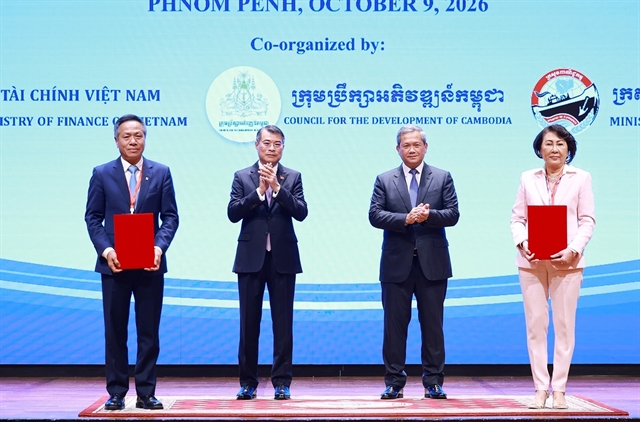
Vietnamese Prime Minister meets Cambodian National Assembly President
1.
|
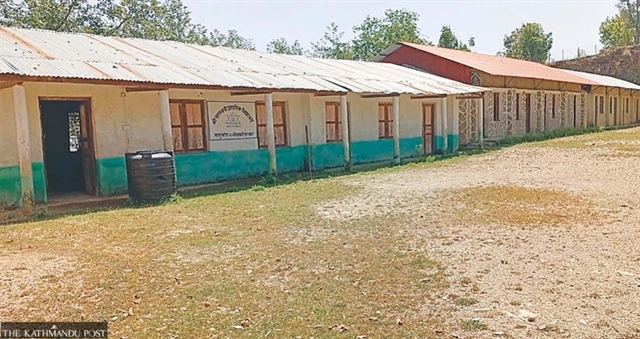
| No students enrolled at Saraswati Basic School in ward 4 of Kapurkot Rural Municipality in Salyan for the 2026 academic session. — The Kathmandu Post Photo |
KATHMANDU — The number of community schools in Nepal is declining while private schools continue to expand, according to the government's Economic Survey 2025-26, highlighting a shift that education experts say is deepening inequalities in access to education.
The survey shows that Nepal has 35,951 schools nationwide. Of these, 25,623 are community schools, 8,941 are private schools, and 1,387 are institutions such as madrasas, gurukuls and Buddhist monastic schools that provide education centred on religious teachings, sometimes alongside elements of formal schooling.
Five years ago, in 2020-21, community schools accounted for 27,813 institutions, representing 78 per cent of all schools. Private schools made up 19 per cent and religious institutions three per cent.
By 2025-26, the share of community schools had fallen to 71 per cent, while private and religious institutions had risen to 25 per cent and four per cent, respectively.
“The share of private schools is increasing. The number of community schools has declined due to school mergers,” the Economic Survey released last week said.
For more than a decade, the government has pursued a policy of merging community schools with low enrolment, leading to a gradual reduction in their numbers. Education experts and stakeholders have repeatedly warned that the policy is encouraging the privatisation of school education.
The trend is also reflected in student enrolment.
A total of 7.04 million students are enrolled in grades 1 through 12 across the country. Of them, 4.38 million, or 62 per cent, study in community schools, while 2.66 million, or 38 per cent, attend private schools. A decade ago, around 80 per cent of students studied in community schools and only about 20 per cent attended private institutions.
Peshal Khanal, a professor at Tribhuvan University's Central Department of Education, said government policies have weakened public education while strengthening the private sector.
“Many primary-level schools are being shut down. The government has a policy of closing schools with very few students, and local governments are actively carrying out school mergers,” Khanal said.
“This could further widen inequalities in access to and quality of education.”
He attributed the closure of small schools to slowing population growth and migration from hill districts to urban centres and the plains.
“The concept of developing large schools based on student numbers is being promoted in urban areas. This could result in even more small schools being closed,” Khanal said. “There has not been enough research into how this affects educational access and quality.”
He added that the closure of community schools creates more room for private institutions to expand.
While the number of community schools has declined, the number of Early Childhood Development (ECD) centres has increased.
The number of ECD centres rose from 41,284 in 2024-25 to 42,619 in 2025-26, an increase of 1,335 centres within a year. About 81 per cent of these centres are community-based and 19 per cent are privately operated.
The centres serve more than 1.22 million children.
Despite the increase in centres, enrolment has declined. During the 2024-25 academic year, 1.30 million children were enrolled in ECD programmes, compared with 1.22 million in 2025-26, a decline of about 80,900 children.
The survey shows that 77.5 per cent of children entering Grade 1 have prior ECD experience, up from 75 per cent five years earlier.
Female students account for 55 per cent of ECD enrolment, while boys make up 45 per cent.
Higher education enrolment rises
The number of students entering higher education has increased steadily.
According to the survey, enrolment in higher education rose by 10.9 per cent in 2025-26 compared with the previous year.
A total of 745,770 students enrolled in higher education in 2025-26, up from 672,489 in 2024-25.
More than half of all higher education students are enrolled in management-related programmes.
Around 20 per cent pursue technical fields such as medicine, health sciences, science and technology, and agriculture, while 80 per cent study general disciplines including management, education and humanities.
Despite government efforts to promote technical education, student interest in these fields remains limited.
Nepal currently has 21 universities, including 15 federal and six provincial institutions, as well as eight health sciences academies, six federal and two provincial.
Several provincial universities and health science academies have been established in recent years. However, Tribhuvan University continues to dominate the sector, enrolling 75.3 per cent of all higher education students.
Health indicators improve
The survey also reports significant progress in Nepal's health sector.
The number of government health facilities has increased by 1,755 over the past five years, reaching 8,976 in 2025-26, compared with 7,221 in 2020-21.
Between February-March 2025 and February-March 2026 alone, 230 new government health institutions were added.
The country now has 420 hospitals, 181 primary health care centres, 3,603 health posts, 426 Ayurvedic dispensaries and 4,346 other health facilities.
The expansion is linked to a government policy aimed at ensuring that every local government unit has a hospital and every ward has at least one health facility.
According to the survey, construction has been completed on 121 basic hospitals with capacities of five, 10 or 15 beds, while another 313 remain under construction.
Health outcomes have also improved considerably.
“Maternal mortality has declined significantly. Neonatal, infant and under-five mortality rates have decreased, while the proportion of women delivering in health institutions has increased,” the survey said.
The proportion of fully immunised children has also risen.
Maternal mortality has fallen from 539 deaths per 100,000 live births before 2000 to 151 currently.
Neonatal mortality has dropped from 33 deaths per 1,000 live births in 2011 to 17.
The share of fully immunised children has reached 92 per cent.
About 90 per cent of pregnant women now deliver in health facilities, compared with just 35 per cent in 2011.
The proportion of women receiving at least four antenatal check-ups has increased from 50 per cent in 2011 to 88 per cent.
Infant mortality has declined from 46 deaths per 1,000 live births in 2011 to 27 in 2025, while the under-five mortality rate has fallen from 54 to 31 per 1,000 live births over the same period, according to the survey. — THE KATHMANDU POST/ANN
World
 World
World
 World
World
 World
World
 World
World
 World
World
 World
World
 World
World
 World
World
 World
World
 World
World
 World
World
 World
World
 World
World
 World
World