 World
World
State-level council to confer intangible cultural heritage artisan titles
1.
|
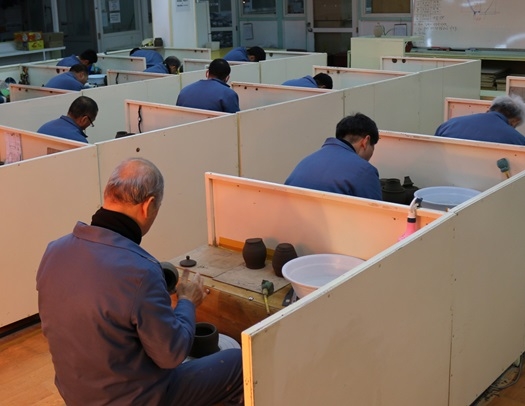
| Inmates undergo vocational training at a prison in Anyang, Gyeonggi Province. — Photo courtesy of the Republic of Korea's Ministry of Justice |
SEOUL — The Republic of Korea will increase the number of inmates released on parole from next year as part of efforts to ease chronic overcrowding in correctional facilities, according to the country's Ministry of Justice.
The ministry said it plans to parole about 1,340 inmates a month in 2026, a 30 percent increase from this year, adding that it will actively push ahead with broader application of parole.
Officials stressed that the measure would be implemented with public safety as a priority, with parole expansion focused on nonviolent offenders.
“While maintaining rigorous review standards for serious crimes, we will expand parole for inmates assessed as having a low risk of reoffending,” a ministry official said. “By encouraging voluntary rehabilitation, we aim to reduce the recidivism rate and help inmates return to society as responsible members."
The move aligns with the current administration’s broader efforts to address overcrowding, which has raised humanitarian concerns across prisons and detention centres.
According to the Korea Correctional Service Annual Statistics Report 2025 released by the ministry, correctional facilities nationwide are operating at 122.1 percent of capacity.
The strain has been driven by delays in building new facilities and a growing inmate population.
The daily average inmate population rose from 51,117 in 2022 to 61,336 in 2024, driven in part by a sharp increase in the number of drug offenders in correctional facilities, which has nearly doubled to 6,628 over the same period.
While ministry guidelines call for 2.58 square metres of living space per inmate, excluding restrooms, the National Human Rights Commission of Korea said in October that some inmates had been provided with only about 2 square metres per person for nearly a year.
Overcrowding has also aggravated management difficulties, contributing to deteriorating working conditions that have left around 20 per cent of personnel at correctional facilities in a mental health risk group, according to a ministry survey released in February.
“Correctional incidents, including assaults among inmates caused by overcrowding, have also surged. The resulting job-related stress is taking a heavy toll on correctional officers,” a correctional official said.
In response, the ministry paroled 1,218 inmates in September, including foreign nationals subject to deportation as well as elderly and ill inmates deemed unlikely to reoffend.
The figure marked a 30 percent increase from the monthly average of 936 parolees recorded between May and August, before President Lee Jae Myung took office in June and during the early months of his administration. — THE KOREA HERALD/ANN
World
 World
World
 World
World
 World
World
 World
World
 World
World
 World
World
 World
World
 World
World
 World
World
 World
World
 World
World
 World
World
 World
World
 World
World