 Travel
Industry and trade sector puts technology into practice
1.
|
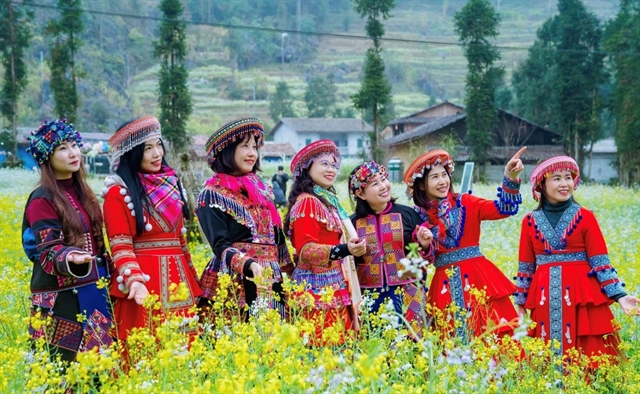
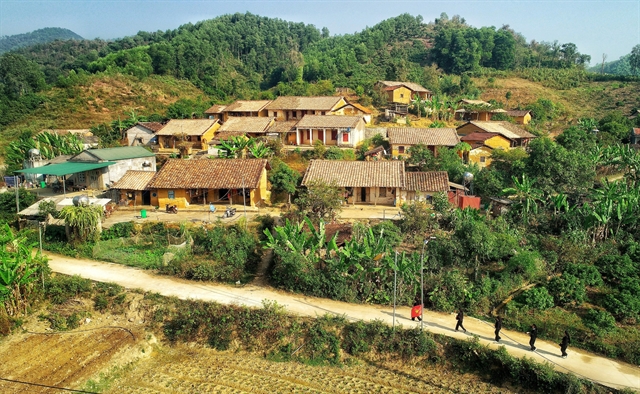
| Visitors check in at Lũng Cẩm Cultural Tourism Village, where traditional architecture and local life remain vividly preserved. — Photos vov.vn |
TUYÊN QUANG — From an expanded geographical canvas to layered travel experiences, Tuyên Quang’s tourism sector is undergoing a strong transformation, grounded in nature, culture and local communities.
Following administrative restructuring, the province has not only widened its boundaries but, more importantly, unlocked an entirely new tourism space, one that is diverse and rich in depth. Stretching from the ecological zones of Na Hang – Lâm Bình to rugged stone plateaus, from pristine forests to remote frontier villages, Tuyên Quang is steadily building a unified tourism product system rooted in indigenous resources and cultural identity, with sustainability and enhanced visitor experiences at its core.
What sets Tuyên Quang apart is its approach: nature is not treated as a standalone destination, but as a backdrop that connects experiences. Against this backdrop, cultural identity becomes the soul – adding depth, narrative and lasting resonance to every journey.
The province’s cultural landscape is nurtured through traditional festivals, spiritual rituals, folk songs and handicrafts. Rather than being preserved as static 'heritage exhibits', these elements remain alive in everyday community life. As a result, community-based tourism here avoids staged performances, instead offering authentic experiences where visitors can eat, stay and live alongside locals, immersing themselves in indigenous rhythms and traditions.
Alongside this, a network of historical and cultural relics, notably the Tân Trào Special National Relic Site, plays a central role in developing heritage and educational tourism. Visitors to Tân Trào are not merely sightseeing; they are invited to listen, reflect and connect with stories deeply intertwined with the nation’s history.
Speaking on tourism development linked to cultural preservation, Chairman of the People’s Committee of Lũng Cú Commune, Trần Đức Chung said: “Tourism development is not just about creating more destinations. It is about awakening awareness and cultural pride among local people. When communities understand their own value and actively preserve it, tourism can truly develop sustainably.”
|
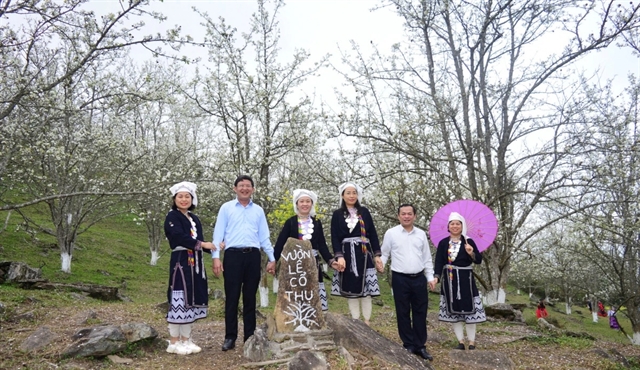
| Pear blossoms in Hồng Thái Commune bloom from mid-February to early March each year, heralding the start of the ecological tourism season in the mountainous region. |
In reality, it is precisely this proactive community participation that breathes life into Tuyên Quang’s tourism. Locals are not simply service providers, but storytellers, custodians of cultural space and companions on visitors’ journeys.
Lê Thảo, a visitor from Hà Nội, said: “In Tuyên Quang, I never felt like I was just sightseeing. Everything feels close and genuine – from nature and heritage sites to the way locals tell stories and inspire exploration. It feels like living within the space, not just observing it from the outside.”
According to Vice Chairwoman of the provincial People’s Committee, Vương Ngọc Hà, in 2025 Tuyên Quang’s tourism sector continued to record impressive growth, welcoming over 3.56 million visitors, including 485,020 international arrivals. Total tourism revenue reached VNĐ9.6397 trillion (approximately US$378 million), exceeding initial targets.
Beyond visitor numbers and revenue, the province is increasingly asserting its position on both regional and international tourism maps. Recognition such as the Đồng Văn Karst Plateau Global Geopark being named 'Asia’s Leading Cultural Destination 2025' and 'World’s Leading Cultural Destination 2025”, along with Lô Lô Chải Village being honoured as one of the “Best Tourism Villages 2025' by UN Tourism, highlights the effectiveness of community-based tourism tied to heritage preservation.
These achievements reinforce confidence and momentum as Tuyên Quang continues to pursue its tourism development goals.
Looking ahead to 2026, the province aims to welcome around 4.1 million visitors, reaffirming tourism as a key economic sector driven by green, sustainable and culturally rich development. Building on current successes, the focus is shifting from quantitative growth to enhancing the quality of visitor experiences – seen as the decisive factor in increasing value and competitiveness.
In line with Resolution No. 57-NQ/TW on accelerating digital transformation, priority will be given to improving infrastructure at key tourism sites, advancing digital applications in promotion and management, and gradually building a smart, synchronised and visitor-friendly tourism ecosystem. Training and capacity building, particularly for community-based tourism workers and guides, will also be strengthened to meet the evolving demands of modern travellers.
At the same time, Tuyên Quang is enhancing regional connectivity, expanding tourism spaces and encouraging longer visitor stays, while ensuring that tourism development goes hand in hand with heritage preservation, environmental protection and improved local livelihoods. — VNS
Travel
 Travel
 Travel
 Travel
 Travel
 Travel
 Travel
 Travel
 Travel
 Travel
 Travel
 Travel
 Travel
 Travel
 Travel