 Travel

Tighter controls on livestream sales
1.
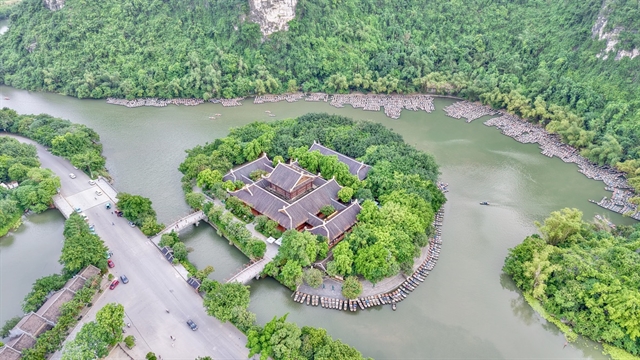 |
| The Tràng An Scenic Landscape Complex has been inscribed by UNESCO as a World Cultural and Natural Heritage Site. — Photo baovanhoa.vn |
Ninh Bình is rewriting its future by leaning on a past that stretches back a thousand years, proving that sometimes the oldest roots yield the boldest growth. Anchored in millennia-old cultural values, unrivalled natural landscapes and a commitment to sustainable development, the province is pursuing a bold strategy for 2025 - 2030 to transform into a centrally governed city distinguished as a Millennium Heritage City.
This is not nostalgic window dressing but a carefully argued, practical roadmap that aims to link Ninh Bình into the global network of heritage cities while accelerating its role in Việt Nam’s national development.
A capital forged by geography and history
For centuries, Ninh Bình has occupied a strategic place on Việt Nam’s map, geographically pivotal, militarily significant and culturally formative. As scholars have shown, Hoa Lư, the ancient capital nestled in the province’s karst landscape, had already assumed the characteristics of a medieval city by the late 10th century: a dense non-agricultural population, vibrant commerce and a developed system of river and land transport. Merchant ships from China and Southeast Asia once plied their waterways, turning Hoa Lư into an early sub-regional trading hub as well as a political centre.
Those attributes were no accident. The land’s unique geopolitics and natural corridors made it an ideal seat for a centralised monarchy. King Đinh Tiên Hoàng recognised and used these advantages to establish a capital that was both defensible and connected. Today, the remains of Hoa Lư sit at the heart of the Tràng An Scenic Landscape Complex - a UNESCO dual World Heritage site (cultural and natural) since 2014, the first and only such designation in Việt Nam and Southeast Asia. Tràng An exemplifies the millennium heritage landscape: a tapestry of rivers and mountains, ancient urban spaces, traditional settlements, heritage infrastructure and living cultural practices that anchor community identity.
Experts emphasise that Ninh Bình’s future city vision is rooted in practical continuity rather than dramatic rupture. Professor Nguyễn Quang Ngọc and others note that when people and policymakers responsibly exploit waterways, forests and trade routes, they can turn historical advantages into modern resources. The province has done exactly that - harnessing the values of its first imperial capital to create momentum for economic and urban development. This historical urban foundation gives Ninh Bình a credible claim to evolve as a Millennium Heritage City, one that preserves its past while channelling it into contemporary growth.
What makes Ninh Bình exceptional is the coexistence of natural and cultural heritage within the same development space. Beyond Tràng An, the province is preparing a dossier for UNESCO to nominate the Tam Chúc – Vân Long complex, a karst landscape on the southern edge of the Red River Delta. If recognised, this continuity of heritage landscapes would strengthen Ninh Bình’s green corridor identity, ecologically rich and regionally connected, bolstering three interlinked pillars of urban development: heritage city planning, a heritage-driven economy and culturally rooted creative industries.
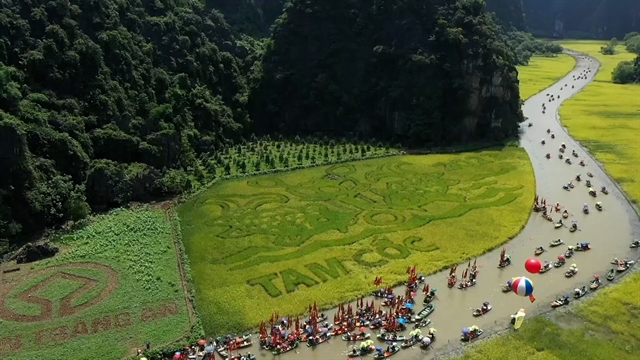 |
| Ninh Bình attracts more and more tourists. — Photo baochinhphu.vn |
International standards, local benefits
Local leaders are consciously aligning this trajectory with global frameworks. The provincial Department of Tourism stresses that the Millennium Heritage City model does not compromise preservation; instead, it dovetails with the United Nations’ sustainable development goals and UNESCO’s protection standards. This signals a deliberate move to internationalise the province’s ambitions, to meet global norms while maximising local value.
The numbers back the ambition. Ninh Bình holds more than 5,000 inventoried historical sites, over 1,100 officially classified sites, thousands of intangible cultural items (40 of which are on the National List of Intangible Cultural Heritage) and 17 artefacts designated as National Treasures. These assets form a dense cultural stock from which a robust heritage economy can be built: high-quality tourism, cultural industries, education and creative services that attract talent and investment.
Urban planners and architects argue that heritage itself can be a planning tool. Associate Professor Nguyễn Hồng Thục of Việt Nam National University, Hà Nội, sees Ninh Bình’s heritage landscape as sufficient groundwork for a historic city strategy that blends heritage conservation with urban renewal. Keeping heritage at the centre of planning encourages a balanced model, protecting sites while using them as anchors for tourism, cultural production and a knowledge-based economy.
Sustainability is also a pragmatic necessity. Nguyễn Quốc Tuân, head of Architecture at Phương Đông University, highlights the global pressures facing cities, climate change, resource constraints and unchecked urbanisation. Ninh Bình’s Millennium Heritage City model is therefore chosen not only for its cultural fit but as a resilient, sustainable development strategy, one that preserves ecosystems and cultural practices while fostering long-term economic stability.
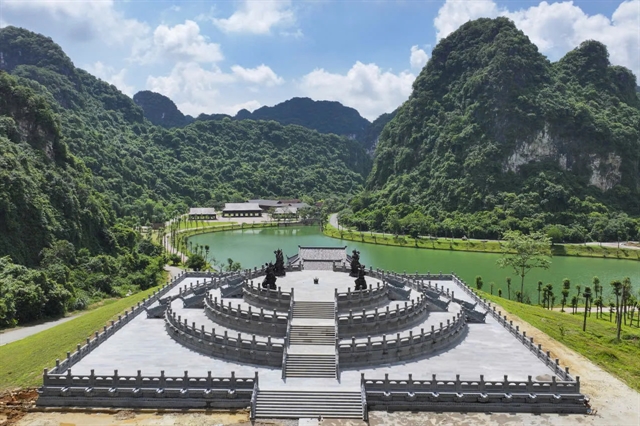 |
| The Altar of Heaven in Ninh Bình Province, where King Đinh Tiên Hoàng offered sacrifices to heaven and earth. — Photo thegioitiepthi.danviet.vn |
Ninh Bình’s economic and demographic trajectory supports this vision. Following spatial expansion, the province now boasts one of the country’s largest populations and ranks among the top ten economies nationwide. By 2025, its GRDP growth is projected at 10.65 per cent, placing it in the top tier of regional growth and among the leading recipients of foreign direct investment. Importantly, provincial authorities are converting growth into infrastructure: updated construction plans, upgraded technical and intercity connectivity, feasibility studies for airports and deep-water ports, river restorations and cultural-heritage park projects. These investments are not random; they are strategic moves to reorganise urban systems, reallocate resources and create new growth poles tied to heritage and high-value services.
Ninh Bình’s strategic choice is straightforward: treat heritage as a long-term, renewable resource that underpins development rather than an obstacle to it. The province emphasises harmony, protecting biodiversity and cultural integrity while pursuing socio-economic progress. By combining Millennium Heritage City aspirations with a Creative City approach, Ninh Bình aims to raise its competitiveness, deepen international integration and claim a leadership role among Việt Nam’s heritage urban centres.
Ninh Bình is not trying to freeze its past. It is weaving history into a sustainable future, building a city where millennial landscapes and living traditions power contemporary growth, attract global attention and pass heritage on to coming generations. The result could be a new model of urban success: rooted in memory, designed for resilience and open to the world. VNS
 |
| Thung Ui, a new tourist destination in Ninh Bình. — Photo thegioitiepthi.danviet.vn |
Travel
 Travel
 Travel
 Travel
 Travel
 Travel
 Travel
 Travel
 Travel
 Travel
 Travel
 Travel
 Travel
 Travel
 Travel