Divo Tùng Dương reunites with hit songwriter for 25th-anniversary concert
1.
|
Nguyễn Mỹ Hà
Some of you may have seen the recent high school student demonstrations in France with growing concern. Students have been protesting against the general state of their educational facilities, including overcrowding and a lack of air conditioning, teachers and investment.
The once-peaceful demonstrations and legitimate demands have given way to violence, with serious consequences, and thousands of adolescents have been arrested.
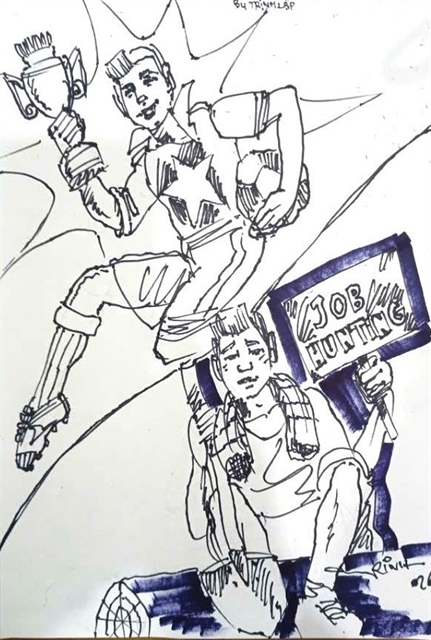
This sort of incident makes us think more deeply about what's going on in our own society here in Việt Nam. The latest report from the National Statistics Office for the third quarter raised the alarm for us all: 1.6 million young people aged 15-24 are not in education, employment or training. The third quarter saw this figure rise by more than 195,000 compared with the previous quarter.
The number of those not in education, employment or training tends to increase this time of year because many are in a period of transition after graduating from college or other tertiary institutions and while looking for work.
This situation is compounded by a serious shortage of high schools and vocational training centres for young people of this age. The rate of 11 per cent of Vietnamese young people not in education, employment or training is lower than the current global average of 20 per cent, but if measures are not taken and more schools and vocational centres are not built, this figure could rise significantly, experts have warned.
The second-quarter statistics report showed that nearly 70 per cent of this group lived in the countryside, and more than half were female. It also found that 87 per cent had never been received vocational training, more than half had not completed high school, and only one-third wanted to find a job.
The number of young people in this situation could be reduced if students who fail to secure a place at high school are offered alternative education or training opportunities.
Due to the limited number of high schools, 65,000 young people were unable to secure places in public high schools this year. They were left without a place to continue their studies or learn a trade. Leaving a growing young man or woman without anything to do means leaving their future shrouded in uncertainty.
Modern societies need builders and designers, hairdressers and tailors, gardeners and plumbers. If everyone pursues office work, who will be left to plant rice and tend orchards, raise fish and poultry?
If young people are not given a chance to discover what they're good at and what they can do to make a living, it will be even harder for them to do so when they get older.
The current situation demands an immediate solution. The success rate of getting a teenager to high school is even harder than finding them a place in college. At 15, one is neither an adult nor a young child. When their parents cannot afford private school fees, they can be left, quite literally, with nowhere to go.
If vast sums of money can be poured into infrastructure to make cities look more attractive, then why can't public funds also be used to build more schools where adolescents can continue learning and developing their skills? Why can't vacant offices in former district administrative centres be turned into vocational training centres, where young people can learn from experienced people in their community?
A pilot programme could be launched in one community and then expanded to others. These adolescents cannot wait. A month without learning or meaningful activity can leave hopeful young people feeling lost and discouraged, and society may ultimately pay a much higher price.
When schools are built but fail to provide meaningful education or training, leaving vulnerable and struggling students behind, they lose sight of their fundamental purpose. Schools must welcome young people and equip them with knowledge, an understanding of right and wrong, help them discover their strengths and weaknesses, and give them chances to try, fail and try again.
Schools should not only boast about the success of excellent students, they should also embrace those who need more time and help to keep up with their peers. Exams are needed to guide the right students onto the right paths, not derail them for good. Opening a classroom today can close a door leading to social evils tomorrow.
Education must be a wall for them to lean on, not a cruel race that only glorifies those who achieve the best test results. If young people cannot learn advanced maths, they can still learn basic maths to open a sandwich shop or a tea stall. Even when something bad comes your way, being able to prepare food and earn a living is a skill that can lift someone out of distress.
Life is about trying, not just passing school exams. As parents, we simply want to help young people find a better future. — VNS
 Talk Around Town
 Talk Around Town
 Talk Around Town
 Talk Around Town
 Talk Around Town
 Talk Around Town
 Talk Around Town
 Talk Around Town
 Talk Around Town
 Talk Around Town
 Talk Around Town
 Talk Around Town
 Talk Around Town
 Talk Around Town