 Talk Around Town
Swiss President Guy Parmelin arrives in Hà Nội, beginning official visit to Việt Nam
1.
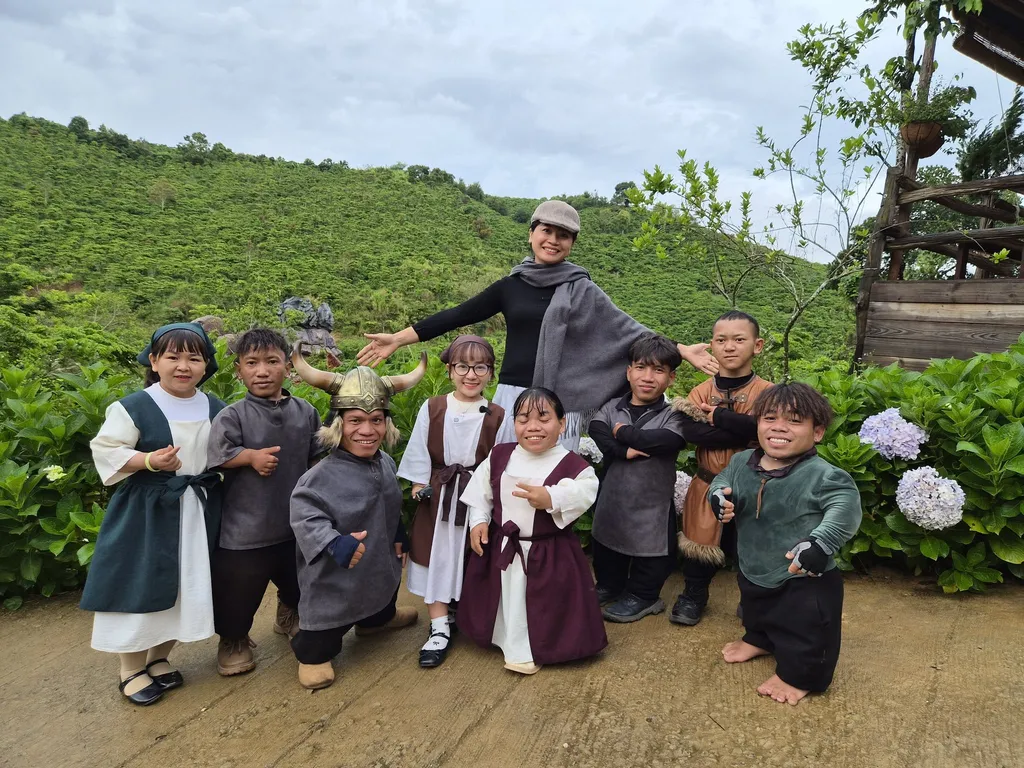 |
| A visitor takes a photo with performers at GOD Valley. — Photo courtesy of Văn Hải |
By Trần Khánh An
The first time I came across a video of GOD Valley on TikTok, my reaction was immediate: it looked uncomfortable.
The attraction looked like something straight out of The Lord of the Rings with tiny houses, miniature furniture and, especially, performers with dwarfism. They dressed like Hobbits, greeted visitors, posed for photos and even danced Gangnam Style as tourists enthusiastically filmed every moment.
Located in Đà Lạt in Lâm Đồng Province, GOD Valley appears to attract considerable attention, with many videos garnering millions of views. Videos posted by international visitors suggested that it has drawn guests from overseas.
The more I watched, the more I wondered: what exactly were visitors paying to experience?
From the videos I watched, not only the setting but also the performers' physical appearance brought Tolkien's fictional world to life, making them an essential part of the attraction's immersive experience. It is no surprise that they appear so prominently in videos shared by both the attraction and its visitors.
At first, it made me question what I really watched. Did I see a fairytale world, or did I also see a business model in which bodily differences became part of what was being sold?
Then I read the story of the people working there. Many of these performers belong to ethnic minority communities from remote, low-income areas. Among them are three siblings from Quảng Nam Province who left school before completing primary education and spent years helping their elderly mother on the family's small farm.
Now, they work six-hour shifts interacting with visitors and caring for animals. They earn around US$550 a month – roughly comparable to what young white-collar workers earn in big cities – with accommodation, meals and transport provided by the company.
The founder, Vy Ngọc Tài, said the project gradually became something more than a fantasy-themed attraction.
"Before becoming the valley's stars, they lived hidden from society," he told VnExpress. "Here, they have jobs suited to their abilities, a stable income and, more importantly, confidence."
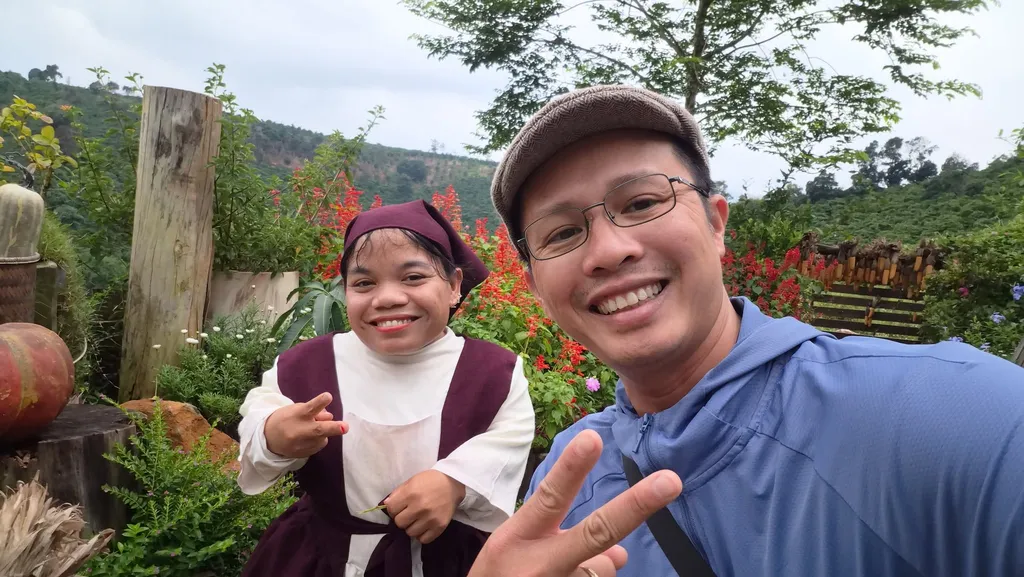 |
| A visitor takes a selfie with a performer at GOD Valley. — Photo courtesy of Văn Hải |
That was the moment I realised this story was far more complicated than I had assumed. The performers' physical differences become part of the attraction's commercial appeal. It also risks reducing them to their roles, and their stories as siblings, members of ethnic minority communities or individuals with unique personalities may fade into the background.
That is an uncomfortable possibility, yet only one side of the coin. GOD Valley provides employment opportunities for people with dwarfism, who frequently face barriers in education and the labour market.
It is easy to view the attraction through a simple moral lens. Either they empower people with dwarfism by providing jobs, or they turn physical difference into part of the spectacle. But the two possibilities are not necessarily mutually exclusive.
Earning a living
Where is the line between inclusion and commercialisation? If a job provides income, confidence and opportunities, yet relies on performers' physical differences to attract audiences, can it be both empowering and rooted in the commercialisation of bodily difference?
Sure, some performers may freely choose this job and are proud of it. But recognising their choice should not prevent us from questioning the limited opportunities that shaped that choice.
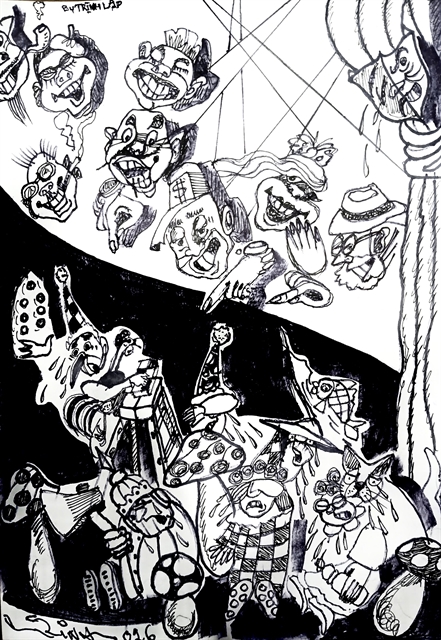 |
| Illustration by Trịnh Lập |
This attraction reminded me of the travelling freak shows of the 19th and early 20th centuries, where people with congenital disabilities or rare medical conditions were exhibited for public entertainment.
Looking back, it is easy to criticise these shows as degrading for turning disability into something to be stared at and commercialised. Yet at a time when people with disabilities had few employment opportunities and little social welfare support, performing was one of the only ways to earn a living.
American historian David A. Gerber argued in his 1992 article, "Volition and Valorisation in the Analysis of the Careers of People Exhibited in Freak Shows", that a performer's volition cannot be detached from the systemic constraints of a society that commodifies bodily difference.
A performer might willingly join a freak show, but the lack of meaningful opportunities for them shaped that decision. Recognising their personal agency without questioning the conditions that shape their choices equates "having a choice" with "having a fair opportunity".
Of course, GOD Valley is very different from 19th-century freak shows in many respects. Still, they share one ethical question: what happens when a person chooses a job in which their physical difference becomes part of what they are paid for?
Perhaps the most important question is not whether the performers enjoy working there. The available evidence suggests that many of them do. Nor is it whether attractions like this should exist.
The question is about whether people with dwarfism have equal access to stable and socially accepted employment beyond attractions like this.
If people with disabilities had more fulfilling job alternatives, performing at a Hobbit village would be a career option among many. People with dwarfism can become Hobbit performers because they genuinely choose to, rather than because their decision is shaped by limited opportunities.
Fantasy has given these performers a livelihood and confidence. However, a truly inclusive society should give them an even more valuable thing – a genuine choice to pursue any career and to be recognised as individuals with the same rights, talents and aspirations as everyone else.
The real measure of inclusion is not whether people with dwarfism can play convincing Hobbits. It is whether performing is just one of many career choices available to them. VNS
Talk Around Town
 Talk Around Town
 Talk Around Town
 Talk Around Town
 Talk Around Town
 Talk Around Town
 Talk Around Town
 Talk Around Town
 Talk Around Town
 Talk Around Town
 Talk Around Town
 Talk Around Town
 Talk Around Town
 Talk Around Town
 Talk Around Town