 Talk Around Town
Textile exports face dual challenges of sustaining orders and boosting efficiency amid growing competition
1.
 |
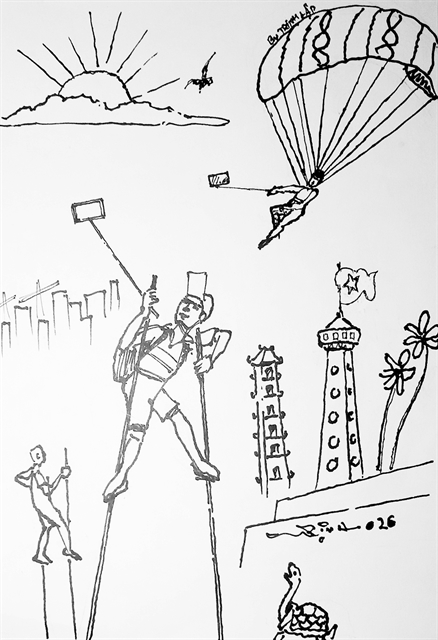
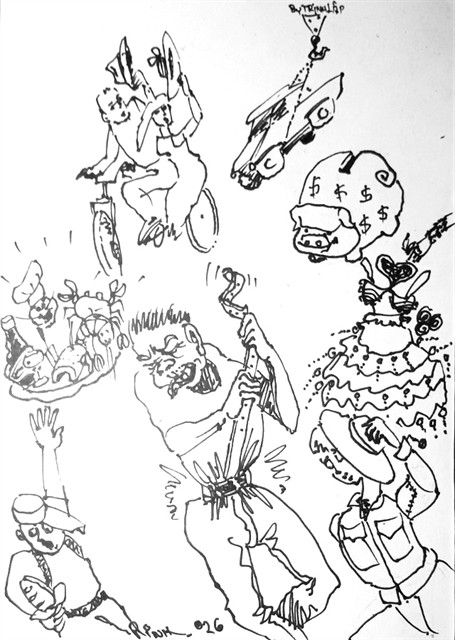
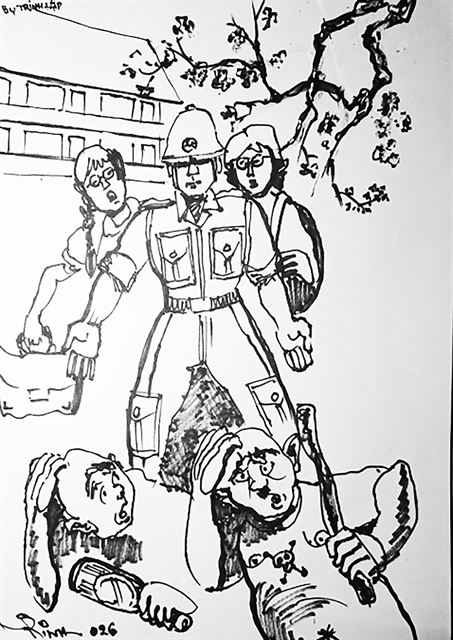
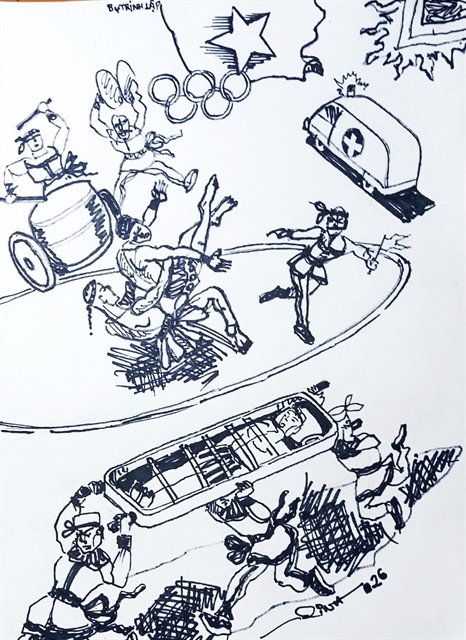
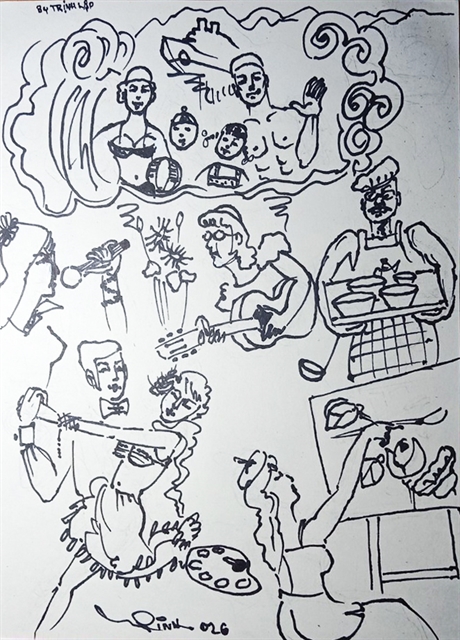
| Illustration by Trịnh Lập |
by Nguyễn Mỹ Hà
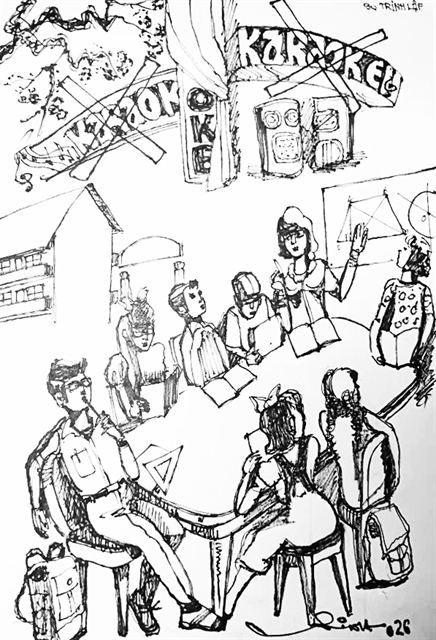
HÀ NỘI — As students across Việt Nam prepare for final and entrance examinations, a quiet campaign from a commune in Vĩnh Long Province has struck a chord nationwide, with local authorities asking residents to lower the volume and give children a better chance to study in peace.
The People’s Committee of Mỏ Cày Commune has requested that small karaoke parlours in the area, as well as registered “sing-for-each-other” karaoke businesses, avoid causing noise disturbances in surrounding neighbourhoods during examination periods.
From May 11 to 22 and from June 1 to 12, households have also been asked not to use home karaoke systems, while parties and events are requested to keep noise levels from disturbing nearby residents.
Karaoke venues with soundproofed rooms may continue operating in accordance with their licences.
Although the measure only applies temporarily in a commune of more than 100,000 residents, it has attracted widespread attention and support across the country.
“How wonderful, I wish the whole country would follow suit,” residents from other localities said after hearing the news.
Huỳnh Trung Tính, chairman of the Mỏ Cày Commune People’s Committee, said local authorities had received repeated complaints about excessive noise caused by overenthusiastic or intoxicated karaoke singers disturbing neighbourhood tranquillity and affecting school students preparing for exams.
Tính said authorities faced difficulties penalising noise violations because officials must measure sound levels using specialised equipment.
He said recreational activities were a legal right for working people after work. As a result, local authorities were encouraging residents to voluntarily respect noise limits and support students during exam season rather than relying mainly on administrative fines.
Local police also stepped up efforts to remind residents about noise regulations and encourage compliance instead of immediately issuing penalties.
The move had been welcomed by residents, especially families with children preparing for primary, secondary and university entrance examinations.
Families holding weddings, parties or special occasions had also been asked to monitor music and noise levels, particularly during evening hours.
Under current regulations, excessive noise is prohibited between 10pm and 6am. Since December 15, 2025, violations involving noise exceeding permitted levels by between 2dBA and 40dBA may face fines ranging from VNĐ1 million (US$40) to VNĐ140 million ($5,000). Higher levels may result in fines of up to VNĐ160 million ($6,000).
Businesses or commercial establishments violating the rules may face penalties double those imposed on households, along with additional costs for inspections or remedial measures if required.
The issue has reignited wider public discussion about noise pollution in residential areas, particularly the widespread use of karaoke systems late into the night.
The love of singing, the desire for self-expression and the urge to revive once-admired voices have, for many reluctant listeners, become increasingly difficult to tolerate.
For neighbours forced to listen to emotional ballads about "carrying a mother on one's shoulder, farewell to love, or promises that a love lasts 50 years", the noise can quickly become exhausting, especially when competing households project entirely different emotions through loudspeakers into the same narrow streets.
As Việt Nam enters what leaders describe as a new era of development, many residents believe learning when to stay quiet can be just as valuable as raising one’s voice.
The request from Mỏ Cày authorities also reflects growing concern for children’s wellbeing during critical school years.
Many students will not achieve the examination results they hope for, but families and society still want them to know they were given the best possible conditions to study.
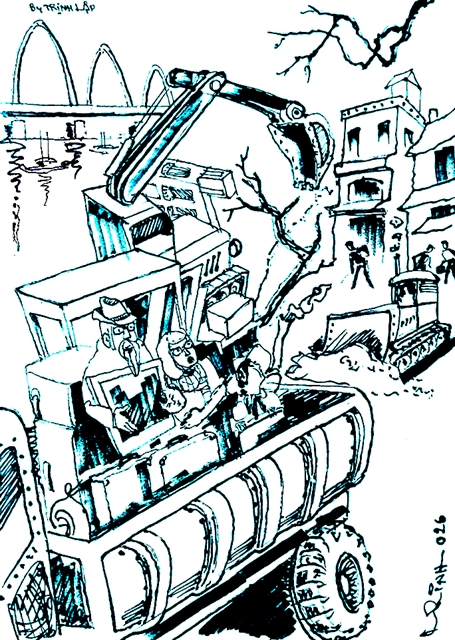
The discussion has also prompted sympathy for students living in the resettlement areas in Hà Nội, where some children are preparing for examinations while families relocate homes and neighbourhoods are demolished for development projects.
For many of them, revision has come amid disruption, uncertainty and the emotional strain of leaving behind familiar homes and childhood memories. — VNS
Talk Around Town
 Talk Around Town
 Talk Around Town
 Talk Around Town
 Talk Around Town
 Talk Around Town
 Talk Around Town
 Talk Around Town
 Talk Around Town
 Talk Around Town
 Talk Around Town
 Talk Around Town
 Talk Around Town
 Talk Around Town
 Talk Around Town