 Talk Around Town
New liquidity rules offer lending headroom but funding pressures persist
1.
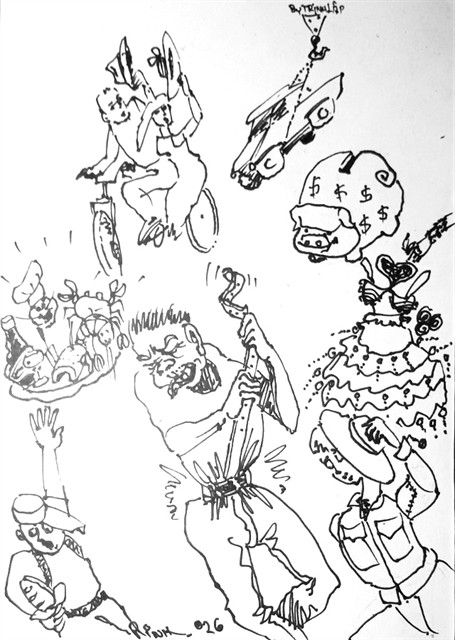 |
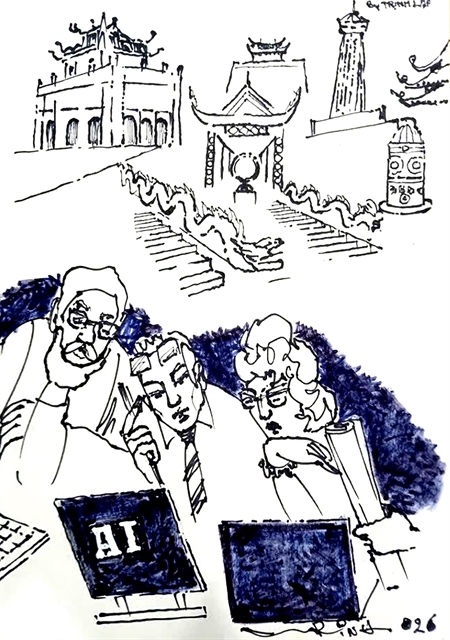
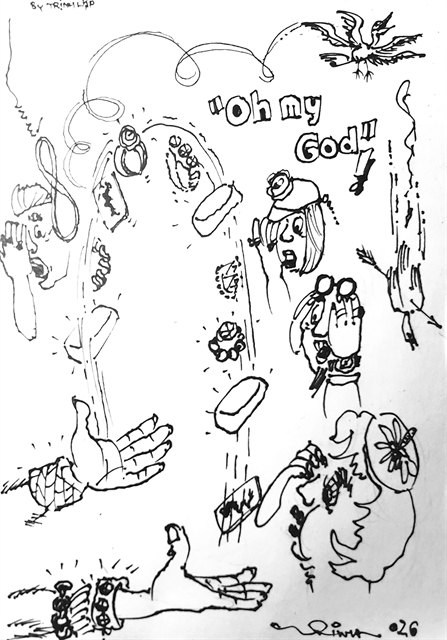
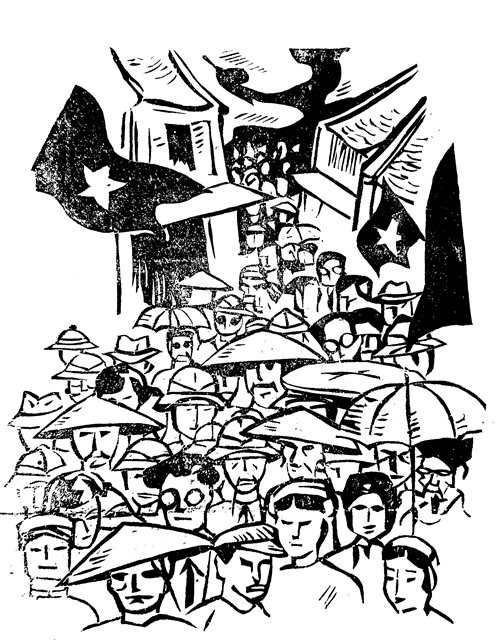
| Illustration by Trịnh Lập |
Nguyễn Mỹ Hà
The Middle East crisis has sent direct waves. The petrol hike has hit almost all of us in this country, particularly those who pay for weekly gas to get around. In Hà Nội and Hồ Chí Minh City, where residents of working age rely mostly on personal transport to get around, the gas hike doesn't spare any of us.
"Today I've just paid VNĐ200,000 for a full bike, which usually costs me VNĐ120,000," exclaimed a government worker in his early 50s. He uses a motorbike to get to work five days a week, and the amount of gasoline he purchases each time can barely keep him fully fuelled for that time.
Last week, long lines of motobike owners waited to get petrol refills until midnight, which was worrying to many. Though some of us didn't find ourselves among those, sooner or later, we all have to refill our bikes.
How long can you last? If anything happens to the local gas station, how do we get to work, to the market, to pick up our kids from school, to visit our parents in a different neighbourhood?
The public transport system is already full of students and the elderly, and may soon have to carry more who switch from personal transport.
Meanwhile, this summer Hà Nội plans to switch to electric bikes in certain areas at certain times, where gas bikes will be banned to reduce emissions.
Prior to the petrol crisis, Hanoians had already been getting prepared to switch from gas-powered vehicles. "I've bought a new e-bike for VNĐ22 million (US$830)," said Nguyễn Bình, who rides 6km every day to work, with stops to pick up his child and run other errands.
Switching to electric bikes has some disadvantages, especially when it comes to access to a suitable battery, both at home and at work, or in between.
If the crisis in the Middle East doesn't cool down anytime soon, we may see a partial return to habits made during the pandemic several years ago, with fewer trips outside, fewer trips to work, fewer get-togethers with friends and family. More walking and use of bicycles will surely occur.
At the same time, daily market prices have already risen since the Lunar New Year break, so much so that old local recipes using common ingredients are being circulated in order to save time, money and travel.
"Here's a secret recipe from the hard old days, where you can make two eggs with lots of tomatoes, enough for six people," read a message from an online cooking community of nearly 200,000 people. It could be a bit of exaggeration from the recipe provider, but it hints some truth in it.
Since late last year, a new vogue of re-introducing old vegetarian recipes with distinctive ingredients has made the rounds online, making simple dishes more flavourful and suitable for the times we live in.
"Cái khó ló cái khôn", a popular saying, means that in difficulty, wisdom is born. The age of easy or cheap food may slowly fade away. If resources become less abundant, skills and expertise make a difference. For home-makers, crafting a nutritious meal for the family with limited resources will soon be a valuable asset.
Ordering food has become so easy and popular that a generation of people today do not or cannot prepare a full meal for themselves. With the petrol price hikes, the cost of delivered food will also increase as a result, and so will other services or daily amenities. Unfortunately, salaries will likely stagnate.
At home, we all may be used to our mother's cooking and to most of us, they are the best cooks in the world. But in these times, perhaps that luxury will not be so available, and we will have to try to expand our options and tastes, try new and different food, and overall simply be less fussy. VNS
Talk Around Town
 Talk Around Town
 Talk Around Town
 Talk Around Town
 Talk Around Town
 Talk Around Town
 Talk Around Town
 Talk Around Town
 Talk Around Town
 Talk Around Town
 Talk Around Town
 Talk Around Town
 Talk Around Town
 Talk Around Town
 Talk Around Town
.jpeg)