 Economy



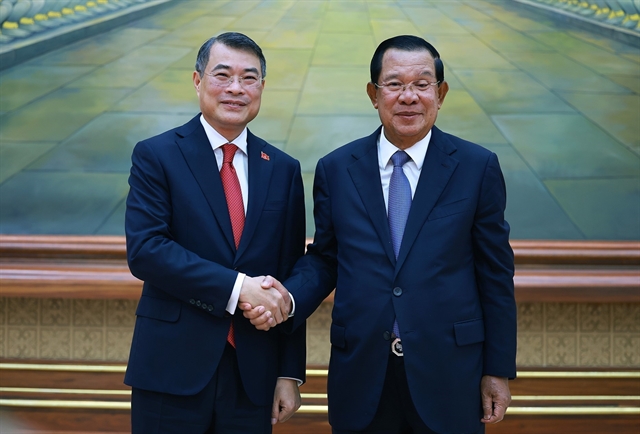
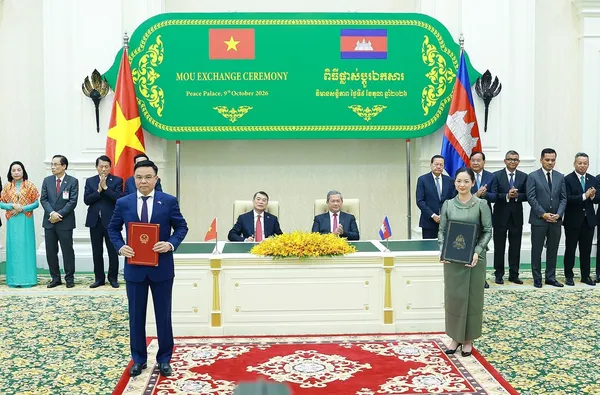
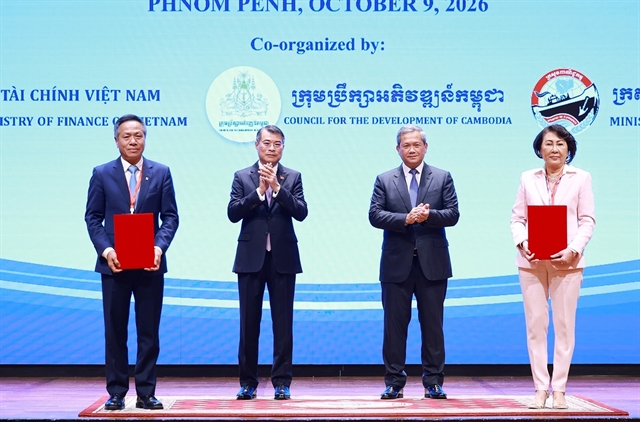
Vietnamese Prime Minister meets Cambodian National Assembly President
1.
|
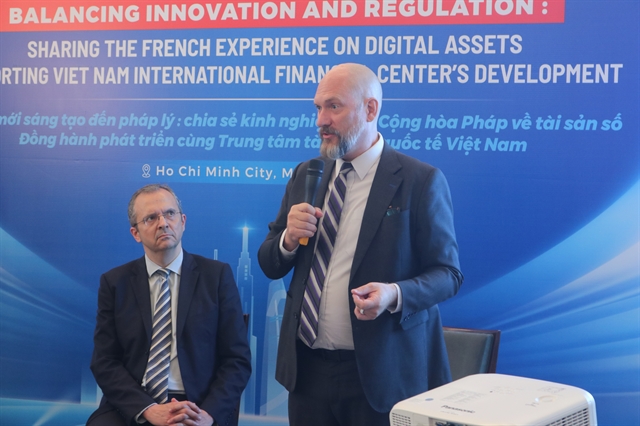
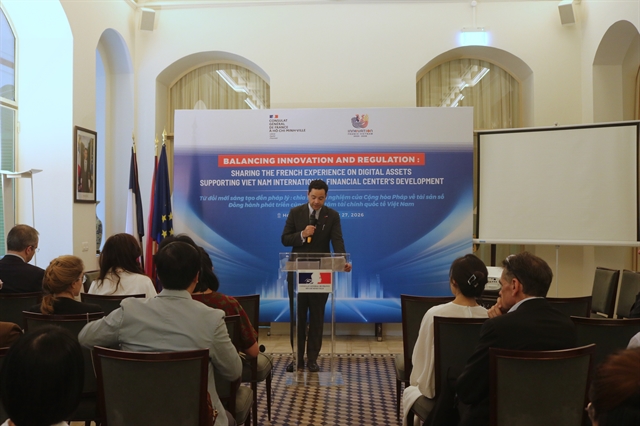
| Richard D. McClellan, CEO of the Việt Nam International Financial Centre (VIFC) in HCM City, speaks at a seminar on Wednesday at the French residence. — VNS Photo Hồng Linh |
HCM CITY — Việt Nam is developing a legal framework for digital asset management to create a more secure digital investment climate for international organisations, experts said at a seminar in HCM City yesterday.
The seminar, held by the Consulate General of France in HCM City, discussed digital asset issues in the context of developing HCM City's International Financial Centre (VIFC), focusing on the legal framework, digital asset development, and market risk management.
Việt Nam's International Financial Centre initiative and the rapid development of its digital economy demonstrate the country's determination to position itself as a leading regional player in financial innovation, according to Etienne Ranaivoson, Consul General of France in HCM City.
Digital assets represent far more than a purely technological or financial issue. They are part of a broader transformation, affecting economies, business practices and international exchanges.
|
| Experts discuss digital assets, risk management and legal frameworks at a seminar organised by the Consulate General of France in HCM City on May 27. — VNS Photo Hồng Linh |
‘The broader context is the France-Việt Nam comprehensive strategic partnerships, which we signed in 2024. We were the very first European partner to sign such a partnership, and France fully stands with this ambition,’ he added.
He mentioned that both countries share similar challenges, including building a clear legal framework that is fit for rapidly changing technologies, balancing economic attractiveness with support for innovation, and managing the risks associated with digital assets.
He also highlighted the need for legal certainty, greater security in transactions, and ecosystem legitimacy in order to build financial centres that are competitive, innovative and secure.
Richard D. McClellan, CEO & Executive Director of the Việt Nam International Financial Centre (VIFC) in HCM City, said the centre serves as a specialised legal and regulatory platform designed for international finance within Việt Nam’s legal framework.
It operates as a ring-fenced financial zone operating under international-standard rules and practices, which is also a gateway for global capital and cross-border financial activity in Việt Nam and a controlled environment supporting innovation in fintech, digital assets and emerging financial sectors.
The 899-hectare VIFC-HCMC zone will span across both banks of the Saigon River, connecting the city’s established financial district with the Thủ Thiêm development area, supported by integrated planning, priority infrastructure, and streamlined investment mechanisms.
In 2026, the VIFC is undergoing an institution-building process, which includes finalising licensing frameworks, preparing the membership registration portal for launch, and developing a one-stop investor service.
The centre is targeting a market launch in 2027 as its first operational year.
Sharing experiences about digital asset management, Olivier Vigna, CEO of Paris Europlace, said the European Union utilises the Markets in Crypto-Assets Regulation (MiCA) to govern Crypto-Asset Service Providers (CASPs), including exchanges, custodians, brokers, trading platforms, advisers, and portfolio managers.
It defines cryptoassets broadly as digital representations of value or rights using distributed ledger technology.
Under the regulation, CASPs must implement internal control and risk-management systems, as well as ensuring operational resilience and cybersecurity protections.
Client cryptoassets must be segregated from the provider’s own assets, and marketing communications must be fair, clear and not misleading, he said.
Furthermore, white papers are mandatory for many public cryptoasset offerings, and they must contain detailed disclosures about risks and rights. National competent authorities can suspend or prohibit misleading cryptoasset offerings.
Meanwhile, Nguyễn Trần Minh Quân, representative of the Việt Nam Blockchain and Digital Assets Association (VBA), said that Việt Nam is tightening management of the digital asset market.
He mentioned that the country has issued policies and regulations covering financial-crime compliance, data management, personal data protection, cybersecurity and fraud management. — VNS
Economy
 Economy
 Economy
 Economy
 Economy
 Economy
 Economy
 Economy
 Economy
 Economy
 Economy
 Economy
 Economy
 Economy
 Economy