 Talk Around Town

Việt Nam should focus quantum push on security, talent: US-based scientist
1.
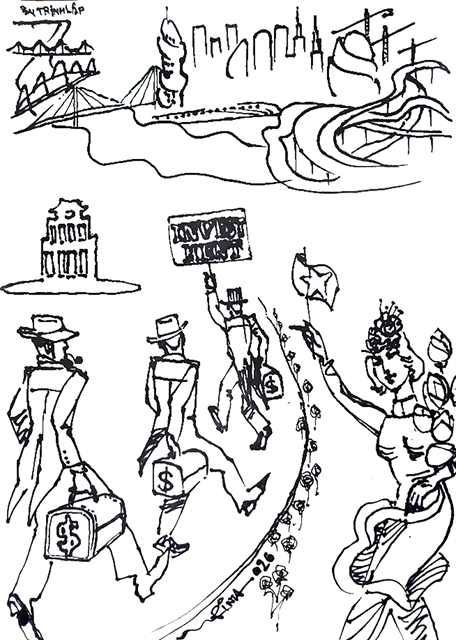 |
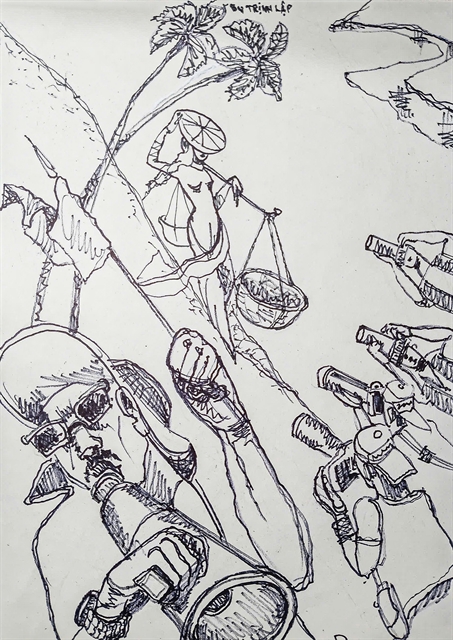
| Illustration by Trịnh Lập |
Nguyễn Mỹ Hà
In the 1960 poem The Ballad of the Train, Chế Lan Viên wrote: "Khi ta ở chỉ là nơi đất ở; Khi ta đi, đất đã hóa tâm hồn". Literally, these lines mean: "When we live in a place, it is merely land to dwell on; When we leave, the land has already become part of our soul."
In the poem, Viên recalled the harsh years of living through the resistance war against the French, when young soldiers received immense support from indigenous people – a brother or sister, a mother who cared for them when they were ill, or a young liaison boy who delivered letters and never lost a single message.
"Tình yêu làm đất lạ hóa quê hương," he wrote, describing how "love can turn a strange land into one's homeland". He wrote about how young men and women brought with them the spirit of the mountains and the love of the local people back to the cities after victory. Although they had formed deep ties with the new land and its people had become like family, they still had to return home, carrying fond memories with them.
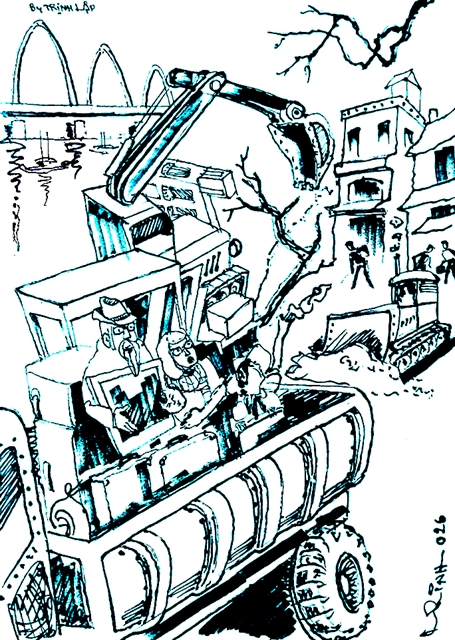
In more recent times, more than 800,000 people living in different parts of Hà Nội have been displaced from their homes, making life difficult for many. Most were never mentally prepared for such displacement.
One of the major factors contributing to a person's mental wellbeing is emotional stability and a strong connection with one's social surroundings. Many residents are now searching for a place to rent or for a new apartment, but in the process lose their livelihoods, having previously earned a living by selling groceries or other neighbourhoods jobs.
For people who have had to leave their homes, whether for a new apartment building or an allotted plot of land 15–20 kilometres away from where they used to live, it is not simply a matter of attachment to the land itself, but of bonds that may have lasted for at least a decade or even several generations. These ties have become their tradition and their reason for living. Severing them from that land can be as serious as a concussion, and the impact may last far longer than expected.
"The victims of the recent pandemic have a memorial in honour of their passing, but who will cry for the sacrifices we're making to make our common city Hà Nội more beautiful?" asked a resident of Hồng Hà Ward who, along with many others in the neighbourhood, now has to look for a new home and new neighbours all at once.
It is impossible to compare the people of Hà Nội with those who lost their lives in the pandemic. However, this emotional outcry carried a degree of truth, and the truth is rarely easy to accept.
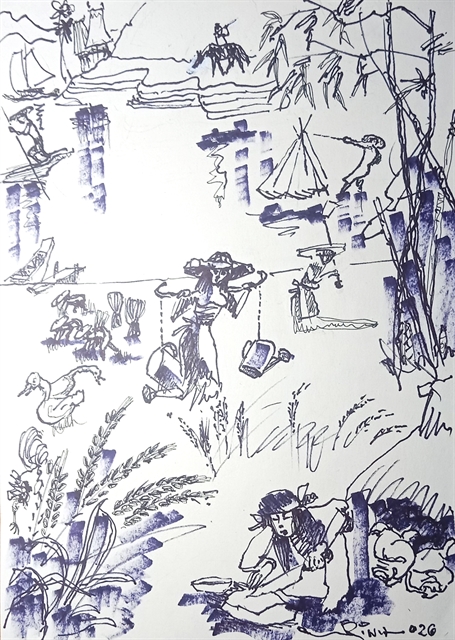
During the wars of resistance, our people did not hesitate to give up their valuable property and assets to support the sacred cause. They donated jewellery to the national budget to buy equipment and supplies for new recruits. During the wars, they abandoned their homes and gardens, even removing their precious hardwood doors to lay across muddy roads so military vehicles could advance.
Today, as citizens are being asked to give up their homes and surrounding land for public projects, there are still unresolved issues that need to be addressed. New projects need to incorporate existing residents into their planning, and the benefits current residents receive should at least match what they already have.
Among the most disruptive changes is that children are being forced to change schools, moving from familiar neighbourhood schools to entirely new environments with unfamiliar classmates and friends.
"Now my kids can walk 10 minutes to school," said one parent in the neighbourhood. "When we move to the new location, which is 20km away from here, how can they manage that distance when we cannot take them every day?"
The publicity campaigns for development projects always repeat the same message about modernity, fast highways and large boulevards. Yet neither local residents nor international visitors who fall in love with Hà Nội and carry memories of the city with them do so because of modernity or highways.
Hà Nội has a history stretching back more than a thousand years, and Hanoians are proud of their traditions. Yet this history is not always visible in spectacular ancient relics, as Hanoians themselves often joke that it is "a thousand years of making a fuss over nothing".
What this means is that ordinary things throughout Hà Nội can become poetic, romantic, or carry a special meaning, or sometimes all three at once. Like any metropolis or cultural melting pot, the people of Hà Nội have embraced both praise and criticism, turning them into part of the city's unique heritage.
It is the people in your neighbourhood, the street vendors who appear at certain hours, or the vendor shouting "Popcorn, peanut anyone?" late at night. It is the familiar question, "Have you eaten?", the hidden cafés, the fresh noodle shops, or the popular stalls that give Hà Nội its charm. Not to mention the streets lined with small purple and red flowers, the lakes, the scenery and, last but not least, train street.
"A small lane, a little street, my home was there," reads the lyrics of one of the many songs about Hà Nội by Lê Vinh. "I dream of returning every day!"
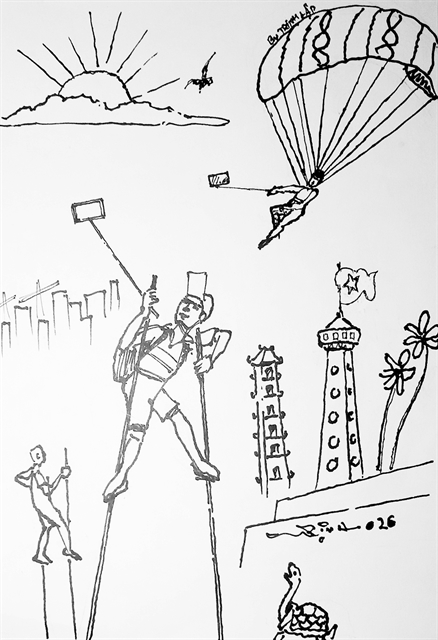
Even as Hà Nội becomes more modern with taller skyscrapers and faster highways, the pain of losing those small memories and familiar fragments of life will only grow stronger. VNS
Talk Around Town
 Talk Around Town
 Talk Around Town
 Talk Around Town
 Talk Around Town
 Talk Around Town
 Talk Around Town
 Talk Around Town
 Talk Around Town
 Talk Around Town
 Talk Around Town
 Talk Around Town
 Talk Around Town
 Talk Around Town
 Talk Around Town