 Talk Around Town

Top Vietnamese leader meets with Belgian Senate Speaker, House President
1.
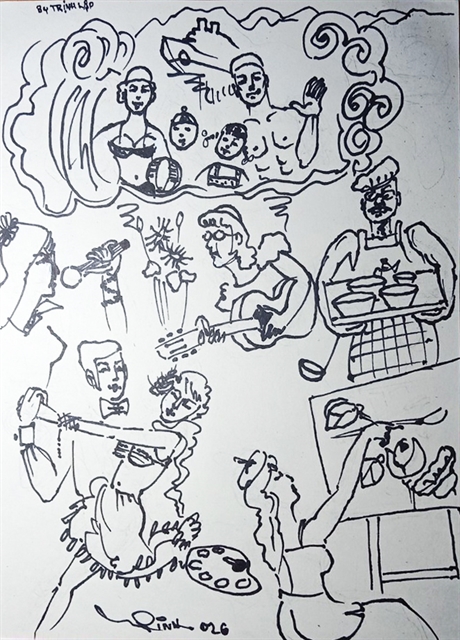 |
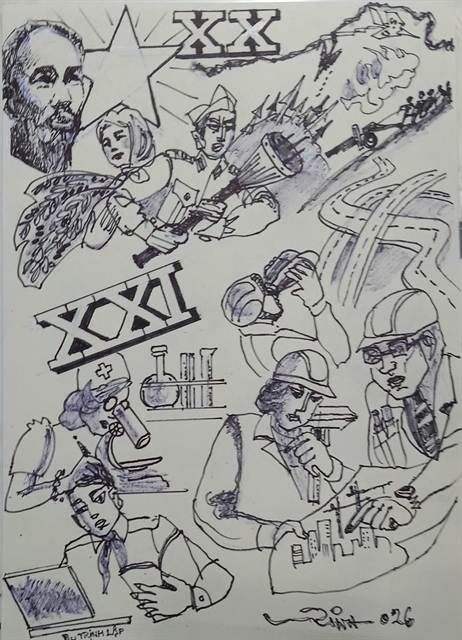
| Illustration by Trịnh Lập |
By Nguyễn Mỹ Hà
It’s International Women’s Day this week and those who cherish the role of women in family and society need to remember that, though we are well into the 21st century, from time to time we as women must speak up for ourselves or insist on having things done our way, so that those around us know and respect our points of view.
The Winter Olympics wrapped up in late February in Milan- Cortina, Italy, yet people are still talking about Alysa Liu not only on figure skating or sports forums. She not only won the gold medal in women’s singles figure skating, but the way she won it on her own terms has inspired women of all ages, from teenagers to elderly men and women who value the growth and influence of inspiring women.
The world of figure skating has always been extremely selective, with young talents emerging in their early teens and retiring in their early 20s. The workload, peer pressure, competitiveness and public, sometimes even national, expectations can be so high that they crush fragile nerves and take away joy and passion.
At 16, Alysa Liu called it quits after the Beijing 2022 Olympics when ice rinks had to close due to the COVID pandemic. She lived a normal life like other teenagers and, after a year and a half, decided to return to professional skating to compete at this year’s Winter Olympics, but with more decision-making power: to choose her music, design her outfit and manage her diet. Even her beloved father needed to step back from interfering in her agenda and, above all, she wanted to keep her joy while training for the toughest competition.
Liu decided that no matter how intense the competition became, she would stay in control of her joy and happiness while doing what she loved. Winning medals was no longer the ultimate goal. Sharing and channelling her joy and talent to those watching her skate outweighed the medal chase. It freed her from many restrictions and gave her the freedom to fly on the ice as she danced. It eventually won her gold. She also succeeded in delivering her message: winning on her own terms without losing genuine passion for skating, making it a win-win outcome.
For many women, it is hard to balance both work and family, but if you want both and keep pushing through, with the help of others, you will achieve your goals in the end.
It is March now, but the Lunar New Year began only two weeks ago. The first Full Moon is the most important worship of the year, perhaps second only to the new year itself. Yet the housewife, homemaker or, as today’s men often call her, the "Nóc Nhà", or "The Rooftop", is already exhausted. How can she be mentally and physically prepared for the events of spring and beyond?
After Tết holiday, many women were eager to return to work, where they could take a break from household chores or social gatherings.
The fight for equal rights in the workplace has brought greater professional responsibility, especially for women in management or leadership roles in business or the public sector. A popular saying goes that when a woman excels at both work and family life, it is as if she has “three heads and six arms” (phụ nữ ba đầu sáu tay in Vietnamese).
Doctors at Gia Định Hospital in Hồ Chí Minh City advise that when stress starts to build, one should take a few minutes to inhale deeply and then slowly exhale. Doing this several times gives the brain more oxygen and helps calm the body. Give yourself a slow, steady start.
A casual conversation with colleagues at work may also help ease the pressure that can build after the first full moon and other family or clan commitments that need to be fulfilled.
Traditionally, men were in charge of major undertakings such as building a new house. Today, if you live in an apartment, there are almost no such big deeds. Most tasks are minor and often fall under the control of the woman, who is given the more flattering title of The Rooftop, the ultimate decision-maker of the family, effectively placing even more responsibilities on her shoulders.
Sometimes we are led to believe that more responsibility or decision-making power makes us more powerful. In reality, more power and responsibility can add pressure, and in trying to maintain a reputation, we may take on even more, which in turn exhausts us.
Do not fool yourself into thinking you must have a hand in everything. Relieve yourself of some responsibilities, entrust others to share the workload, sit back, take a break and enjoy yourself. Those around you will benefit from your happiness, good mood and positive energy. When everyone feels relaxed and less stressed, things will gradually fall into place.
They say the best feng shui of a family is the mother’s steady and calm mood. But with hormones fluctuating every month, how can we manage that?
How do we turn from happy, cheerful young women into fussy, grumpy and hard-to-please ones after marriage and childbirth?
Social norms such as “Giỏi việc nước, đảm việc nhà”, meaning "Excellence in public work and competence in family affairs", raise expectations and increase pressure on women to try harder. If we step back and examine this idea carefully, it is indeed well intentioned. It benefits women if each person at her level feels successful at home and at work.
When we feel exhausted and helpless, looking around and seeing friends and colleagues doing well, looking great and always seeming to know exactly what to say and how to react, we should pause and remember that they may have gone through a painstaking process just like us. We simply did not see it.
So ladies, give yourselves time to rest, a nap or some quiet and meaningful time during the day, whether it is a 15-minute lunch break, half an hour of proper rest or meditation, or enjoying your favourite tea or snack alone or with your best friend. You need to feel content and relaxed. Your nerves need to settle.
When you are relaxed and calm, your decisions will be more considered. Even if you must work hard to achieve your goals, it will feel less overwhelming and stressful.
Let others lend a hand. Reach out for help when needed. People are often willing to help and may appreciate support in return when their turn comes.
A big thanks to Alysa Liu -- and an even bigger thanks to her father, Arthur Liu -- for supporting her on the ice so that today we are inspired to reach for our own dreams. — VNS
Talk Around Town
 Talk Around Town
 Talk Around Town
 Talk Around Town
 Talk Around Town
 Talk Around Town
 Talk Around Town
 Talk Around Town
 Talk Around Town
 Talk Around Town
 Talk Around Town
 Talk Around Town
 Talk Around Town
 Talk Around Town
 Talk Around Town