 Talk Around Town
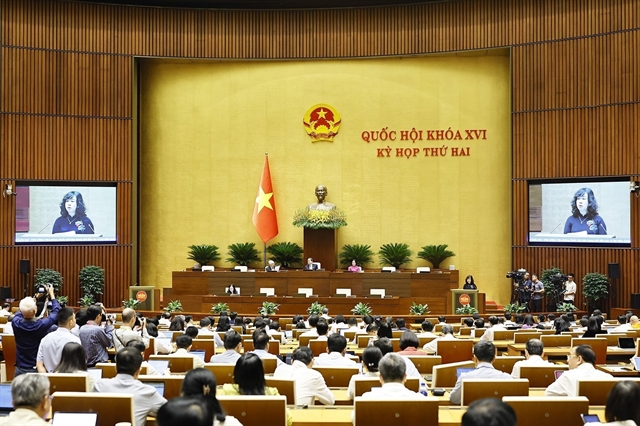
16th NA’s second session: Social insurance coverage to expand under roadmap
1.
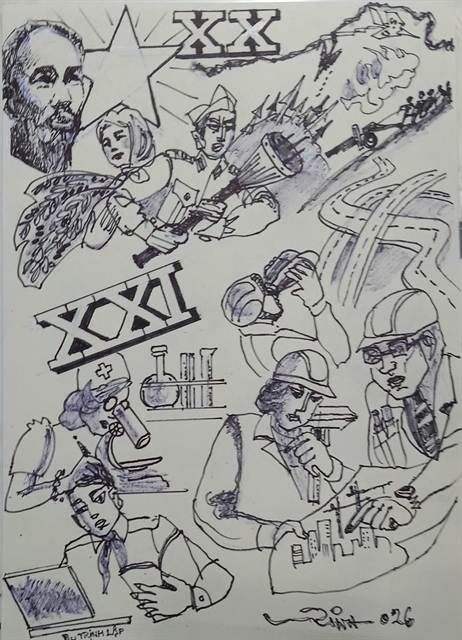 |
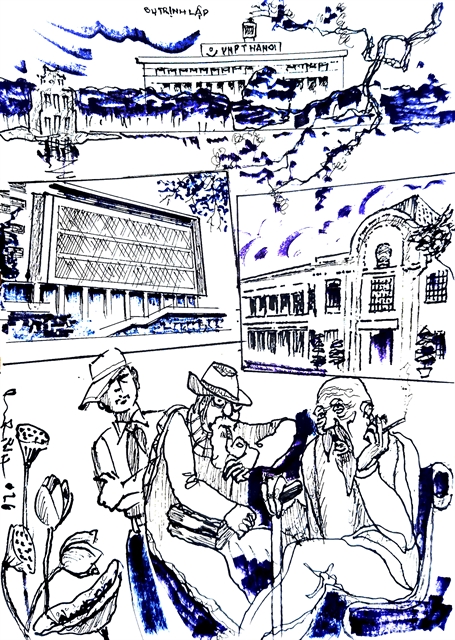
| Illustration by Trịnh Lập |
By Nguyễn Mỹ Hà
The first quarter of the 21st century is already behind us. During the first 25 years of this century, our country has enjoyed peace, focusing its coordinated efforts and energy on one overarching task: eradicating hunger and reducing poverty, gradually lifting itself off the list of poor and underdeveloped countries.
It was expected that by the end of 2025, the country’s overall poverty rate would drop to around 1.1 per cent, meaning between 900,000 and 1.1 million people would still be living in poverty, according to Phạm Hồng Đào, deputy chief of the National Office for Poverty Reduction.
In 1998, the number of poor households in the country was 58 per cent. This is truly a phenomenal transformation that won respect and acknowledgement around the world, making Việt Nam one of the fastest countries to lift itself out from poverty.
The figures also reflect that the government not only helps people escape poverty but also helps them to avoid falling back into it, through credit programmes, job training, free health insurance and the waiver of tuition for children of poor families. Moreover, poverty reduction programmes also incorporate gender equality and capacity building for women and girls in rural, mountainous and remote areas.
Việt Nam has raised its national poverty standard and is now one of 30 countries worldwide that apply a multidimensional criteria, ensuring that minimal living conditions are aligned more closely with sustainable development objectives.
The country has developed a new multi-dimensional poverty index for the 2026-2030 period, increasing the urban income threshold to VNĐ2.8 million (US$106) and rural income to VNĐ2.2 million ($84) per person per month. Other criteria including access to information, clean water and environment and hygiene standards have also been adjusted.
Despite the great achievements, Việt Nam still faces challenges: some rural and mountainous areas that are hard to access still lack clean water, electricity, schools and healthcare clinics.
Sound programmes have been designed to tackle rural poverty, incorporating poverty reduction objectives in green economy development initiatives, and offering diverse ways of earning a living that align with local ecology conditions and cultural heritage.
The poverty figures do not specifically mention the significant and growing number of urban poor. They come in many forms: street lottery ticket vendors, the poor patients with chronic diseases such as cancer, or families forming informal communities or hamlets in big cities. They include seasonal migrant workers who come to urban centres to find manual jobs.
Poverty as we once understood it meant lacking basic living conditions: food, clean water, electricity, health insurance and schooling. But poverty also hits hard when young students cannot afford college, arts students cannot afford supplies, or medical students cannot sustain the long years of training and tuition while their families badly need income.
The oft-used motto of “not leaving anyone behind” has not only become a slogan. It has spread a consensus of equal opportunity in society, where helping each other out has become one of Việt Nam’s signature strengths.
For example, severe climate conditions in 2025 devastated many people who worked hard to build stable lives. Natural calamities forced many well-off people to their knees after just one night of flooding, while countless others suffered even more severe losses.
Yet while recent storms exposed gaps in our capacity to respond to emergencies, nevertheless new homes were rapidly built, allowing affected families to move into safe housing before the Lunar New Year holiday.
When Prime Minister Phạm Minh Chính told The World Economic Forum last year about Việt Nam’s care for over 100 million people, he highlighted the enormous leadership role of the government and the collective strength of the people that brought the country to where it is today.
Prime Minister Chính pinpointed three keys to success. First, at the government level, development has not sacrificed social welfare, progress, social equality or the environment for economic gains alone. Second, Việt Nam has ensured food security and reaffirmed that agriculture remains the backbone of the national economy.
Last but not least, people must remain at the centre of development, with higher-quality human resources built through science, technology and innovation. VNS
Talk Around Town
 Talk Around Town
 Talk Around Town
 Talk Around Town
 Talk Around Town
 Talk Around Town
 Talk Around Town
 Talk Around Town
 Talk Around Town
 Talk Around Town
 Talk Around Town
 Talk Around Town
 Talk Around Town
 Talk Around Town
 Talk Around Town