 Talk Around Town

Top Vietnamese leader meets with Belgian Senate Speaker, House President
1.
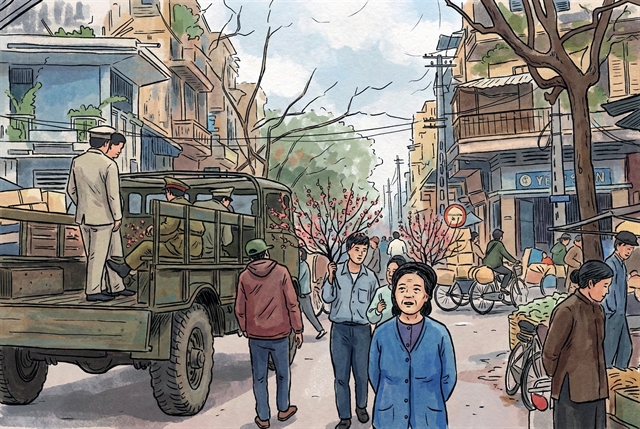 |
| AI-generated scenes in the Missing Hà Nội music video offer a nostalgic portrait of the city during the 1960s and 1970s. Photo courtesy of Viên Hồng Quang. |
Nguyễn Mỹ Hà
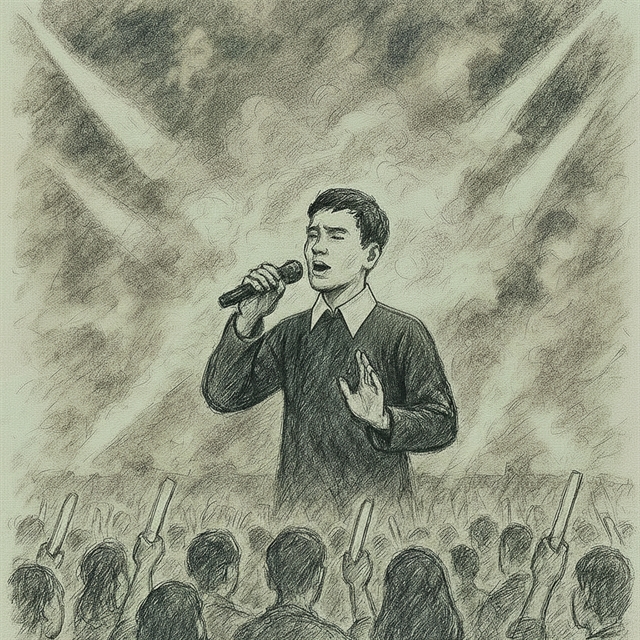
When musicians and writers are still discussing authenticity and rights as they use AI for composing, a young documentary post-production technician has rocked online music listeners with his own use of AI to produce Vietnamese hit songs in English and French, with voices that mimic both men and women.
They have become a catalyst for lively debate among music lovers, with many people thinking the AI voice sounds better than the real singer versions they had listened to.
"Oh God, the voice singing in French in Missing Hà Nội by Hoàng Hiệp sounds even more heart-wrenching than the original song in Vietnamese!" one listener posted.
AI is now appearing in every corner of life – in the film, music, media industries, and more. And the question is whether AI will replace or take over the creative process of writing, words and music or both, and even more.
"I do this for fun only," says Viên Hồng Quang, a technician who works on restoring colours for old documentary films. He is the author of the recent images and short video clips of President Hồ Chí Minh at work, and for the first time, we get to see him up close and in motion via high-quality photos and video clips.
The first video he used AI to make was Việt Bắc nhớ Bác, (Việt Bắc missing Uncle Hồ), a song written by composer Phạm Tuyên, with lyrics by poet Nông Quốc Chấn in ethnic Tày language and sung by Thanh Loan and Nông Văn Khang in its first – and still only – original recording in August 1969.
"I love music and only pick the songs I like most," Quang says.
Next he did Tình Ca (Love Anthem) by Hoàng Việt, a big hit by a talented composer who was born in Sài Gòn in 1928. He wrote this masterpiece in 1957, three years after Việt Nam was divided and he moved north.
He wrote the song about longing for his wife, who stayed in the south with their three children. The song was not only about his love for his wife, but framed by a greater love for the country, longing for a reunification so that they would be reunited.
After the song and the brief description of Việt the composer's life and work, many people liked it even more when they learned how and why it was written, and more about the time it was written.
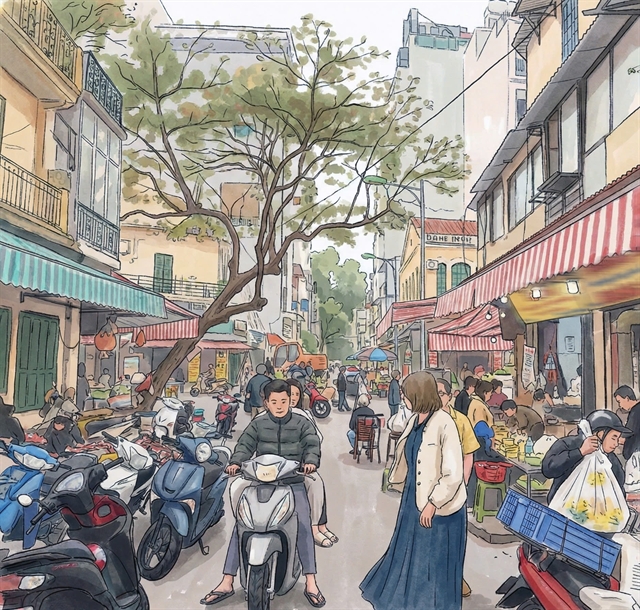 |
| The city of Hà Nội becomes a cherished memory in the hearts of many people who once lived there. |
Born with a natural gift for music and composing, Việt was one of the leading musicians of his time. From a young age, he could play many instruments including the mandolin, violin, guitar, and accordion. He also wrote great songs, most notably sad songs during his pre-revolution period.
In the north, he initiated this music trend during wartime with some songs that are still big hits today, such as Nhạc Rừng (Forest Music), Lên Ngàn (To the Mountains) or Lá Xanh (Green Leaves).
During his time in the north, Việt was in the first class to study composition at Việt Nam Music School in its first year in 1956 in Hà Nội. In 1957, in a small room at the school, he received his wife's letter after two years of absence and wrote the song Love Song that same night.
After graduating from school, he went on to study music composition at the National Conservatory of Sophia in Bulgaria. He then wrote Việt Nam's first ever four-movement symphony suite in 1964 titled Quê Hương, meaning Homeland.
Việt, born Lê Chí Trực, volunteered to go back south to join the people's fight for national reunification in 1966 and to search for more material to write his next symphony, with initial ideas already started in Varna, Bulgaria. While working in the south, he also lived the life of a liberation fighter, marched long distances, and kept writing music.
Over six months, he penned 12 songs and an opera titled Bông Sen (The Lotus), with more than 100 pages of hand-written piano accompaniment before he died on the mission in 1967, never finishing his second symphony.
The 100-plus pages of piano accompaniment – written with sweat, tears, and at times blood – could today be completed in a fraction of the time with AI tools capable of defining style, harmony, and instrumentation.
Due to the nature of his work, technician Quang surrounded himself with many wartime songs, such as Tự Nguyện (Volunteering) by Trương Quốc Khánh, a songwriter, journalist and screenplay writer. His most famous song talks about a person's wishes if he or she could incarnate into anything they wanted:
"If I get to be a bird, I'd like to be a white pigeon
If I can be a flower, I'd like to be a sunflower
If I get to be a floating cloud, I'd like it to be warm
Being a man, I will die for my homeland."
It was the defining anthem for a student-led peace movement in Sài Gòn in the 1960s calling for an end to war and for reunification. The movement was self-started among the students in 1961, later came under the National Liberation Front of South Việt Nam.
This wave of movements and anti-war rallies, as well as activities, was officially announced at the Sài Gòn Agriculture, Forestry and Husbandry School in December 1969 and later grew to other cities such as Huế, Đà Nẵng, Cần Thơ, An Giang, Quy Nhơn, and Đà Lạt. It also spread to Phan Thiết and later to other countries including France, West Germany, Canada, Japan, Belgium, Australia, and the US.
The songs sung during Christmas 1969 helped awaken young intellectuals, called on their conscience and moved them to stand up to help Việt Nam be reunified in 1975. The movement was brutally suppressed, with students arrested and harshly punished.
The hard times of fighting for peace during the war are now behind us. This song that called on young people to die for their homeland now encourages them to live for it – and help keep peace within it.
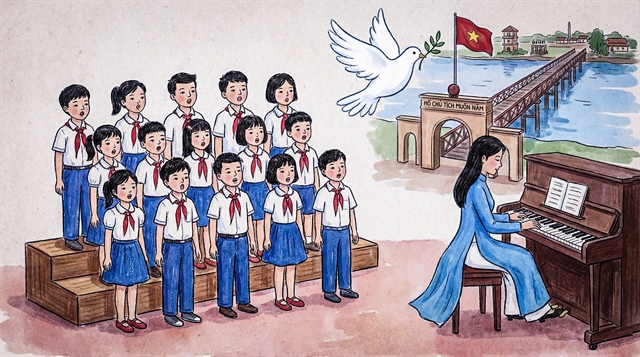 |
| 'Tự nguyện' (Volunteering) as portrayed in the video clip made by Viên Hồng Quang as he tried the French version of the popular wartime song. Photo courtesy of Viên Hồng Quang |
In peace, looking back to those war years, when the sons and daughters of the south returned to their homes to rebuild them from the ashes, they missed their Hà Nội, where they had spent 20 years working toward reunification.
Written long after the country became one, the song Missing Hà Nội by Hoàng Hiệp – now remixed with AI tools and a woman’s voice singing it in French – has passed the linguistic test that even strict language purists might expect it to fail.
"It took me a long time to come to an audible copy," Quang says. "Each time I upload a new piece, it means I already had six or seven earlier copies that I wasn’t satisfied with."
Having worked on reviving old documentary films, Quang says he once travelled to Vĩnh Linh in Quảng Trị Province, where he walked into the famous Vịnh Mốc guerrilla tunnel.
It was the setting of a Dutch documentary titled Le 17e Parallele: La Guerre Du Peuple (Parallel 17, Việt Nam in War). The crew lived underground for two months with colleagues from Việt Nam Television to film the lives of local peasants living under heavy American bombardment.
"When I went down into the tunnel and we reached a tight corner," Quang says, "where the guide told us a family of six used to live, I felt they were truly heroes... and I felt grateful for the sacrifices people like them made so that we today can live in peace.'
"The reactions from people so far have been quite positive," Quang adds. "I even got a recommendation from songwriter Trần Tiến for his friend in Australia to get in touch with me. He wanted to commission me to help with accompaniment and harmony for a song he wrote."
"This is unheard of, you know," he says. "Where you once needed an orchestra to work on your new piece, it can now be done much faster, with as many instruments and styles as you may want to experiment with before finalising the arrangement."
Before lawmakers may find a decree to limit the use of AI in artworks, people working in creative fields may receive great help from AI — tools that expand possibilities while challenging traditional ideas of authorship. VNS
Talk Around Town
 Talk Around Town
 Talk Around Town
 Talk Around Town
 Talk Around Town
 Talk Around Town
 Talk Around Town
 Talk Around Town
 Talk Around Town
 Talk Around Town
 Talk Around Town
 Talk Around Town
 Talk Around Town
 Talk Around Town
 Talk Around Town