 Talk Around Town
Hà Nội student arrested after allegedly assaulting teacher in classroom
1.
 |
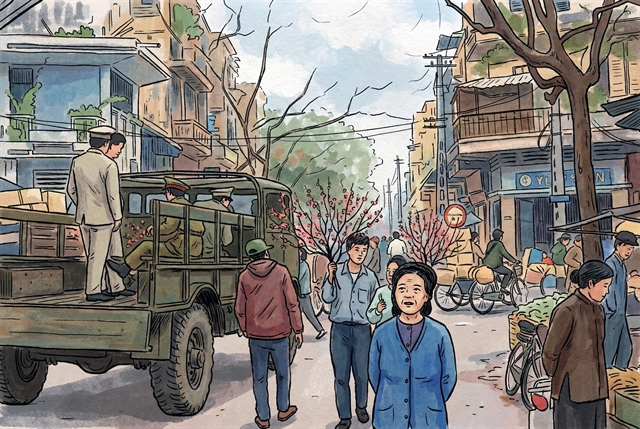
| cIllustration created with AI by Đoàn Tùng. |
Nguyễn Mỹ Hà
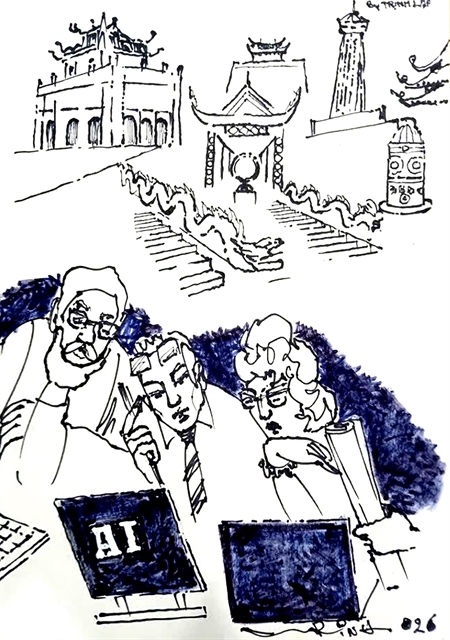
It's not simply small talk anymore. Discussions over the invasion of AI and its convenience potential are taking place not only here in cafes all over the country, in the workplace, and even at dinner table of many families around the world.
"Hey, I think we should take some classes to learn about AI," my hubby suggested recently when we were having dinner. "No, Dad," bursts in our teenage child, who has been telling me about video clips I may mistake for being real, "you need not learn about it. Be careful!"
While some children think their parents do not need to learn about AI, having managed without it up to now, it is now harder to ignore than ever. The minute you open your phone or computer, it's already on the screen staring at you, patiently waiting for your input, like a genie in a magic lamp or a personal assistant.
But it turns out that their answers may not always be correct, depending on the information given to them in the first place. When my child's 17-year-old friend Lami heard her father's advice on her future career, that she should learn about AI and try to get a job in this field, she just burst out crying.
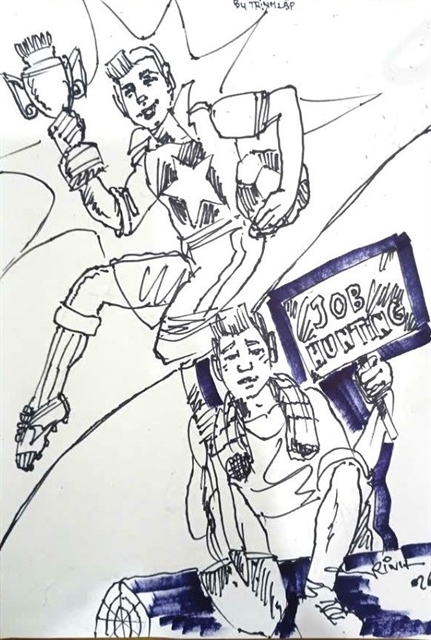
Lami spend time as an artist, drawing original animated characters and selling them online. She gets money from doing it, and receives a decent amount for each order. She doesn't need to ask her parents for pocket money, which gives her a near-idol status among friends.
"Mommy, you know what, when Lami's father told her to do AI, it would kill her as an artist," my child started to explain. "If she lets AI use her work input, it then re-uses it for a million others and the originality of the work is just gone without trace."
The same goes with music. If you can use AI to give you different samples of your melody or even a tune, then it'll be used for others, just as the way you use others' work to sample a few styles or tunes.
When students overseas return to Việt Nam for their Christmas holiday overseas, they say at their colleges they also talk about how AI have impacted their lives on and off campus. Everywhere, the overwhelming issues are how to not use AI for their writing, essays or thesis, and how to use apps to trace if someone used AI tools for their writings, photos or videos.
Regulations have started to warn students not to overuse the convenience of the tools, yet to keep them updated on the latest developments in the fields.
It has to be a two-way road: when you offer your own writing to AI, you can use works of others who came before you, and vice versa. When you use AI, you're already standing on the giants of time and throughout history to create something that doesn't bear your signature.
Over the past few months, the music scene in Việt Nam has been rocked by a song put together by Ken Quách (Quách Anh Thảo) and Hương Ly Bông (Nguyễn thị Hương Bông), two music aficionados, and have no relations in the music world. They together put in info for AI to write lyrics, music accompaniment, and sing a new song, Say một đời vì em, translated as Drunk on You Forever.
When the song debuted in August, it became an instant hit. Today four months later, it has more than 16 million views and covered by real singers. It is a romantic song with rumba beat and soul rap, especially written for broken hearts.
A metal version of the song, put together by a YouTube group of rockers, aims to build up a rock community in Việt Nam hoping to give listeners an explosive, different and inspiring music experience. The song's chorus has been used in hundreds of thousands of TikTok videos and then used by a million others in music reels.
Without any marketing efforts, the song and chorus tune became viral and can be heard in cafes, restaurants, co-working spaces or in parks as workout music for public classes.
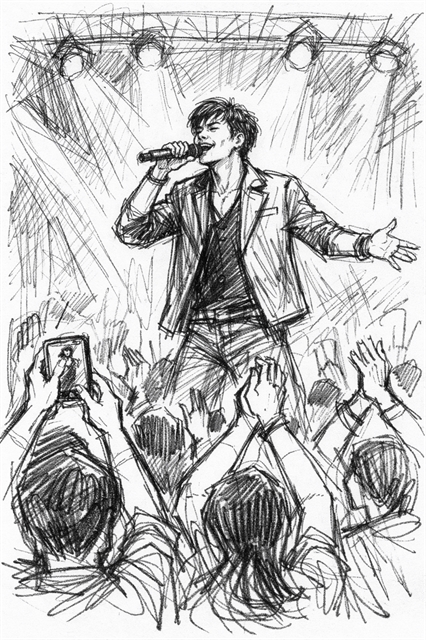
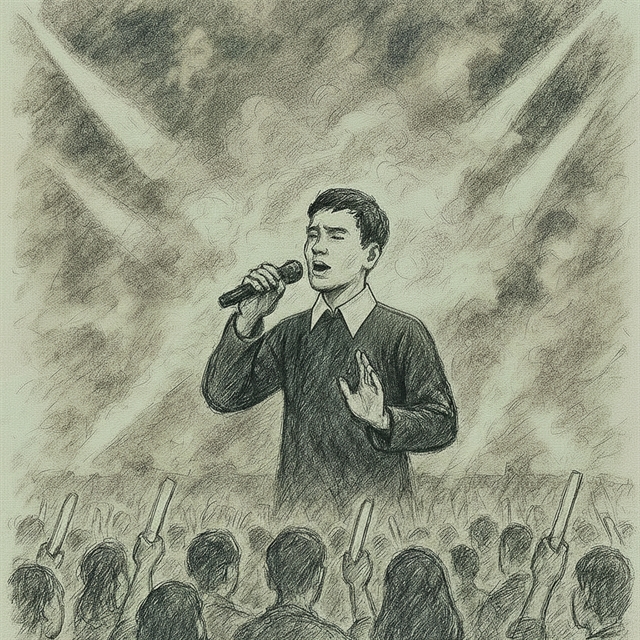
Singer Nguyên Vũ recently released his version of the song with permission, which got more than 2 million views and positive feedback. AI could give a perfect version with no false notes, but when a human sings it, he sings with feeling, which makes a difference. "I'm up for the comparison," he was quoted as saying.
Vũ has pointed out the most important factors that make any art special: it's the human feeling, the musicality and nuances, which conveys the warmth from heart to heart, and that makes art alive and needed for us all.
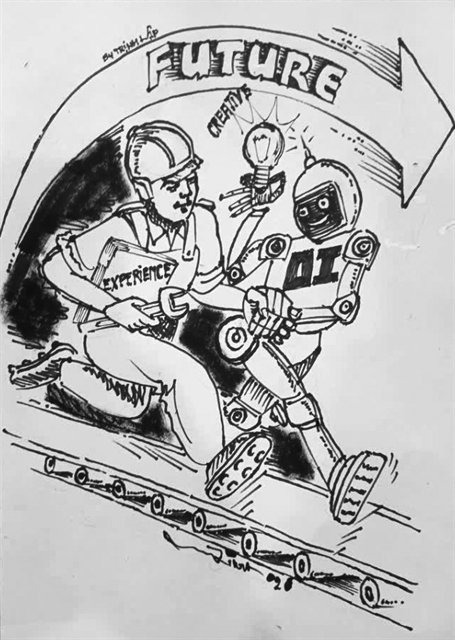
As in art and music, the personal attitude of the author is what makes it alive and touching. AI can help when you need to do research for your work. The real work of art shall still need to be carried out with human emotions, sweat, tears and, in some cases, blood too. VNS
Talk Around Town
 Talk Around Town
 Talk Around Town
 Talk Around Town
 Talk Around Town
 Talk Around Town
 Talk Around Town
 Talk Around Town
 Talk Around Town
 Talk Around Town
 Talk Around Town
 Talk Around Town
 Talk Around Town
 Talk Around Town
 Talk Around Town