 Talk Around Town
PM orders urgent completion of decree on petroleum trading by November 10
1.
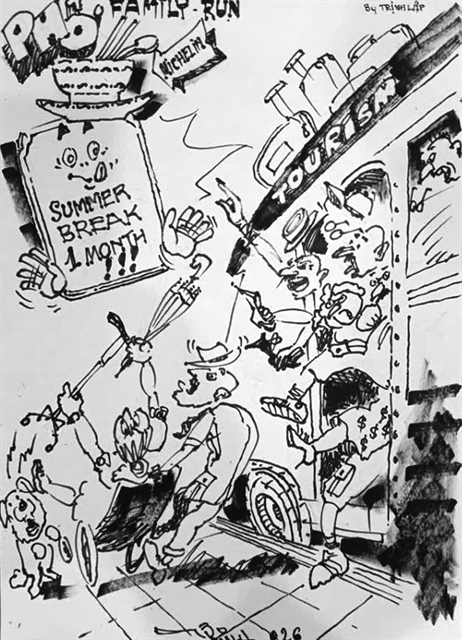 |
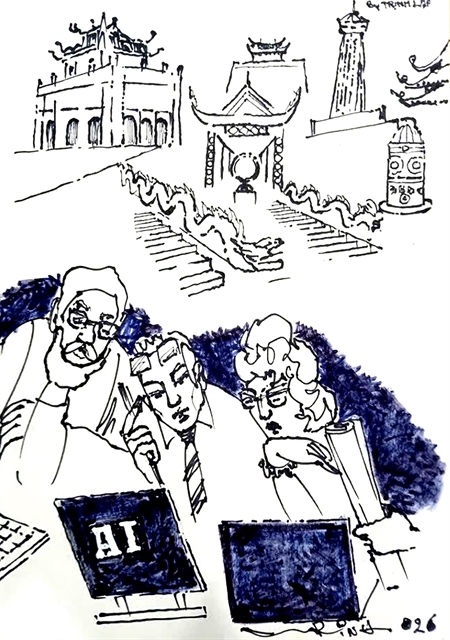
| Illustration by Trịnh Lập |
Nguyễn Mỹ Hà
This weekend will come as a relief for phở aficionados in Hà Nội, as well as visitors travelling from far and wide to try the iconic beef noodle soup.
Phở Gia Truyền, a long-running, family-run phở shop on Bát Đàn Street, has reopened after a month-long summer break.
Disappointed phở lovers have taken to social media to lament their favourite noodle soup shop being unavailable for breakfast while the staff enjoyed a break.
”Along with Gia Truyền shop, Phở Lâm also put up a notice announcing its summer closure," said one disgruntled diner, who claimed that Lâm serves the best phở in town with its secret broth recipe and perfectly tender rare beef as its signature topping.
The summer break still seems unreal in a city of more than 8.5 million people where having a hot bowl of phở is something close to a morning ritual.
To make matters worse for devotees, Phở Gia Truyền also closes for one month during the Lunar New Year period. Online commenters jest that employees at the phở shop may have the longest holidays of all.
"Gia truyền" literally means "handed down from one's ancestors", and a specialty, be it a dish or a craft, is generally expected to have remained in the same family for at least three generations before it can truly be considered "gia truyền". In Hà Nội's Old Quarter, many phở shops are familiar with one another, and some even belong to branches of the same extended family.
But when the big players take a break, other shops benefit from an influx of customers who had hoped to sample the city's best-known bowls but instead settle for a different, though often equally rewarding, experience.
Many who fail to get a bowl of phở at Phở Lâm may turn to Khôi Hói, conveniently located next door. While Lâm serves only the morning crowd, Khôi Hói stays open until late afternoon.
On my most recent visit, the influx of customers at Khôi Hói was so long that my group decided to walk a little further to try Cồ Chiêu on Hàng Đồng Street. We had to wait in line for a table, but fortunately the queue was short.
Although we have visited Cồ Chiêu many times before, we usually sat outside at the café next door, as I personally find the heat from the huge pot of boiling broth inside the shop overwhelming. However, recent campaigns to clear pavements of encroachments meant that not a single table or chair was available outside.
Inside, however, it was cosy, cool and clean. In a tiny dining room with just four or five tables, everyone looked calm and relaxed. A young couple sat opposite us, alongside a couple of solo diners. An elegantly dressed elderly couple looked as if they had just walked out of a black-and-white film about the city.
The dim yellow lighting cast a delicate golden glow over everyone, bathing the room in warmth. The entire experience felt like stepping aboard a train back in time, and we returned to the present only after stepping back onto the street.
From the point of view of a Hanoian, it was wonderful when both Phở Gia Truyền Bát Đàn and Phở Lâm earned Michelin recommendations. At Bát Đàn, only the owners are allowed to slice the boiled beef for their signature bowl of phở bò chín. They have plenty of staff who could cut the meat well in advance, but they believe doing so would leave it dry and less tasty, even after it is topped with hot broth.
At Cồ Chiêu in Hàng Đồng, the cooking counter and serving area were spotless. Each bowl was filled with the utmost care and the waiters, who are also members of the family, were courteous, attentive and considerate. The number of bowls served each day is limited, so demand is always greater than supply.
If Cồ Chiêu had more seating capacity and could serve more customers, perhaps it too could afford to close for a month each year. If that ever happened, its faithful clients, yours truly included, would yearn even more for a visit to this little shop that seems almost frozen in time.
Perhaps Hà Nội's tourism authorities could also come up with initiatives to boost the profile and revenue of these old-style phở shops. Dedicated food markets or phở festivals, whether in Hà Nội or elsewhere in the country, would certainly be a good place to start. — VNS
Talk Around Town
 Talk Around Town
 Talk Around Town
 Talk Around Town
 Talk Around Town
 Talk Around Town
 Talk Around Town
 Talk Around Town
 Talk Around Town
 Talk Around Town
 Talk Around Town
 Talk Around Town
 Talk Around Town
 Talk Around Town
 Talk Around Town